Algeria
 Egypt
 Libya
 Morocco
 Sudan
 Tunisia
 Benin
 Burkina Faso
 Cabo Verde
 Ghana
 Guinea
 Guinea-Bissau
 Liberia
 Mali
 Mauritania
 Niger
 Nigeria
 Senegal
 Sierra Leone
 The Gambia
 Togo
 Cameroon
 Central African Republic
 Chad
 DR Congo
 Equatorial Guinea
 Gabon
 Republic of the Congo
 São Tomé and Príncipe
 Burundi
 Comoros
 Djibouti
 Eritrea
 Ethiopia
 Kenya
 Madagascar
 Malawi
 Mauritius
 Mozambique
 Rwanda
 Seychelles
 Somalia
 South Sudan
 Tanzania
 Uganda
 Angola
 Botswana
 Eswatini
 Lesotho
 Namibia
 South Africa
 Zambia
 Zimbabwe
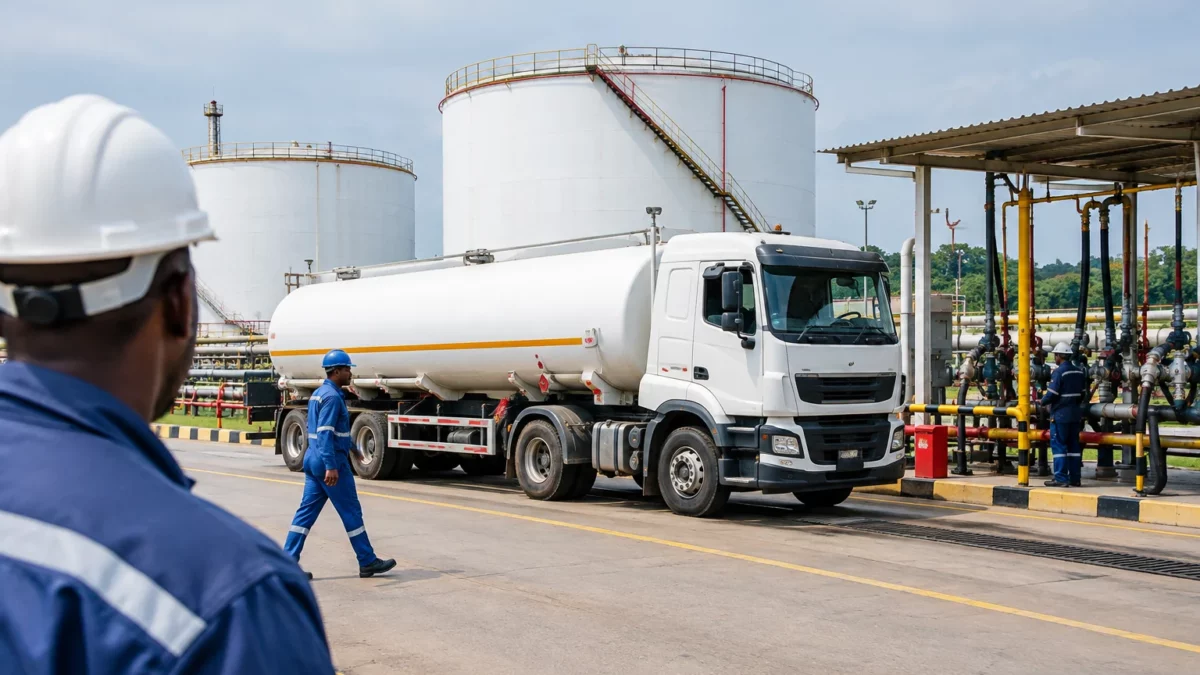
A supply disruption does not stop at the border of a coastal country. For landlocked Mali and Burkina Faso, connected to ports by overland corridors, continuity of fuel deliveries also depends on the reserves and infrastructure of their neighbours.
This interdependence was at the heart of discussions on oil stocks at the International Exhibition of Extractive Resources and Energy (SIREXE), held in Abidjan from 18 to 22 November 2026. Ivory Coast wants to consolidate its energy security while strengthening its role as a regional supplier. But storage capacity, refining and delivery are distinct objectives.
A coastal link for hinterland countries
Ivory Coast is a member of the Economic Community of West African States (ECOWAS), which brings together countries with different energy profiles. Its coastline and refining facilities give it a particular place in regional supply, especially to countries without access to the sea.
The link is material, not just diplomatic. Ivorian refined products are exported to Mali and Burkina Faso. Burkina Faso’s customs statistics confirm that Ivory Coast is among the countries of origin for its fuel imports. This does not mean that all deliveries follow the same route or that both markets depend exclusively on Abidjan.
This position brings additional responsibility. A disruption at depots, the refinery or on roads can affect Ivorian consumers and cross-border flows. Transport companies and businesses are directly exposed to delays; households, meanwhile, may feel the effects of pressure on prices or product availability.
Stocks do not mean a single reserve
At SIREXE, Ivory Coast’s Minister of Mines, Petroleum and Energy, Mamadou Sangafowa-Coulibaly, acknowledged that current refining capacity was insufficient, without disclosing the volume of strategic reserves. These stocks are not reported in detail, limiting public comparisons between countries.
The Ivorian Petroleum Stock Management Company (GESTOCI) manages petroleum-product storage facilities. At a panel held on 20 November, its deputy managing director, Nina Keïta Kamara, announced total capacity of 424,000 cubic metres. She also said that a 20,000-cubic-metre diesel tank had been commissioned in Yamoussoukro in July 2026. These figures were reported by the Ivorian Press Agency.
Tank volume alone does not show how many days of consumption can be covered. The actual fill level, the types of products available and the speed at which they can be distributed must also be known. Access to stocks matters as much as their theoretical capacity, especially when infrastructure is concentrated around Abidjan.
The Ivorian Refining Company (SIR) is another link in the chain. Its managing director, Tiotioho Soro, said at the exhibition that the refinery’s crude-oil stocks represented about one month of autonomy. He said SIR processes one million barrels every 15 days. This figure, attributed to the executive, concerns crude destined for refining; it should not be confused with the finished-fuel reserves managed by GESTOCI.
Second refinery, project with regional implications
The government is backing the construction of a second refinery. According to the minister, the existing facility was designed to process heavy crude imported from Nigeria, while Ivorian discoveries include light oil. A new plant could therefore adapt refining to domestic resources and, according to Abidjan’s stated aim, also supply neighbouring markets.
This is an announced project, not capacity already available. Its scope will depend on decisions that remain crucial: financing, timetable, technological choices, crude supply and commercial outlets. Nor would the new refinery replace stocks: producing locally and holding reserves meet two different needs.
Production figures give an indication of the scale of the current sector. According to data published by the Ivorian Economy portal, SIR processed 3.31 million tonnes of crude in 2024 and produced 5.07 million tonnes of petroleum products. Sales, for the domestic market and export, reached 5.16 million tonnes. Ivory Coast therefore imports crude while exporting some refined products: its regional role already rests on processing and logistics, not just extraction.
Energy security also depends on roads
For the authorities, developing storage and refining could reduce exposure to shocks in international markets. For operators, holding more crude also ties up capital and increases the risk associated with price fluctuations. The head of SIR described excessive storage as a risk for a refinery. Reserve policy therefore requires a balance between protection against supply disruptions and financial cost.
The final mile remains. Capacity near Abidjan does not guarantee regular distribution across all Ivorian regions, let alone in neighbouring countries. Roads, convoy security, terminals and co-ordination between operators determine the actual movement of fuel. Data provided by GESTOCI on coverage of areas in Mali and Burkina Faso highlight the scale of these flows, but do not in themselves measure their regularity.
Across West Africa, the issue goes beyond ambitions to become an energy hub. It concerns the ability of states to co-ordinate their reserves, diversify their sources of supply and keep trade corridors open. The second refinery has yet to be built; for now, changes in stocks, their distribution beyond Abidjan and the continuity of deliveries to Mali and Burkina Faso will be the clearest indicators of Ivory Coast’s strategy.
Sources consulted: Ivorian Press Agency on GESTOCI’s capacity, GESTOCI, Ivorian data on petroleum products, TV5MONDE on the second refinery project and Burkina Faso customs statistical yearbook.