Algeria
 Egypt
 Libya
 Morocco
 Sudan
 Tunisia
 Benin
 Burkina Faso
 Cabo Verde
 Côte d'Ivoire
 Ghana
 Guinea
 Guinea-Bissau
 Liberia
 Mali
 Niger
 Nigeria
 Senegal
 Sierra Leone
 The Gambia
 Togo
 Cameroon
 Central African Republic
 Chad
 DR Congo
 Equatorial Guinea
 Gabon
 Republic of the Congo
 São Tomé and Príncipe
 Burundi
 Comoros
 Djibouti
 Eritrea
 Ethiopia
 Kenya
 Madagascar
 Malawi
 Mauritius
 Mozambique
 Rwanda
 Seychelles
 Somalia
 South Sudan
 Tanzania
 Uganda
 Angola
 Botswana
 Eswatini
 Lesotho
 Namibia
 South Africa
 Zambia
 Zimbabwe
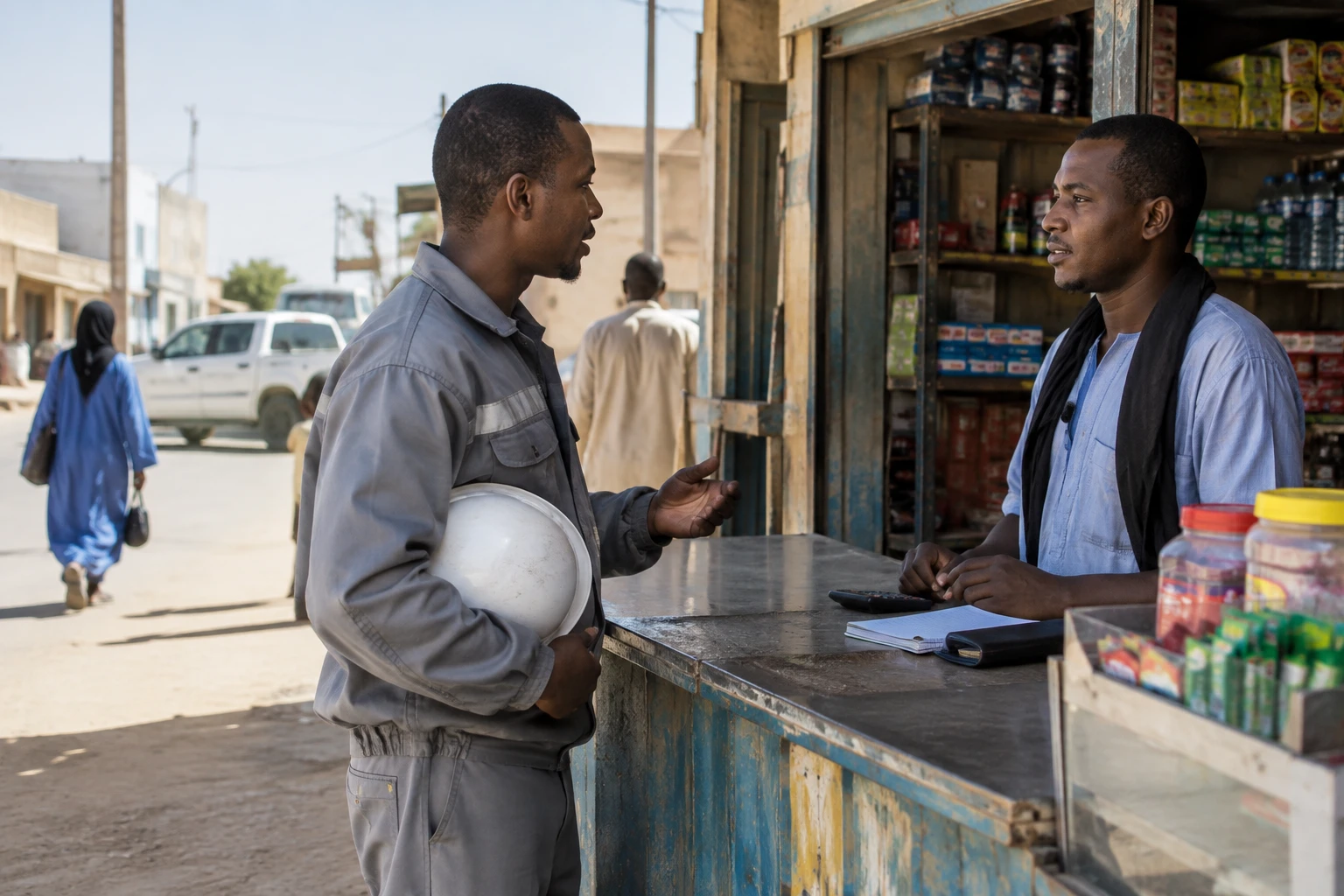
At Tasiast, in the Inchiri region, a ministerial visit brought a practical question back to the fore: what share of the wealth extracted benefits Mauritania and the communities hosting the mine over the long term? On 22 and 23 October 2026, the Minister of Mines and Industry, Dy Ould Zein, visited the site with regional and municipal officials.
A mine at the heart of the Mauritanian economy
Mauritania is heavily dependent on its extractive industries, particularly iron ore, gold and, more recently, gas. In this landscape, Tasiast is one of the country’s main gold projects. The site is in Inchiri, north of Nouakchott, and its operations link state revenues, national suppliers and local employment.
This economic weight makes public oversight and revenue transparency essential. The 2024 report by the Extractive Industries Transparency Initiative (EITI), published in October 2025, examines payments, production and governance in the sector. It also identifies discrepancies to be reconciled and makes recommendations for institutional monitoring. The EITI report on extractive industries in Mauritania thus provides a framework for comparing companies’ disclosures with public data.
Mauritania is also part of a regional space where mining choices, investments and supply chains extend beyond national borders. It belongs to the Arab Maghreb Union and shares Sahel-related challenges with its neighbours. Even so, the benefits of a mine are first measured at the level of the country and the localities concerned: revenues collected, jobs accessible to Mauritanians, contracts awarded to local companies and services provided to communities.
Two days on site, from safety to working conditions
According to the Mauritanian News Agency, Dy Ould Zein observed extraction and maintenance operations, as well as measures to protect employees’ health and safety. The delegation included the governor of Inchiri, the president of the regional council, the hakem of Bénichab and the mayor of the municipality. It also met the company’s management and workers’ representatives.
The minister praised working conditions and dialogue with staff, the AMI reported. He also said that Mauritanians make up 98% of the company’s workforce and that it works with more than 230 national companies. These figures describe local content — the role given to the country’s workers and suppliers in a project — but are not, on their own, enough to measure job quality, how jobs are distributed or the income that remains in neighbouring municipalities. The Mauritanian News Agency’s account of the visit also says that the minister spoke with staff delegates.
The company says Tasiast generates more than 4,000 direct and indirect jobs. This total therefore includes positions with subcontractors and should not be confused with the number of people directly employed by the mine. In its data for 2024, Kinross says 97.8% of its direct workforce was Mauritanian. That year, the company says it paid $95.2 million in gross wages and spent $225.8 million on purchases from Mauritanian suppliers. These are figures reported by the company and should be distinguished from statistics consolidated or verified by the authorities.
Significant figures, but questions of accountability
For the period 2010–2025, Kinross says it paid $1.7 billion to the Mauritanian state and made more than $3.3 billion in purchases and procurement in the country. The company also puts its community investments between 2011 and 2025 at more than $28 million. These cumulative figures indicate the scale of financial flows. On their own, they do not show what share goes to local budgets, which projects have had lasting effects or how results are assessed.
Data for 2024 illustrate the value of comparing periods and categories. In an earlier publication, Kinross reported cumulative payments of $1.44 billion to the state through to the end of 2024 and $3.1 billion in local purchases over the corresponding period. The higher figures announced for 2025 therefore extend these series, but their verification must draw on available public disclosures and transparency reports. Mauritania’s EITI report is a tool for this oversight, but does not replace monitoring social commitments or examining working conditions.
The benefits and burdens are not shared in the same way. The state receives revenues, while the operation supports jobs and contracts. Employees are directly affected by safety, working hours and living conditions at the site. Small local businesses may gain access to contracts, but must also meet the volume and quality requirements of a major operator. In Bénichab and neighbouring localities, the question is whether community investments address needs identified with residents and continue beyond the initial funding.
Beyond the visit, follow-up will make the difference
The ministerial visit provided an opportunity to observe how the mine operates and to speak with managers, local authorities and workers. It does not, on its own, amount to an independent assessment of the project’s social, environmental or fiscal performance. The significance of this visit will depend on what follows: the publication of comparable data, monitoring of the concession holder’s obligations and regular dialogue with the communities concerned.
For Mauritania, the issue extends beyond Tasiast. It concerns the country’s ability to turn natural resource extraction into transparent public revenues, national skills and sustainable economic activity. At the regional level, the question also concerns Sahelian and Maghreb countries seeking to better regulate mining projects while attracting investment. The next transparency reports and the implementation of local commitments will show whether the announced figures translate into verifiable benefits on the ground.