Algeria
 Egypt
 Libya
 Morocco
 Sudan
 Tunisia
 Benin
 Burkina Faso
 Cabo Verde
 Côte d'Ivoire
 Ghana
 Guinea
 Guinea-Bissau
 Liberia
 Mali
 Mauritania
 Niger
 Nigeria
 Senegal
 Sierra Leone
 The Gambia
 Togo
 Cameroon
 Central African Republic
 Chad
 DR Congo
 Equatorial Guinea
 Gabon
 Republic of the Congo
 São Tomé and Príncipe
 Burundi
 Comoros
 Djibouti
 Eritrea
 Ethiopia
 Kenya
 Madagascar
 Malawi
 Mauritius
 Mozambique
 Rwanda
 Seychelles
 Somalia
 South Sudan
 Uganda
 Angola
 Botswana
 Eswatini
 Lesotho
 Namibia
 South Africa
 Zambia
 Zimbabwe
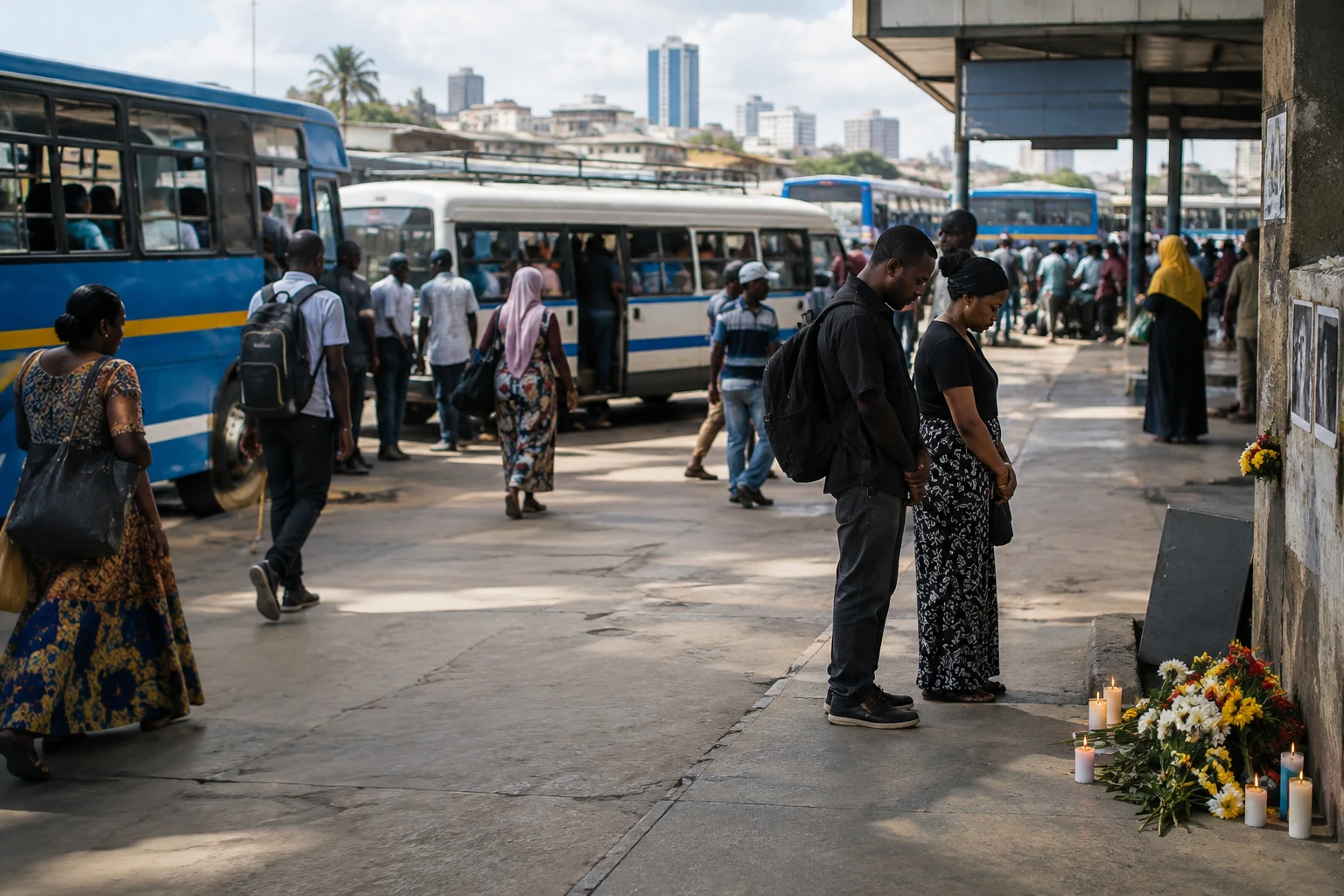
A year after the violence that followed Tanzania’s general election, an official death toll is now available. But establishing responsibility, making the findings public and responding to families remain decisive steps. In Tanzania, the 29 October 2026 commemoration is therefore taking place amid mourning and calls for justice.
An acknowledged toll, but questions remain
The 29 October 2025 vote was preceded by the exclusion of opposition candidates and restrictions that narrowed political space. The main opposition party, Chadema, did not take part in the vote. Protests broke out in several cities, including Dar es Salaam, while the authorities imposed a curfew and an internet shutdown that restricted communications and the verification of information.
The African Union election observation mission noted allegations of excessive use of force and said in its preliminary assessment that the vote did not comply with the organisation’s electoral principles and standards. It also stressed that the internet shutdown had hampered access to information and observation of the process. The Southern African Development Community (SADC), a regional organisation of which Tanzania is a member, also concluded that the election did not meet its democratic principles and guidelines.
In April 2026, an investigative commission established by President Samia Suluhu Hassan announced that it had recorded 518 deaths during the violence. Its chair, Mohamed Chande Othman, said the figure might be incomplete, particularly because some families had buried their relatives without taking them to a mortuary. The African news agency APA reported the same toll. These figures constitute an official count, but do not resolve questions about the circumstances of the deaths or individual responsibility.
The publication of the findings has not ended the criticism. Observers and families are calling for transparent access to the evidence gathered by the inquiry, including recommendations concerning the use of firearms and the conduct of security forces. The commission recommended further investigations into these issues. The large gap between the official toll and estimates put forward in the aftermath of the vote had already fuelled mistrust; without information that can be publicly scrutinised, the debate remains difficult to close.
Commemorating without confusing reconciliation with forgetting
For the anniversary, Chadema has announced a week of commemorations, from 29 October to 4 November, and plans to fly its flags at half-mast. The party is calling for an independent inquiry involving several parties, as well as a compensation mechanism for those injured and the victims’ relatives. These are opposition demands; in themselves, they do not constitute judicial findings on responsibility.
Christian churches, for their part, are calling for prayers for the dead, the injured and bereaved families. The Christian Council of Tanzania describes reconciliation as necessary for national dialogue, while saying that forgiveness must not replace justice. This distinction matters in a country where calls for political calm may be made without victims having received answers or compensation.
Before the commemoration, the police authorities warned of possible unrest. However, allegations against opposition figures, activists or religious leaders must remain attributed unless verifiable evidence is made public. Political and religious organisers, for their part, say they want to honour the victims. How the gatherings are policed will affect perceptions of freedom of assembly and expression.
There is also disagreement over the process. An institutional inquiry can establish facts and propose reforms; judicial proceedings, in turn, must determine responsibility through adversarial procedures. A commission therefore cannot replace criminal justice or public access to evidence. For families, the issue goes beyond political debate: identifying the victims, understanding what happened to them and obtaining compensation.
A disappearance in Kenya broadens concern
Human rights concerns extend beyond Tanzania’s borders. Twaha Mwaipaya, a former Chadema youth mobilisation official, was reported missing after last being seen in Kenya on 25 October 2026. Tanzanian police said they were following the case, but had not received an official report by the time this information was published. Kenyan organisations and political figures are calling for his whereabouts and safety to be established.
At this stage, the circumstances of his disappearance and the identity of any possible perpetrators have not been established publicly. A link to the 2025 violence or to his online statements should therefore not be presented as confirmed fact. But the case has renewed concerns about the safety of Tanzanian activists beyond the country’s borders and cooperation between neighbouring countries when a person goes missing.
For East Africa, the stakes are tangible: Kenya and Tanzania belong to the East African Community, an integration framework that facilitates trade and regional movement. This proximity makes a clear response from the competent authorities all the more important, in accordance with due process and fundamental rights. At continental level, the findings of the African Union and SADC are a reminder that electoral integrity is not limited to election day: it also depends on political inclusion, transparency and the ability to investigate violence.
The next step will therefore be less symbolic than institutional: making the detailed findings of the inquiry accessible, clarifying what judicial action will follow and explaining the measures intended to prevent further abuses. In Dodoma, Tanzania’s capital, as in the affected cities and rural communities, trust will depend on verifiable answers. An anniversary can keep memory alive; only a credible process can help establish the facts and redress wrongs.