
 Algeria
 Egypt
 Libya
 Sudan
 Tunisia
 Benin
 Burkina Faso
 Cabo Verde
 Côte d'Ivoire
 Ghana
 Guinea
 Guinea-Bissau
 Liberia
 Mali
 Mauritania
 Niger
 Nigeria
 Senegal
 Sierra Leone
 The Gambia
 Togo
 Cameroon
 Central African Republic
 Chad
 DR Congo
 Equatorial Guinea
 Gabon
 Republic of the Congo
 São Tomé and Príncipe
 Burundi
 Comoros
 Djibouti
 Eritrea
 Ethiopia
 Kenya
 Madagascar
 Malawi
 Mauritius
 Mozambique
 Rwanda
 Seychelles
 Somalia
 South Sudan
 Tanzania
 Uganda
 Angola
 Botswana
 Eswatini
 Lesotho
 Namibia
 South Africa
 Zambia
 Zimbabwe
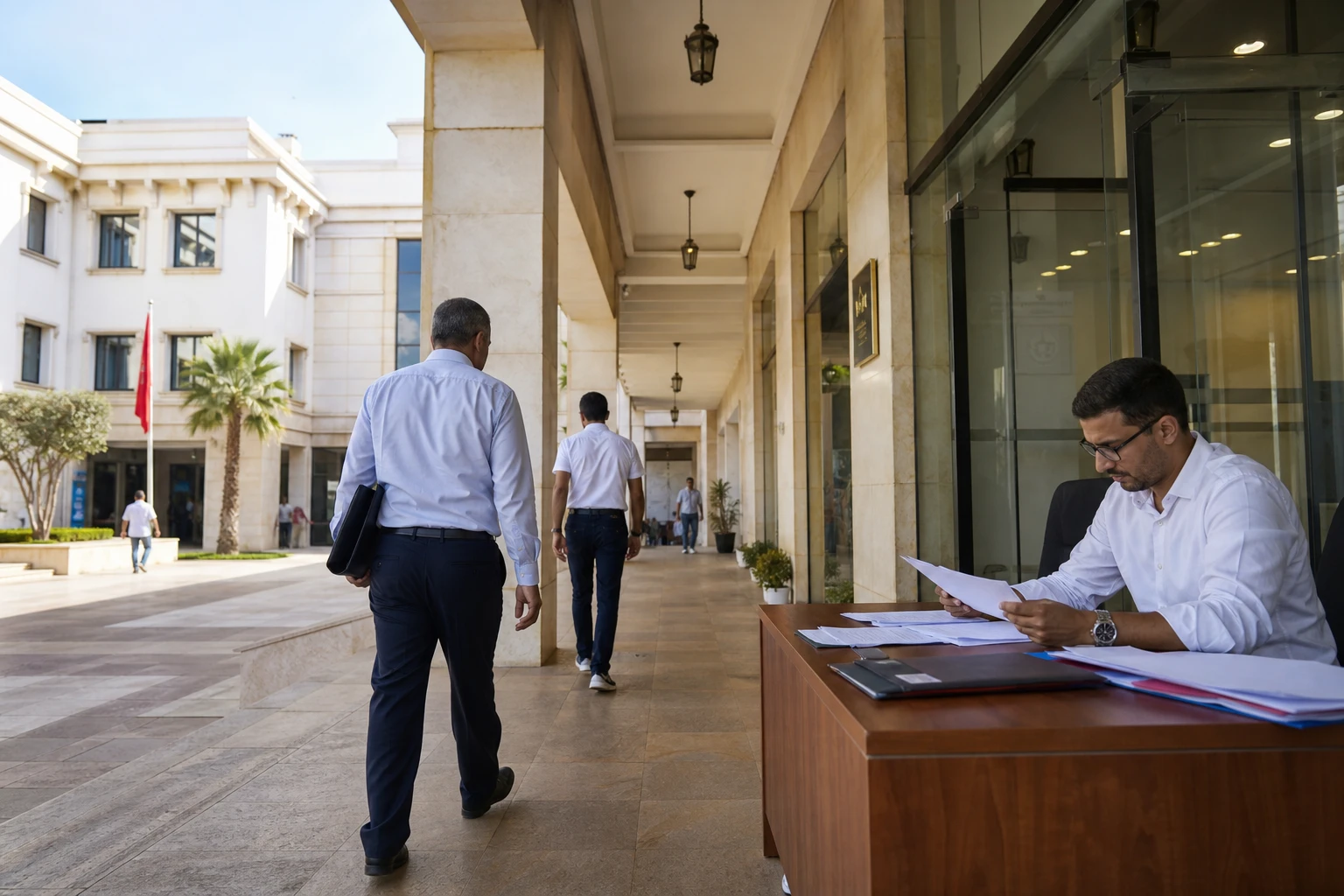
In Tangier, a judicial investigation into allegedly irregular ballot papers has now reached the top of the municipal administration. Mayor Mounir Laymouri’s placement in police custody comes days after Morocco’s legislative elections on 23 September 2026, which were won nationally by his party, the Authenticity and Modernity Party (PAM).
Investigation launched at a polling station
The King’s Prosecutor General at the Tangier Court of Appeal ordered Mounir Laymouri’s placement in police custody on Monday 28 September. The mayor was arrested at Tangier Ibn Battuta Airport on his return from Spain, after several hours of questioning.
The investigation concerns ballot papers seized on 23 September near Al Qods school, in the Casabarata district. Authorities are seeking to establish their origin, their intended destination and any potential responsibility for their presence around the polling station.
The case also involves several other people. Officials responsible for overseeing electoral operations are among those arrested, according to several Moroccan media outlets. Initial reports said five people had been placed in police custody. Some of those brought before the public prosecutor are said to have subsequently been remanded in custody pending further investigation.
At this stage, the allegations against the mayor do not prejudge his criminal responsibility. Police custody is an investigative measure. It is intended to allow magistrates and investigators to verify the facts, testimony and material evidence gathered in the case.
The mayor, who heads Tangier’s municipal council and also holds local responsibilities within the PAM, had previously denied any connection with the irregularities under investigation. He said his trip to Spain was for professional reasons and announced that he would return to Morocco.
National vote already marked by high abstention
The case comes at a politically sensitive moment for Morocco. The 23 September legislative elections put the PAM in first place with 97 of the 395 seats in the House of Representatives. The National Rally of Independents (RNI) won 66 seats, ahead of Istiqlal, which took 65.
The final results confirmed provisional figures announced by the Interior Ministry. They were published after votes were counted by provincial and regional commissions, then submitted to the Constitutional Court. The results may still be challenged through the appeals provided for under electoral law.
National turnout stood at 38.02%. This is among the lowest levels recorded in recent Moroccan legislative elections. It reflects limited voter mobilisation, as the campaign was dominated by concerns over jobs, public services, housing and the cost of living.
In this context, any suspicion surrounding the conduct of the vote can extend beyond a single constituency. It also risks fuelling distrust of political parties and institutions, particularly among young people and in urban districts where abstention is already high.
The Interior Ministry has sent a central inspection commission to Tangier. This administrative procedure is separate from the judicial investigation. The former is to examine how the polling stations concerned operated and any possible organisational failings. The latter seeks to establish whether offences were committed and identify individual responsibility.
A test for the PAM and electoral trust
The case presents the PAM with an immediate political challenge. The party has come first in the national vote, but one of its most prominent local officials is now being questioned by the justice system. The party leadership will therefore have to let the investigation take its course while addressing questions about the conduct of its campaign in Tangier.
For residents, the stakes are concrete. Proceedings concerning ballot papers or the supervision of a polling station could call local results into question if irregularities are established and shown to have affected the outcome. However, the opening of an investigation alone does not imply that any result will be annulled.
The situation also illustrates the distinction between municipal and national responsibilities. Mounir Laymouri heads Tangier’s municipality, while the 23 September elections were held to renew the House of Representatives. Any judicial responsibility would therefore not, by itself, be enough to change the composition of parliament. A competent court would have to establish an irregularity affecting the vote or the constituency concerned.
Tangier holds a special place in Morocco’s economic trajectory. A port city oriented towards Europe, it is home to industrial, logistics, tourism and commercial activity. It is also marked by sharp differences between central districts, outlying areas and neighbourhoods linked to the informal economy. In this context, the credibility of local institutions directly affects the delivery of urban services and investment.
The Tangier case should also be viewed in a regional context. Morocco is not a member of the Economic Community of West African States (ECOWAS), but it maintains important political and economic ties with North Africa, the African Union and the Mediterranean region. The integrity of its electoral procedures therefore matters to its standing as a regional and continental partner.
What to watch next
The prosecutor’s next decisions will clarify the legal status of Mounir Laymouri and the other people questioned. Investigators will need to establish the chain of custody of the seized ballot papers, determine whether they were genuine or forged, and verify any possible link to a specific polling station.
The Interior Ministry’s inspection commission will, for its part, have to report on the failings found in Tangier. The publication of specific findings will be crucial to distinguishing an isolated offence from a wider problem in the organisation of the vote.
Beyond the fate of those facing prosecution, the case raises a central question for Moroccan public life: how can trust be restored as electoral participation declines and suspicions emerge in a major city? The answer will depend less on political statements than on the transparency of the proceedings, the speed of judicial decisions and the ability of institutions to explain their conclusions clearly.



