Algeria
 Egypt
 Libya
 Morocco
 Tunisia
 Benin
 Burkina Faso
 Cabo Verde
 Côte d'Ivoire
 Ghana
 Guinea
 Guinea-Bissau
 Liberia
 Mali
 Mauritania
 Niger
 Nigeria
 Senegal
 Sierra Leone
 The Gambia
 Togo
 Cameroon
 Central African Republic
 Chad
 DR Congo
 Equatorial Guinea
 Gabon
 Republic of the Congo
 São Tomé and Príncipe
 Burundi
 Comoros
 Djibouti
 Eritrea
 Ethiopia
 Kenya
 Madagascar
 Malawi
 Mauritius
 Mozambique
 Rwanda
 Seychelles
 Somalia
 South Sudan
 Tanzania
 Uganda
 Angola
 Botswana
 Eswatini
 Lesotho
 Namibia
 South Africa
 Zambia
 Zimbabwe
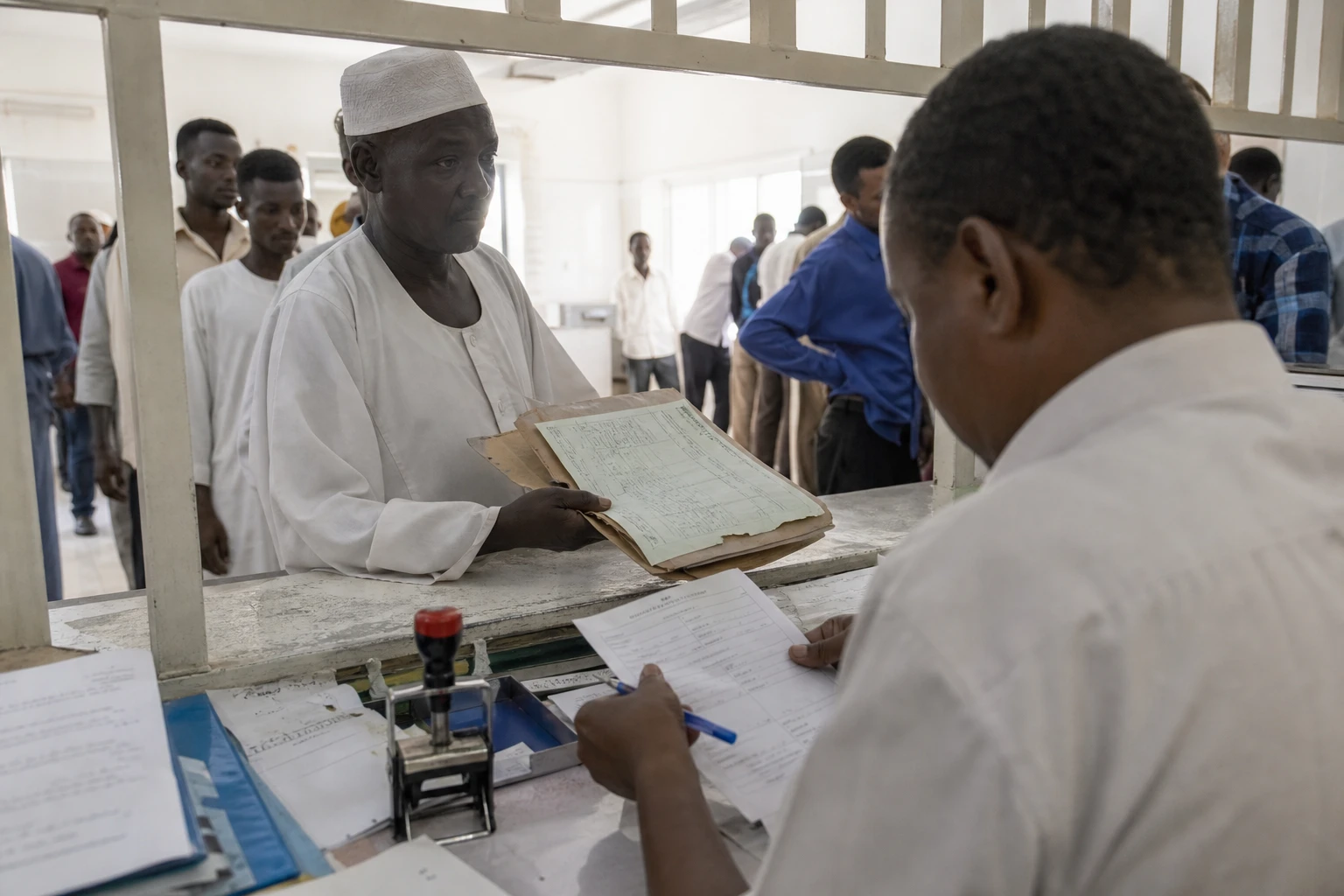
In western Sudan, gold sustains families as well as the war
In Sudan, an artisanal mine can become a means of survival in a matter of seconds, then a trap. That is what happened in West Kordofan, where the collapse of a gold-mining site underscored the fragility of an economy undermined by war, precarious work and the lack of meaningful oversight of informal mining operations.
The disaster comes in a country where gold remains one of the few sectors still capable of bringing in foreign currency. But this wealth circulates in a war economy, at a time when the conflict that erupted in April 2023 between the Sudanese army and the Rapid Support Forces has disrupted the state, fragmented areas of control and left artisanal mines without adequate oversight. The United Nations estimates that millions of Sudanese face acute food insecurity, while the war has displaced millions of people within the country and into neighbouring states.
In this context, informal mining attracts young men seeking an immediate income. The problem is not new. In June 2026, Sudanese authorities again announced measures to regulate traditional mining and curb smuggling, showing that the sector remains largely beyond regulation.
What is known about the disaster in West Kordofan
According to several corroborated sources, the accident happened on Tuesday 16 September 2026 at the Al-Zaraa mine, near Al-Nuhud, in an area controlled by the Rapid Support Forces. The death toll was later revised to at least 82, with dozens injured and people still missing. A local source cited by international media said rescuers were still at work with rudimentary equipment, lacking machinery to move the rock and earth. Another local source initially put the death toll at at least 67, showing that the count remained fluid as rescue operations continued.
The circumstances of the disaster say much about the sector. In Sudan’s artisanal mines, shafts are often very close together. When one tunnel gives way, others can follow. Kordofan’s terrain is also marked by dust, unstable ground and very rudimentary facilities. Miners interviewed at the site described spending an entire night trying to extract colleagues buried beneath the rubble, without heavy equipment.
Once again, the accident is not merely a local news story. It points to a sector in which the formal economy and the war economy often overlap. Kordofan, like other regions of western Sudan, is home to gold-mining sites that draw operators, intermediaries and armed networks. In a country at war, a mine becomes a workplace, a source of resources and a prize in the struggle for territorial control.
Why Sudanese gold remains a source of power
Sudan is one of the continent’s major gold producers. The state-owned Sudanese Mineral Resources Company announced production of 70 tonnes in 2025, a level described as the highest in five years. But several Sudanese sources also estimate that parallel trading channels remain extensive. A joint committee of the central bank and the state-owned mining company was set up in early 2026 to better monitor exports, a sign that the state is struggling to track the ore once it leaves artisanal sites.
That is the central issue: Sudanese gold does not just generate private income; it also fuels the war. A British government report said in July 2026 that illicit gold trading was supporting arms purchases and the activities of armed groups. The European Union subsequently adopted a decision banning the purchase and transfer of gold originating in Sudan and exported after 15 July 2026. These measures show that the issue extends beyond Sudan: it affects regional smuggling routes and international trading hubs.
Several investigations and analyses published in recent months have also highlighted routes out of the country through Libya, Chad, South Sudan and the United Arab Emirates. Although Emirati authorities deny any direct involvement, the movement of gold through parallel networks remains a major issue in Sudan’s war. The debate is therefore not only about the metal’s origin, but also about its potential to become a strategic resource for the warring parties.
A warning that extends beyond Kordofan
This latest collapse says something broader about Sudan at war: as the state retreats, artisanal mines become economic lifelines, but also highly dangerous places. Families send young people there because work is scarce elsewhere. Local authorities lose their ability to exercise control. Armed groups, meanwhile, find resources, tax revenues and sometimes logistical support there. The human cost falls on the most exposed workers, who are rarely protected and often invisible in official casualty figures.
The regional significance is clear. Across the Horn of Africa and the eastern Sahel, several conflicts show how artisanal mining, smuggling and insecurity feed into one another. Sudan’s case is also a reminder that mineral extraction can sustain public revenues, private networks and war supply chains at the same time. As long as site security, export controls and access to appropriate rescue services remain inadequate, further accidents of this kind are possible.
For Khartoum, now weakened by war and the fragmentation of the country, the question is no longer simply how to produce gold. It is who controls it, who benefits from it and who pays the price. In West Kordofan, that price has once again been measured in human lives.