Algeria
 Egypt
 Libya
 Morocco
 Tunisia
 Benin
 Burkina Faso
 Cabo Verde
 Côte d'Ivoire
 Ghana
 Guinea
 Guinea-Bissau
 Liberia
 Mali
 Mauritania
 Niger
 Nigeria
 Senegal
 Sierra Leone
 The Gambia
 Togo
 Cameroon
 Central African Republic
 Chad
 DR Congo
 Equatorial Guinea
 Gabon
 Republic of the Congo
 São Tomé and Príncipe
 Burundi
 Comoros
 Djibouti
 Eritrea
 Ethiopia
 Kenya
 Madagascar
 Malawi
 Mauritius
 Mozambique
 Rwanda
 Seychelles
 Somalia
 South Sudan
 Tanzania
 Uganda
 Angola
 Botswana
 Eswatini
 Lesotho
 Namibia
 South Africa
 Zambia
 Zimbabwe
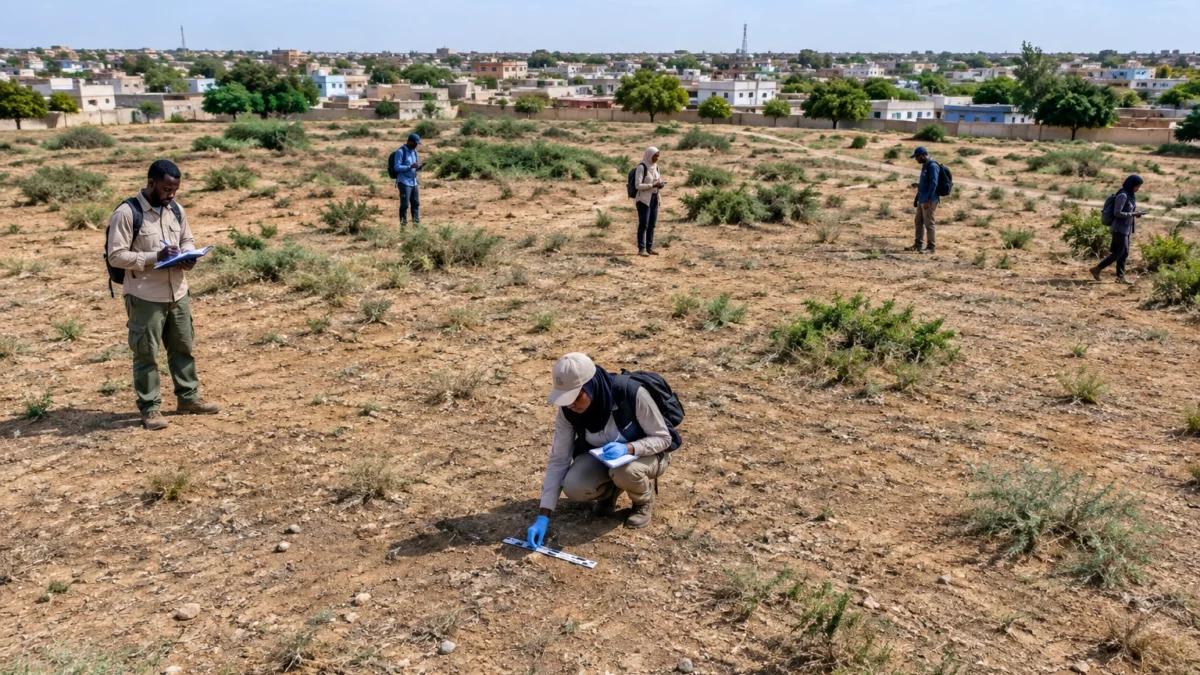
A military defection can shift front lines. On its own, it cannot establish what happened behind them. In Sudan, the defection announced on 23 November 2026 by a senior Rapid Support Forces (RSF) official has revived a crucial question: what is known about the civilians killed in El-Fasher, and how can it be verified?
A city captured after 18 months under siege
El-Fasher, the capital of North Darfur state, fell to the RSF on 26 October 2025, after a siege of about 18 months. The city’s capture marked a major milestone in a war that began in April 2023, pitting the Sudanese Armed Forces, led by Abdel Fattah al-Burhan, against the paramilitaries commanded by Mohamed Hamdan Daglo, known as Hemedti.
The conflict has also weakened civilian protection mechanisms and made it harder for journalists and humanitarian organisations to gain access. Sudan is a member of IGAD, the regional organisation for the Horn of Africa, and diplomatic efforts also involve the African Union and other partners. But mediation efforts have failed to secure a lasting ceasefire.
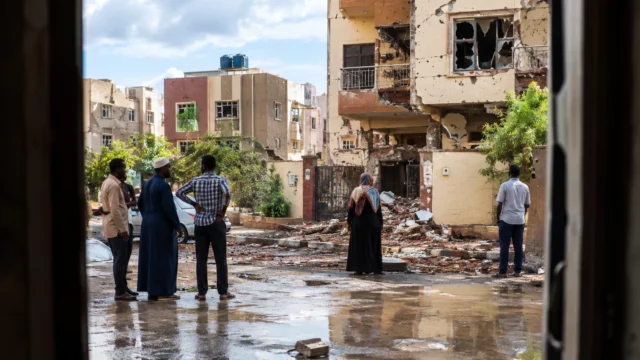
In El-Fasher, accounts gathered after the city fell describe executions, detentions and violence against civilians. In February 2026, the UN human rights office documented more than 6,000 deaths during the first three days of the final offensive, based on interviews with more than 140 victims and witnesses. This toll relates to that specific period, not to all the victims of the battle.
A serious allegation that needs evidence
On 23 November 2026, Major General Ammar Mohamed Zein Rabih arrived at Khartoum airport and announced that he was leaving the RSF and joining the armed forces. Sudan’s official news agency SUNA reported that he had apologised to the population and said he regretted his involvement with the paramilitaries.
In his remarks, Rabih claimed that mass graves containing thousands of bodies were located east of El-Fasher airport. He blamed the RSF for the deaths. This is a statement by an officer who has just changed sides, and should therefore be reported as an allegation, not as an independently established toll. The sources consulted do not confirm the precise location of the graves or the number cited.
This caution does not mean that the alleged violence is without foundation. An independent international mission mandated by the UN concluded in a report published in February 2026 that the atrocities committed during the capture of El-Fasher bore “the hallmarks of genocide”. The mission based its conclusion on a body of evidence and testimony; that finding does not, however, automatically validate every new claim about burial sites or their contents.
Independent evidence adds to the urgency of an investigation. Yale University’s Humanitarian Research Lab analysed satellite images taken after the city was captured. Sudan Tribune reported that researchers had identified about 150 clusters of objects consistent with human remains. This analysis is not a forensic identification of the victims and cannot, on its own, establish a definitive count.
Defections: military calculation and accountability
Defections by RSF officials can weaken the organisation, shift the balance of power and provide intelligence to the army. They can also serve the communications strategy of the side that welcomes them. SUNA’s statement presents Rabih’s return as a patriotic choice and urges other fighters to follow him. This official account offers no information about the circumstances of his defection.
In a war in which both sides are contesting control of territory and political legitimacy, defections are therefore not automatic proof of a collective break or collapse. Local reports sometimes point to financial arrangements accompanying defections, but the available evidence does not establish that any such deal involved Rabih. It would be just as imprudent to claim that there was none.
For families in El-Fasher, the issue is more immediate: finding the missing, discovering whether relatives are being detained and getting answers about burial sites. In a city under the control of an armed group and difficult to access, evidence-gathering depends on witness safety, site preservation and the possibility of independent investigations.
A case with implications beyond Darfur
Documenting alleged crimes also matters for any future negotiations. Protection guarantees, humanitarian access and the preservation of evidence are not technical details: they affect communities’ trust and the conditions for a return to civilian political life. Without safe access to the areas concerned, allegations risk spreading faster than they can be verified.
The regional implications are direct. Population movements, supply chains and rivalries over the conflict concern neighbouring countries as much as Sudanese actors. IGAD and the African Union are being called on to support a political settlement led by Sudanese people, while the UN documents violations and humanitarian needs. The immediate priority remains to secure independent access to El-Fasher and protect witnesses.
At this stage, UN findings and satellite analysis establish a documented context of mass violence. They do not confirm the specific figure Rabih cited for the mass graves. Distinguishing what has been verified from what remains to be established is essential: for families seeking the truth, and to prevent El-Fasher’s dead from becoming another argument in the war.