Algeria
 Egypt
 Libya
 Morocco
 Sudan
 Tunisia
 Benin
 Burkina Faso
 Cabo Verde
 Côte d'Ivoire
 Ghana
 Guinea
 Guinea-Bissau
 Liberia
 Mali
 Mauritania
 Niger
 Nigeria
 Senegal
 Sierra Leone
 The Gambia
 Togo
 Cameroon
 Central African Republic
 Chad
 DR Congo
 Equatorial Guinea
 Gabon
 Republic of the Congo
 São Tomé and Príncipe
 Burundi
 Comoros
 Djibouti
 Eritrea
 Kenya
 Madagascar
 Malawi
 Mauritius
 Mozambique
 Rwanda
 Seychelles
 Somalia
 South Sudan
 Tanzania
 Uganda
 Angola
 Botswana
 Eswatini
 Lesotho
 Namibia
 South Africa
 Zambia
 Zimbabwe
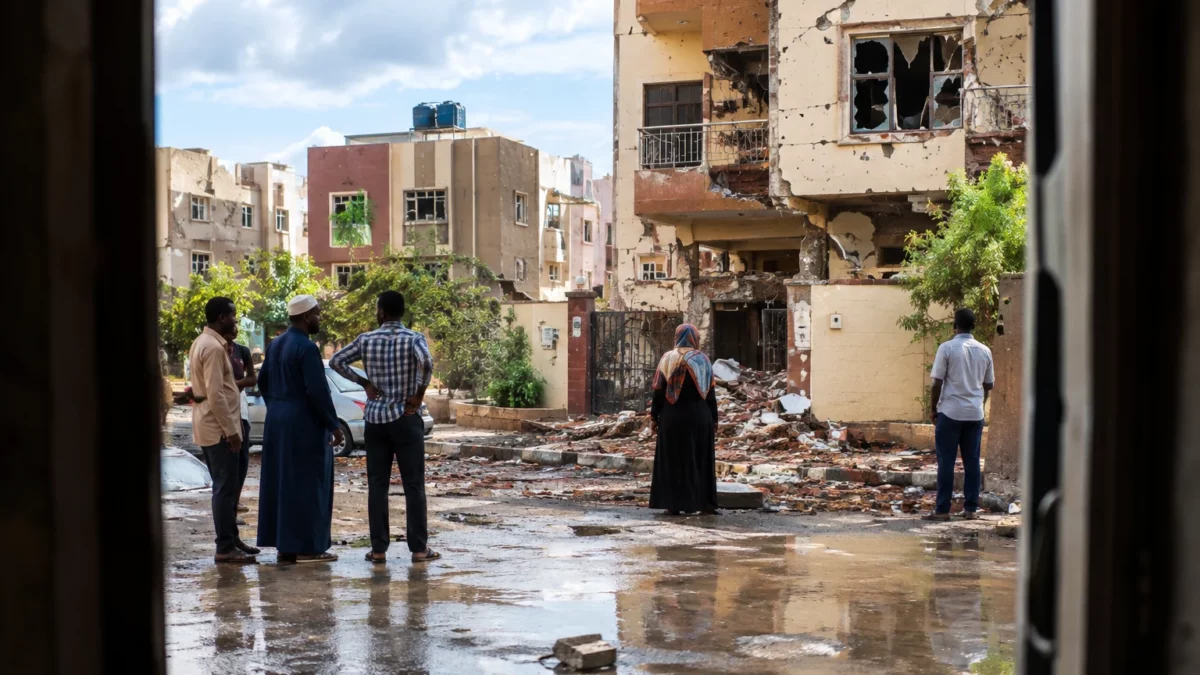
When drones hit residential neighbourhoods and a United Nations site, Sudan’s war is no longer confined to the front lines. It also threatens places where civilians are trying to rebuild their lives, even in the capital.
Khartoum targeted in a new attack
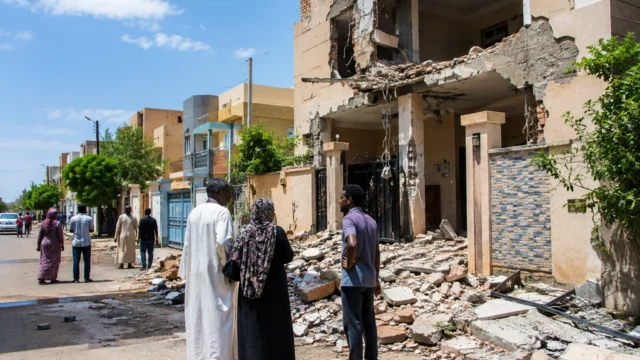
At dawn on Sunday 22 November 2026, drones struck areas of Khartoum, Sudan’s capital, damaging homes and a UN building. The organisation confirmed that members of its staff were inside. Its statement gave no detailed account of the damage to the UN site.
A report by Sudanese news agency Sudan Tribune reported at least four deaths in the metropolitan area. Associated Press, meanwhile, reported three people killed in Omdurman, a neighbouring city on the other side of the Nile, and damage to a UN site in Khartoum. These reports describe several strikes in the capital region; they do not establish a definitive, consolidated death toll.
Denise Brown, the UN humanitarian coordinator in Sudan, said the building hit was in a civilian neighbourhood. She stressed that civilians and humanitarian workers are not legitimate targets and that UN facilities enjoy special protection under international humanitarian law. Authorities had not released a full toll at the time of the first reports.
A source close to the Sudanese army accused Ethiopia of having served as the drones’ launch point. The claim has not been independently verified. Addis Ababa has rejected previous accusations from Khartoum that its territory was being used. The confirmed facts—strikes and damage—must therefore be distinguished from questions of responsibility and origin, which remain disputed.
A war striking far from the front lines
Since 15 April 2023, the Sudanese army has been fighting the Rapid Support Forces (RSF), a paramilitary group led by Mohamed Hamdan Dagalo, known as “Hemedti”. The conflict has shifted the balance of power from one city to another and spread well beyond Khartoum. Drones now allow the warring parties to strike infrastructure and areas far from ground fighting.
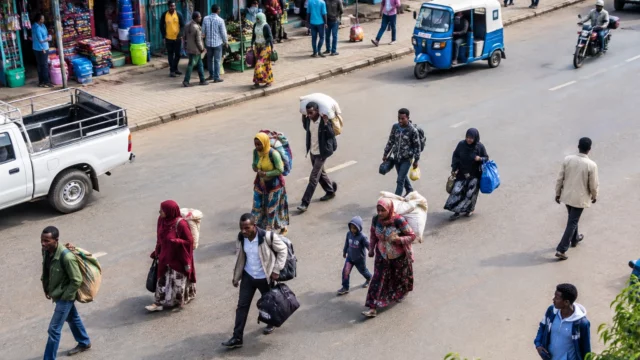
This shift affects very different populations. In the capital, residents of residential neighbourhoods live with the threat of strikes and deteriorating services. In rural areas, displaced families, markets, roads and essential facilities may be exposed without shelters or medical care nearby. Humanitarian workers, for their part, must keep aid flowing while protecting their staff and premises.
The growing number of attacks is also making it harder to return to daily life. A damaged home can leave a family without shelter; a strike near a public service can disrupt access to electricity, water or healthcare. The effects therefore extend beyond the point of impact. They weigh on travel, incomes and access to supplies, for households and small businesses alike.
Heavy tolls, responsibility still to be established
The attack on Khartoum comes as civilian casualties from drone strikes continue to mount. The UN Human Rights Office said it had documented more than 1,630 civilians killed in drone strikes between January and October 2026, out of a total of more than 2,230 civilian deaths verified during that period. These figures cover the whole country and deaths documented by the UN; they are not a comprehensive toll of all victims.
Days before the strikes in the capital, a drone attack in West Kordofan State reportedly killed civilians, including children. Associated Press relayed a toll attributed to a local human rights group, while other reports gave different figures. In the absence of full independent verification, these figures should remain attributed. The contrast between the regions nevertheless shows that civilians are exposed to attacks in rural areas as well as major cities.
The UN has documented strikes attributed to different parties to the conflict. Attribution must be examined on a case-by-case basis: accusations by the parties are not enough to establish who launched a drone or authorised an operation. This caution does not lessen the need for investigations. It prevents a military or political claim from being treated as established fact, particularly when civilians or protected infrastructure are hit.
Tensions extending beyond the two countries
The accusations exchanged between Khartoum and Addis Ababa add a regional dimension to the war. Sudan has already approached the UN Security Council and the African Union Peace and Security Council over attacks it attributes to drones launched from Ethiopia. Ethiopia disputes the accusations. The proximity of the border and the overlapping crises in the Horn of Africa mean that any escalation could further complicate diplomatic efforts.
IGAD, the regional organisation bringing together countries in the Horn of Africa and East Africa, as well as the African Union, are concerned by the risk of spillover. A deterioration in bilateral relations could narrow the scope for mediation and heighten tensions along the border. But the 22 November strike alone neither confirms Ethiopian involvement nor establishes a military escalation between states.
The next developments to watch are therefore concrete: a more precise civilian death toll, an investigation into the attack on the UN site, and the presentation of verifiable evidence about the drones’ origin. For Sudanese people, the immediate priority remains protecting residential neighbourhoods and ensuring aid can continue. For neighbouring countries and African institutions, the task is to prevent unresolved accusations from becoming a new front in the war.