Algeria
 Egypt
 Libya
 Morocco
 Tunisia
 Benin
 Burkina Faso
 Cabo Verde
 Côte d'Ivoire
 Ghana
 Guinea
 Guinea-Bissau
 Liberia
 Mali
 Mauritania
 Niger
 Nigeria
 Senegal
 Sierra Leone
 The Gambia
 Togo
 Cameroon
 Central African Republic
 Chad
 DR Congo
 Equatorial Guinea
 Gabon
 Republic of the Congo
 São Tomé and Príncipe
 Burundi
 Comoros
 Djibouti
 Eritrea
 Ethiopia
 Kenya
 Madagascar
 Malawi
 Mauritius
 Mozambique
 Rwanda
 Seychelles
 Somalia
 South Sudan
 Tanzania
 Uganda
 Angola
 Botswana
 Eswatini
 Lesotho
 Namibia
 South Africa
 Zambia
 Zimbabwe
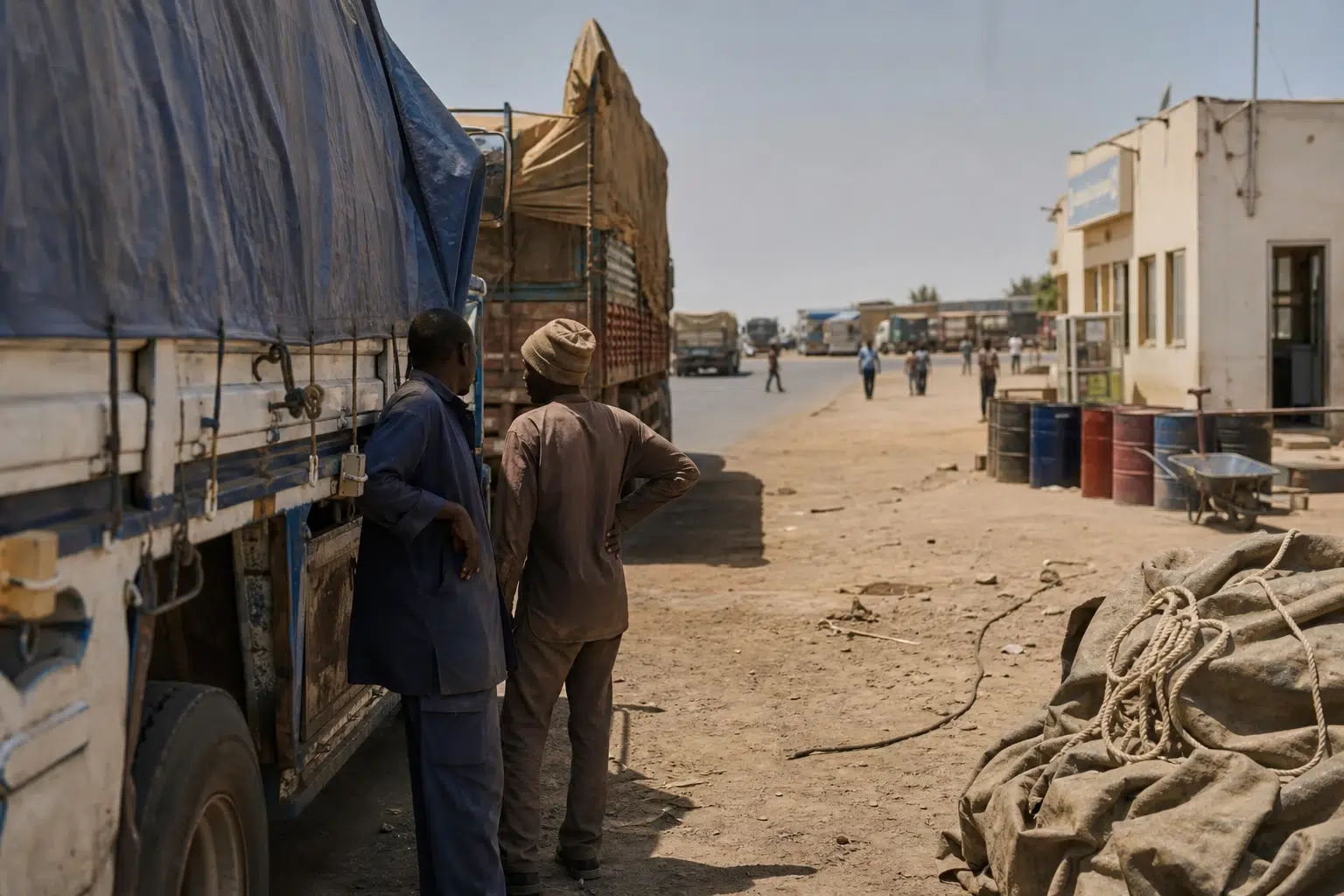
In North Kordofan, the front line matters more than the map
In Sudan, a military advance is never measured only in kilometres. It is also gauged by roads reopened, convoys blocked and pressure shifting from one region to another. In North Kordofan, the Sudanese army is trying to retake what the war has long wrested from it: the supply route linking Khartoum, El-Obeid and, further west, Darfur.
Since the conflict broke out in April 2023 between the Sudanese Armed Forces and the Rapid Support Forces, fighting has shifted the centre of gravity of the war from the heart of Khartoum to pivotal states such as Kordofan. This central-western region controls roads, depots and crossing points that matter as much to the regular army as to its opponents.
Breakthrough reported in eleven localities
On Thursday 17 September 2026, the Sudanese army and its allies in the Joint Forces said they had launched a large-scale operation in western North Kordofan. According to their statement, they took control of eleven areas previously held by the Rapid Support Forces, including Kajmar, Sharshar, Al-Baniyah al-Kurayniyah, Al-Qulay’at, Awlad Hazmah, Magwildat, Rayshan, Al-Qaa, Ghabat al-Laqad, Al-Kukaiti and the outskirts of Al-Mazroub.
Army spokesman Assem Awad Abdel Wahab said the paramilitaries had suffered heavy losses and that some had been pursued towards the borders of Darfur. Mutawakkil Ali Wakil, spokesman for the Joint Forces, said more than 60 combat vehicles in good condition had been seized and 120 others destroyed, as well as stocks of weapons, ammunition and military equipment recovered. These figures remain claims by pro-army forces and have not been independently confirmed.
The Rapid Support Forces had not publicly responded at the time of the announcements. In a conflict where each side puts forward its own account of the situation on the ground, the absence of a counterstatement is not enough to validate one protagonist’s version.
El-Obeid, Sodari and the corridor to Darfur
The choice of areas targeted is no accident. North Kordofan acts as a gate between the capital, El-Obeid and the desert roads leading to Darfur. In late June, then again in July and August, the army had already retaken Bara, Jabra al-Sheikh, Umm Sayala and other positions along the Rapid Support Forces’ supply route. Several sources described this as a manoeuvre intended to cut off the paramilitaries’ reinforcements and supplies before pushing west.
This sequence explains the military’s focus on Sodari, the largest locality in the area, and on the road that opens the way to Darfur. The stakes go beyond capturing a group of villages. They include control over the movement of fighters, fuel, ammunition and goods. For residents, this could mean fewer armed groups on some routes, but also a greater risk of reprisals, forced displacement and disruption to local markets.
The war has also crossed borders. This summer, the army carried out drone strikes against convoys said to be bringing reinforcements from Chad and Libya, according to military sources cited by the press. One of the strikes reportedly hit Chadian territory, around 100 kilometres from the Sudanese border. Here too, the warring parties accuse, deny or remain silent, and each account should be treated with caution.
What this push changes in Sudan’s war
On the ground, such an advance could alter the balance of power around El-Obeid, a major city in North Kordofan and a key logistical hub. If the army consolidates the localities it says it has taken, it will tighten the squeeze on the Rapid Support Forces’ supply lines and reduce their ability to move between the centre of the country and Darfur. But a reported conquest is not yet a lasting consolidation. Sudan’s war has already shown how quickly positions can change, especially when drones, artillery and desert mobility come into play.
For civilians, the impact is more immediate. Fighting around roads leads to supply disruptions, rising prices and new displacement. Areas retaken by the army can also become military transit zones, with daily life even more subject to checkpoints, searches and suspicion. In markets, transport and the informal economy, stability depends less on statements than on actual security along the routes.
At the regional level, Kordofan remains a barometer of Sudan’s war. Fighting there intersects with issues involving Darfur, the Chadian border, Libya and, more broadly, the security of the Sahel belt. For now, the international community is still debating a possible extension of the arms embargo beyond Darfur, while the fighting continues to spread. For Khartoum and neighbouring capitals, the next indicator to watch will be simple: can the army turn this breakthrough into lasting control, or will the front move even further west?