Egypt
 Libya
 Morocco
 Sudan
 Tunisia
 Benin
 Burkina Faso
 Cabo Verde
 Côte d'Ivoire
 Ghana
 Guinea
 Guinea-Bissau
 Liberia
 Mali
 Mauritania
 Niger
 Nigeria
 Senegal
 Sierra Leone
 The Gambia
 Togo
 Cameroon
 Central African Republic
 Chad
 DR Congo
 Equatorial Guinea
 Gabon
 Republic of the Congo
 São Tomé and Príncipe
 Burundi
 Comoros
 Djibouti
 Eritrea
 Ethiopia
 Kenya
 Madagascar
 Malawi
 Mauritius
 Mozambique
 Rwanda
 Seychelles
 Somalia
 South Sudan
 Tanzania
 Uganda
 Angola
 Botswana
 Eswatini
 Lesotho
 Namibia
 South Africa
 Zambia
 Zimbabwe
A mass regularisation that says more than the Ceuta crisis alone
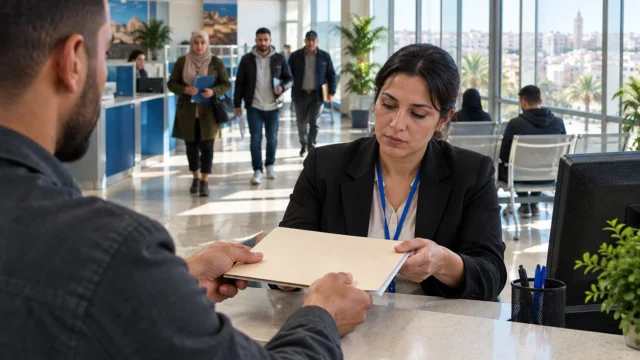
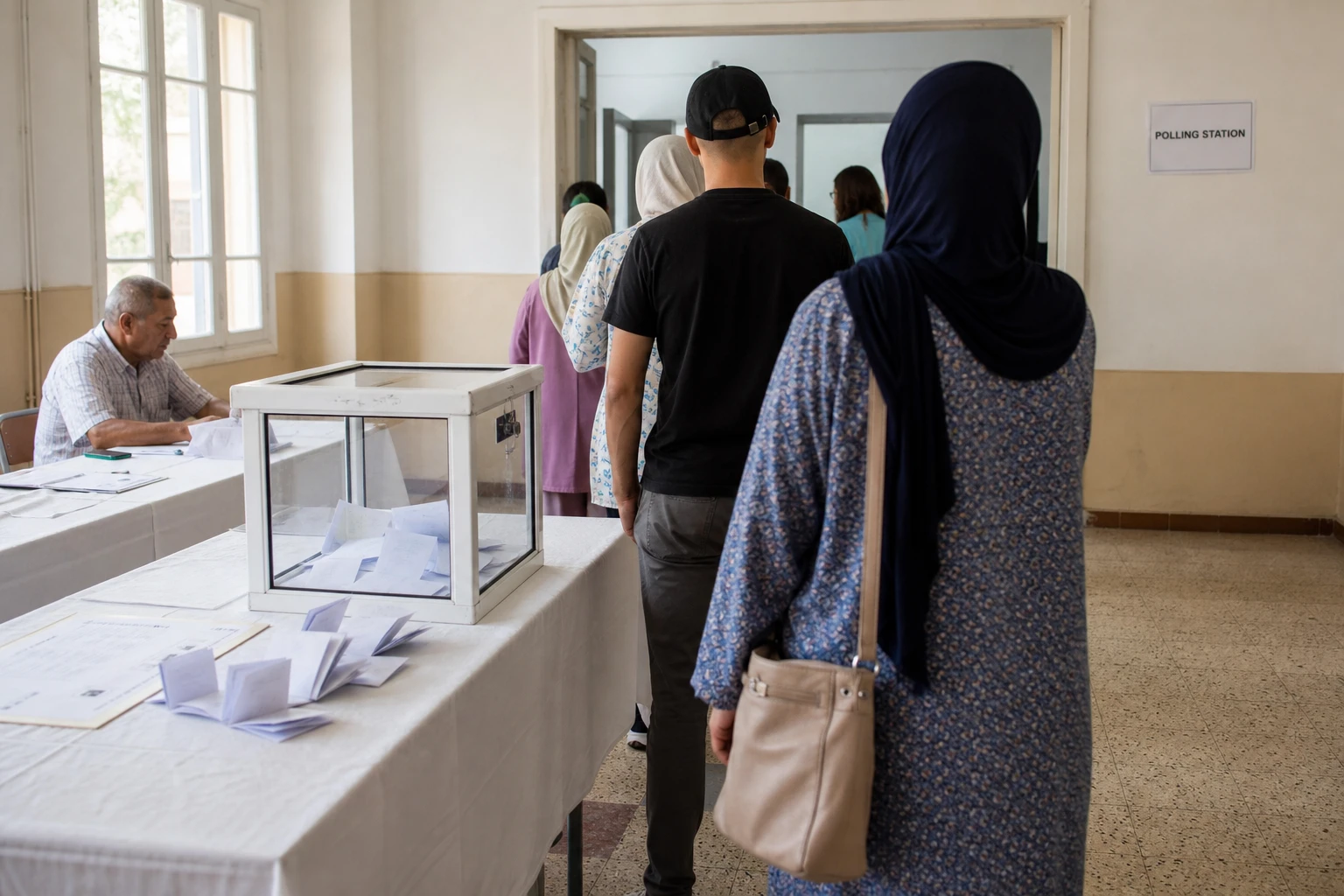
In Spain, the migration question is not confined to images of the border. It also plays out in offices, queues and administrative files. For thousands of Algerians living in the country, the extraordinary regularisation scheme launched in spring 2026 has above all become a necessary step towards a more stable, clearer and formally declared life.
The scale of the movement is considerable. Spain’s Ministry of Inclusion, Social Security and Migration recorded 1,174,978 applications as at 30 June 2026, far exceeding the initial target discussed in Madrid. The government opened the procedure on 16 April 2026, after the Council of Ministers adopted the legal framework on 14 April. Applications could be submitted until 30 June.
Of that total, 39,949 Algerian nationals had submitted an application, according to figures published by the Spanish ministry. Algeria thus ranks among the most represented nationalities, behind Morocco and Colombia but ahead of several other countries in Africa and Latin America.
Spain, now a place of settlement for part of the Algerian diaspora
To understand this figure, it is necessary to look beyond the narrow perspective of irregular arrivals. Spain is no longer merely a transit point towards northern Europe. For part of the Algerian diaspora, it has become a country in which to put down roots, with jobs, children in school and established family networks. The regularisation scheme was specifically designed for people present in Spain before 1 January 2026 who could prove continuous residence of at least five months.
Regularisation first grants a provisional right to reside and work. If the application is finally approved, it leads to a one-year permit, before a transition to the ordinary procedures under Spanish law. In other words, this is not simply an administrative document, but a concrete shift into the formal economy.
The figures also confirm that the Algerian presence is not limited to people without residence permits. As at 31 March 2026, 67,308 Algerian nationals held a valid residence permit in Spain, according to the Spanish National Statistics Institute. Their average age was 37; women accounted for 36% of this population and children under 16 for 16%.
This reality is particularly visible in the province of Alicante, where the Algerian community is long-established, well organised and economically active. A survey published by the local Chamber of Commerce recorded 19,831 residents of Algerian nationality in the province. At city level, foreign nationals make up a significant share of the population, and Algerians are among the most visible groups in neighbourhoods, businesses and family networks.
Alicante, Oran and the Mediterranean as a social space, not just a border
The link between Alicante and Algeria cannot be read solely through departures. It forms part of a broader human geography. In 2026, the Port of Alicante confirmed the strengthening of its maritime links with Oran and Béjaïa, in a development involving both passengers and freight. The port also says that regular ferry services connect Alicante with Oran.
This connection has historical depth. Alicante City Council notes that Alicante and Oran have been twin cities since 1985. Beyond the symbolism, the twinning reflects long-standing movement between the two shores of the western Mediterranean basin, shaped by work, trade, seasonal returns and family mobility.
It is against this backdrop that the volume of Algerian applications should be understood. For some applicants, the main difficulty was documentation. Obtaining a criminal-record certificate or having it legalised slowed the process. For foreign public documents, the Spanish authorities required consular legalisation or an apostille where one was available in the issuing country. Algeria, however, did not activate its apostille system until 9 July 2026, after the application deadline. Algeria’s Ministry of the Interior described the reform as a simplification of administrative procedures for citizens.
The timing gap mattered. During the weeks when applications were being submitted, many people still had to go through a more cumbersome chain of legalisation. The new Algerian system therefore came too late for the initial application, but may still help with supplementary documents and related procedures. The Spanish administration does, in fact, accept the regularisation of documents until 30 September 2026.
What this case says about Algeria, Spain and Mediterranean dynamics
For Algeria, the issue goes beyond consular administration. It touches on how the diaspora organises itself, works and maintains its ties with the country. Successful regularisation can secure incomes, facilitate remittances and reduce the informal economy. Conversely, an incomplete file leaves families in uncertainty, at risk of exploitation at work and long-term administrative insecurity.
For Spain, the debate is also economic. The ministry said that 159,097 new Social Security registrations were already linked to the process as at 30 June. This shows that administrative integration meets a labour-market need in a country where foreign employment contributes to growth and the functioning of entire sectors, from agriculture to services.
For the Mediterranean basin, finally, this case is a reminder of an often-forgotten truth: the border is not only a place of tension. It is also a space for movement, settlement and administrative negotiation. Crossings between eastern Algeria, Oran and the Spanish coast continue to shape enduring family trajectories. Ports, consulates and local administrations play a role there as important as that of grand speeches on migration.
What remains to be watched now is no longer the closure of the application window. It is how the files are actually processed, what proportion of Algerian applications pass scrutiny, and whether this regularisation is converted into long-term residence permits. For tens of thousands of people, the decisive developments will come in the months ahead, far from Ceuta’s dramatic scenes, but with a much deeper impact on everyday lives.