Algeria
 Egypt
 Morocco
 Sudan
 Tunisia
 Benin
 Burkina Faso
 Cabo Verde
 Côte d'Ivoire
 Ghana
 Guinea
 Guinea-Bissau
 Liberia
 Mali
 Mauritania
 Niger
 Nigeria
 Senegal
 Sierra Leone
 The Gambia
 Togo
 Cameroon
 Central African Republic
 Chad
 DR Congo
 Equatorial Guinea
 Gabon
 Republic of the Congo
 São Tomé and Príncipe
 Burundi
 Comoros
 Djibouti
 Eritrea
 Ethiopia
 Kenya
 Madagascar
 Malawi
 Mauritius
 Mozambique
 Rwanda
 Seychelles
 Somalia
 South Sudan
 Tanzania
 Uganda
 Angola
 Botswana
 Eswatini
 Lesotho
 Namibia
 South Africa
 Zambia
 Zimbabwe
A secondary front that speaks volumes
In southern Libya, a local attack often has implications beyond its military scope. It also reveals who really controls the roads, fuel, borders and tribal loyalties. In Fezzan, geography matters as much as armoured vehicles.
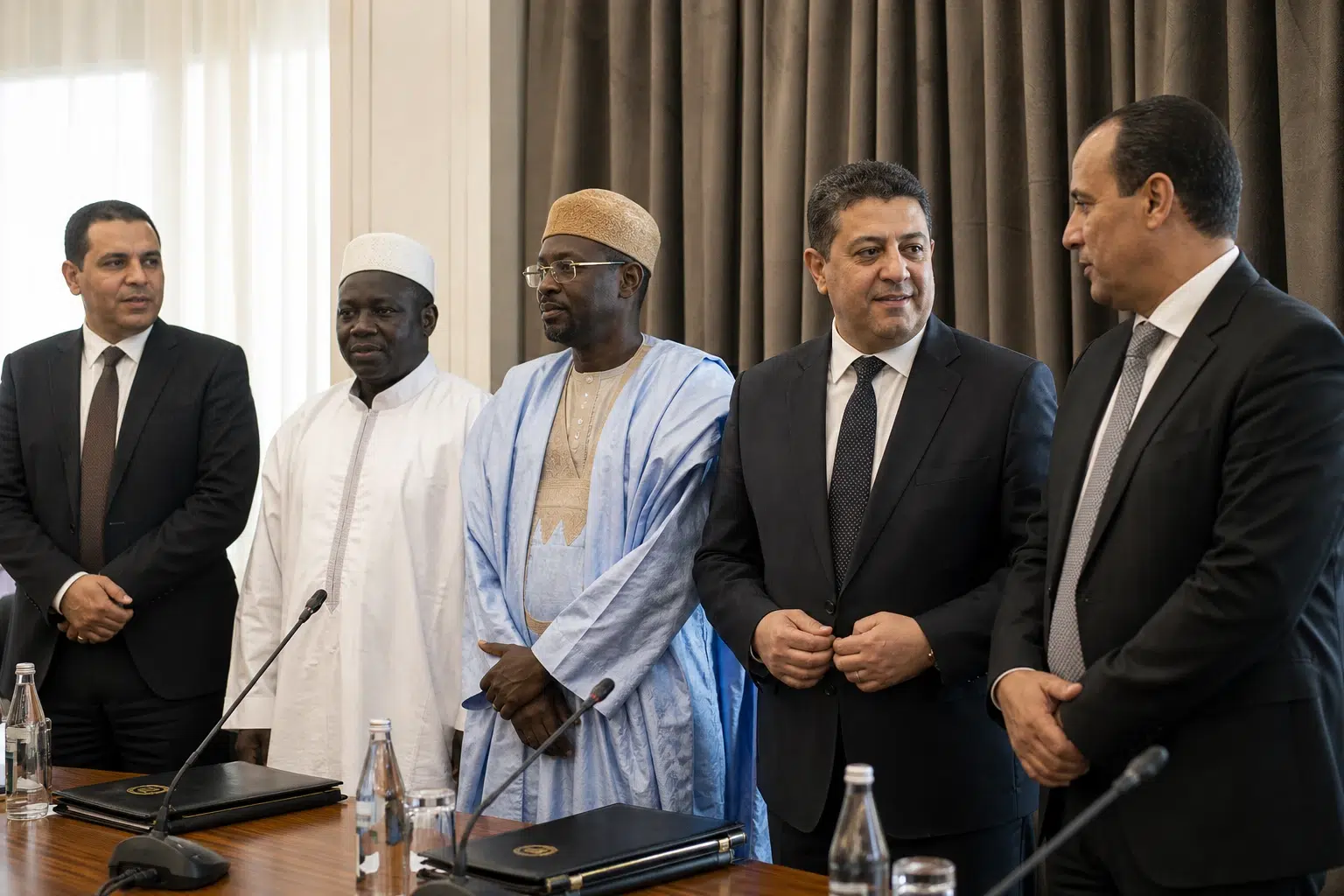
On 12 July 2026, a group calling itself the Operations Room for the Liberation of the South targeted a checkpoint linked to the Libyan National Army, near Al-Wigh base in the country’s far south, close to the borders with Niger and Chad. The attack came just as military officials from the eastern and western camps were meeting in Sirte to discuss rapprochement, under the auspices of the United Nations Support Mission in Libya. The contrast sums up Libya today: institutional progress at the top, and power dynamics that remain in flux on the ground.
Fezzan, a pivotal region and contested ground
Fezzan remains a decisive piece of the Libyan puzzle. This desert region in the south-west is criss-crossed by smuggling routes and armed movements, and is home to Toubou and Tuareg communities linked by networks that extend beyond national borders. In this part of the country, Tripoli and Benghazi are not the only forces that count. Local alliances, tribal leaders and informal economic networks often determine the real balance of power.
For several months, the Libyan authorities and the African Union have described a transition that remains unfinished. In June 2026, the African Union welcomed the signing of a roadmap between Libya’s main institutions, as the AU Peace and Security Council reaffirmed its support for the country’s unity and a Libyan-led political process. This sequence shows that security in the south cannot be separated from the national political process. On the contrary, it is one of its most sensitive tests.
What the July fighting reveals
According to the information available, the attack targeted an outpost on the approach to Al-Wigh, a strategic base that has been contested in the past. Images circulated by the attackers show equipment seized and soldiers taken prisoner. The group says it acted against the Haftar camp’s grip on the south, while the LNA describes the men as criminals threatening Fezzan’s stability. For now, the exact losses and total number of captives remain difficult to independently confirm, requiring caution over casualty figures.
The response was swift. The LNA announced pursuit operations in the desert, beyond some border areas, following a pattern seen in recent months. Independent analyses also note that southern Libya serves as a refuge and transit zone for cross-border armed groups, in an area where borders remain porous for communities living on both sides of Libya, Niger and Chad. That is precisely what makes the area so unstable: an attack there is rarely isolated; it is part of a network.
Haftar, Tripoli and the economics of control
For the Haftar camp, the challenge is not limited to repelling an assault. It is also about preserving the image of an authority capable of holding the south, a region that provides some of the country’s resources and political leverage. In February 2026, corroborated reports had already described the Haftar camp losing control of the Niger border area after an attack attributed to the same Toubou mobilisation network. July’s incident is therefore part of a series, not an isolated episode.
Tripoli is watching the situation with interest. The western capital is seeking to influence national balances of power, while Libya remains divided between rival institutions. The UN-recognised Government of National Unity also has every reason to show that no single actor holds the key to the south. In this kind of power struggle, every show of military strength becomes a political message. It speaks to negotiators, tribes, local markets and foreign partners.
A Libyan affair with reverberations across the Sahel
Southern Libya is not merely a periphery. It is a corridor. The movement of weapons, fuel, migrants and fighters intersects there with tensions in Niger, Chad, Sudan and the wider Sahel. This is also why outside actors project their rivalries into the region. Russian presences at some bases in the country, Western diplomatic support and suspicions of mutual interference all add to an already crowded environment. The 12 July attack is a reminder that Libya remains a crossroads between internal war and regional competition.
At the continental level, the Libyan issue therefore remains tied to three urgent African priorities: reunifying institutions, securing Sahelian borders and reviving a credible political process. The AU and the UN continue to apply pressure to prevent southern fronts from permanently stalling progress in Tripoli, Benghazi and Sirte. What happens next will depend on forthcoming military and political exchanges, as well as Libyan actors’ ability to turn a negotiated ceasefire into real authority on the ground.