
 Algeria
 Egypt
 Libya
 Morocco
 Sudan
 Tunisia
 Benin
 Burkina Faso
 Cabo Verde
 Côte d'Ivoire
 Ghana
 Guinea
 Guinea-Bissau
 Liberia
 Mali
 Mauritania
 Niger
 Nigeria
 Senegal
 Sierra Leone
 The Gambia
 Togo
 Cameroon
 Central African Republic
 Chad
 DR Congo
 Equatorial Guinea
 Gabon
 Republic of the Congo
 São Tomé and Príncipe
 Burundi
 Comoros
 Djibouti
 Eritrea
 Ethiopia
 Kenya
 Madagascar
 Malawi
 Mauritius
 Mozambique
 Rwanda
 Seychelles
 Somalia
 South Sudan
 Tanzania
 Uganda
 Angola
 Botswana
 Eswatini
 Lesotho
 Namibia
 Zambia
 Zimbabwe
Co-operation that goes beyond protocol
In a region where goods, workers and supply chains often cross borders, bilateral agreements quickly take on practical significance. Between Pretoria and Harare, the stakes are not only diplomatic. They also concern agriculture, industry, employment and how southern Africa wants to process more goods locally rather than simply export raw materials.
This development forms part of a broader regional framework: South Africa officially assumed the chair of the Council of Ministers of the Southern African Development Community, SADC, on 12 August 2026 in Durban, with a mandate running until August 2027. The regional organisation wants to strengthen integration, economic resilience and shared prosperity. In this context, relations with Zimbabwe serve as a practical test.
Sectoral agreements and a political signal
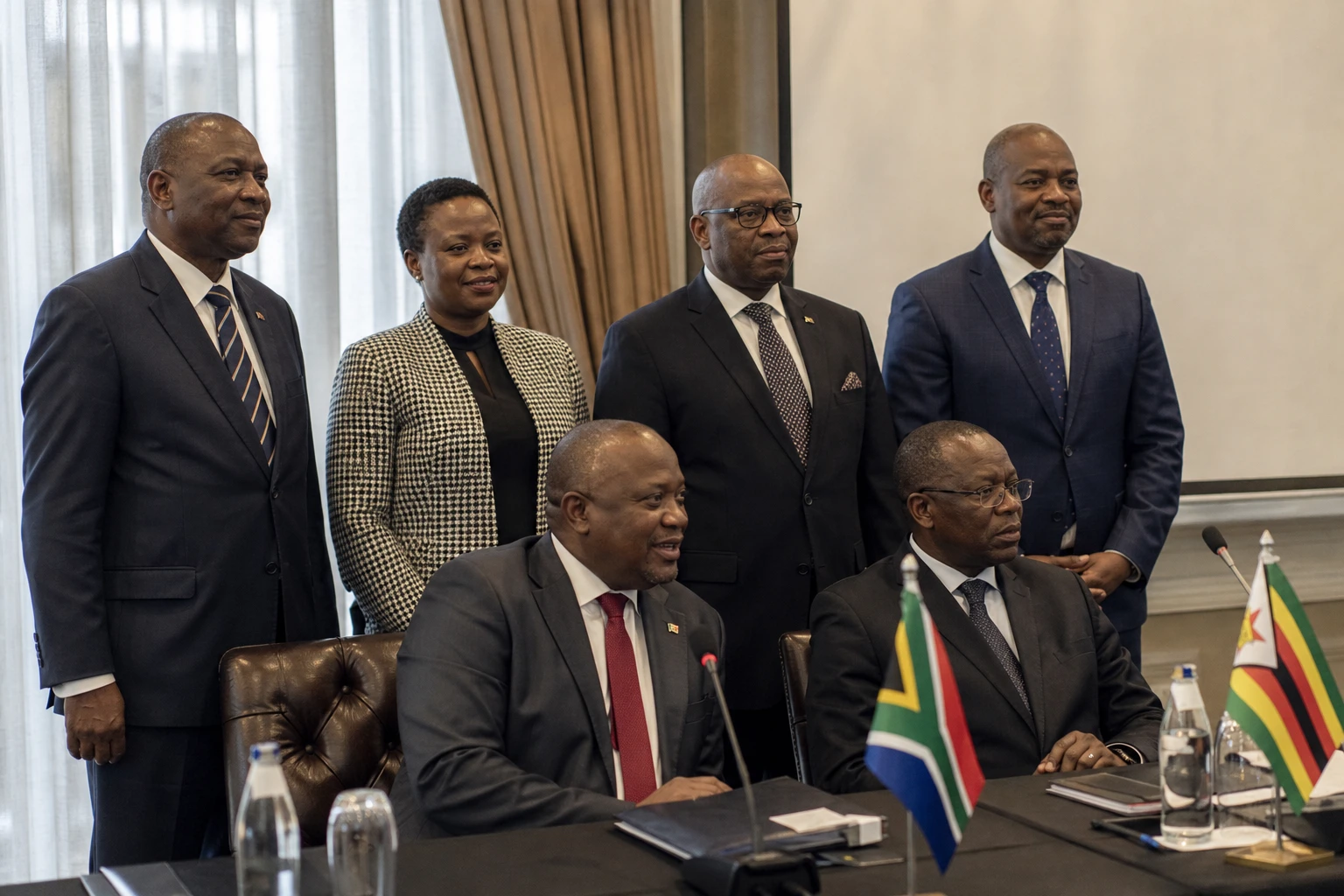
On 21 August 2026, Pretoria and Harare concluded the fourth session of their binational commission with the signing of several agreements and memorandums of understanding. The areas covered are specific: agriculture, correctional services, diplomacy, arts and culture, as well as a protocol on women’s empowerment and gender equality. South Africa’s presidency described these instruments as texts that must now be implemented to produce tangible results.
The move is as political as it is economic. The binational commission provides a regular working framework between two states with close historical, human and commercial ties. Exchanges between the two countries are not confined to diplomatic missions. They affect businesses, farmers, service sectors and families on both sides of the border.
At the preparatory ministerial meeting, South Africa’s Department of International Relations stressed a simple idea: the range of goods exchanged must widen and become more balanced. The same message was reiterated at the political summit, alongside a call to invest in infrastructure, develop natural resources locally and create more value on the continent.
Trade, the quiet lifeblood of the relationship
The figures show the scale of the ties. Bilateral trade between South Africa and Zimbabwe reached 81 billion rand in 2025, according to official South African communications. Pretoria also notes that Zimbabwe is its second-largest export destination on the African continent, while South Africa is Zimbabwe’s leading supplier from the rest of the world. In 2025, Zimbabwean agricultural exports to South Africa were estimated at about $202 million.
This intensity of trade reveals real interdependence, but also an imbalance. South African authorities cite a ratio of about eight to one in favour of South African exports. In other words, South Africa sells far more to Zimbabwe than it buys from it. In practice, Pretoria mainly exports processed goods: vehicles, equipment, industrial products and mining machinery. This is a central point, as it shows where value is added and where jobs are created.
For Zimbabwe, the relationship remains useful in the short term. The country is seeking markets, investment and better access to industrial inputs. But it also wants to avoid being confined to the role of a consumer market for its most industrialised neighbour. Zimbabwean officials are therefore emphasising technology transfers, local production and diversification across the sectors involved.
What Pretoria is seeking to consolidate
South Africa is doing more than signing texts with its neighbour. It is seeking to confirm its status as a regional hub. Its SADC chairmanship gives it a platform to advance three priorities: industrialisation, agricultural transformation and the upgrading of regional value chains. This is not abstract rhetoric. It is a way of saying that southern Africa cannot be content with trading raw materials without strengthening its productive capacity.
This approach aligns with the continental agenda advanced by the African Continental Free Trade Area, AfCFTA, which aims to facilitate trade between African countries. Pretoria already supports this framework and wants to secure more tangible benefits from it for its businesses. In this context, Zimbabwe matters because it is a neighbour, connected by road, and already heavily dependent on South African goods.
The issue also has a social dimension. Both governments have placed women and young people at the centre of their speeches. This may seem symbolic, but the choice is strategic. In economies where unemployment, informality and difficulties accessing credit weigh heavily, regional integration makes sense only if it leads to jobs, markets and more accessible services. The agreements on gender equality point in this direction, provided administrations translate them into measurable programmes.
A development to watch beyond Pretoria and Harare
This rapprochement says something broader about southern Africa. The region often moves forward through bilateral agreements before bringing them into a collective framework. The South Africa-Zimbabwe partnership is a good example. If the promises are delivered, it could serve as a model for other partnerships within SADC, particularly in agro-industry, critical minerals, logistics and services. If they remain at the signing stage, the political impact will quickly be limited.
The next test is twofold. On the one hand, South Africa’s SADC chairmanship will have to show that it can turn an ambition for integration into visible results. On the other, the two governments will be judged on implementation of the agreements announced in Pretoria. In southern Africa, as elsewhere on the continent, the value of a binational commission is rarely measured by the group photo. It is measured by the investment that comes in, the factories that operate and trade that becomes more balanced.



