
 Algeria
 Egypt
 Libya
 Morocco
 Sudan
 Tunisia
 Benin
 Burkina Faso
 Cabo Verde
 Côte d'Ivoire
 Ghana
 Guinea
 Guinea-Bissau
 Liberia
 Mali
 Mauritania
 Niger
 Nigeria
 Senegal
 Sierra Leone
 The Gambia
 Togo
 Cameroon
 Central African Republic
 Chad
 DR Congo
 Equatorial Guinea
 Gabon
 Republic of the Congo
 São Tomé and Príncipe
 Burundi
 Comoros
 Djibouti
 Eritrea
 Ethiopia
 Kenya
 Madagascar
 Malawi
 Mauritius
 Mozambique
 Rwanda
 Seychelles
 Somalia
 South Sudan
 Tanzania
 Uganda
 Angola
 Botswana
 Eswatini
 Lesotho
 Namibia
 Zambia
 Zimbabwe
Wheeling expands in a strained South African market
In South Africa, electricity is no longer just a matter of generation. It is also about transmission, contracts and cost control. For industrial companies, wheeling — the delivery of electricity bought from a private producer through existing networks — is becoming a tool for securing supply and competitiveness. The country is moving towards a more open market, while major consumers seek to reduce their exposure to tariff increases and constraints on the national grid.
This shift is part of a broader reform of South Africa’s energy sector. In 2024, Pretoria adopted a reform that paves the way for a competitive electricity market and strengthens the independent transmission architecture, with implementation gradually under way since 1 January 2025. At the same time, raising the licensing threshold for embedded generation to 100 MW has made it easier for new private projects to connect to the grid.
Industrial contract confirms major consumers’ appetite
Against this backdrop, the agreement between NOA and Idwala Industrial Holdings illustrates a clear trend: South African mining companies and industrial groups no longer want to wait for the system to stabilise fully before securing their electricity supply. Idwala, a producer of lime and calcium carbonates, will receive renewable electricity delivered by wheeling to its production sites. Exact volumes have not been disclosed publicly, but the company highlights more competitive tariffs and greater visibility in the face of Eskom’s price trajectory.
The message is clear. Heavy industrial sites, which often consume large amounts of energy, are seeking long-term contracts that can smooth costs. For Idwala, the demand is not just about the source of its electricity, but also about economic reliability. The model is attractive because it combines two objectives: greening supply and moving away from sole dependence on the incumbent operator.
This is not NOA’s first contract. In 2025, the group announced an annual supply of 288 GWh to the Siyanda Bakgatla platinum mine, followed by another agreement with Sibanye-Stillwater for about 401 GWh a year, with an additional 100 GWh of flexible supply. Other deals have also been struck in South Africa’s private market, where Discovery Green has signed several agreements with Afrox and Glencore. The signal is significant: wheeling is no longer a marginal mechanism. It is becoming a competitive segment in its own right.
Why mines are stepping up now
South African mines have a straightforward reason to act quickly. They need to secure production, remain exportable and contain energy costs that weigh heavily on their accounts. In a country where electricity has long been associated with outages, production stoppages and constant trade-offs, industrial companies prefer to lock in renewable volumes for several years rather than endure spot-market volatility and successive tariff revisions. Wheeling allows them to transmit this electricity without building their own dedicated lines.
The mining sector is also under climate and commercial pressure. Export markets are demanding greater carbon traceability, while major companies must present more credible emissions-reduction pathways. In this equation, renewable contracts serve compliance, reputation and operational management alike. South Africa’s new electricity rules and the rise of private systems give this trend a firmer legal basis than it had a few years ago.
The trend also affects other parts of the formal economy. Afrox, Glencore, property groups and industrial sites outside the mining sector are also seeking wheeling solutions. The logic is the same: secure energy, reduce exposure to price increases and stabilise investment plans. For businesses, the issue is therefore no longer just environmental. It is financial, logistical and strategic.
Eskom Green, regulation and the battle for grid access
As the private sector expands, Eskom is not standing still. In mid-July, the state-owned group obtained the necessary approvals to establish Eskom Green, a subsidiary dedicated to renewable energy that can raise its own financing. Its stated aim is to develop large-scale projects and provide major customers with a more continuous supply. This move changes the picture: the state is no longer just regulating the market, but is returning as a competing operator.
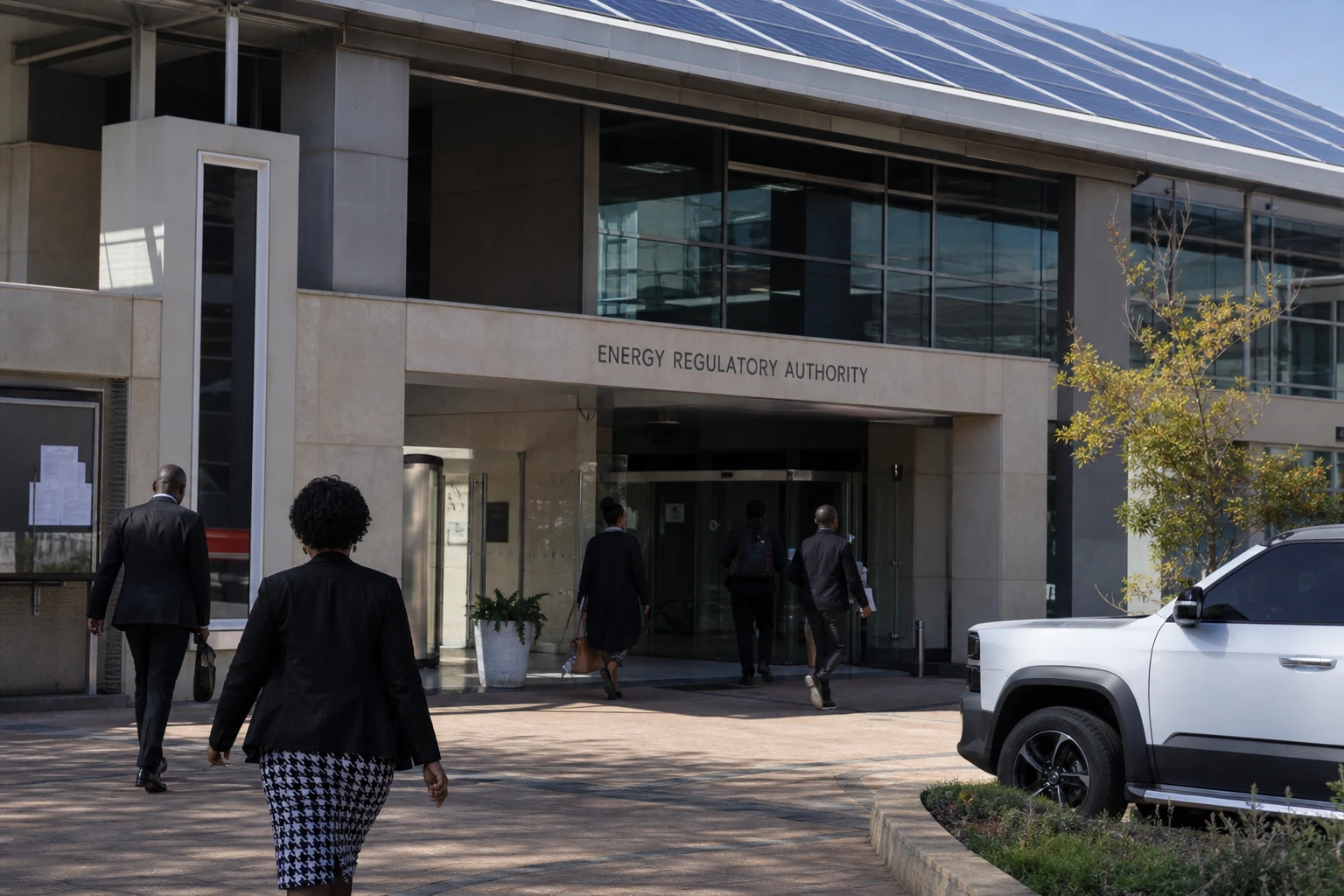
But this development also raises practical questions. South Africa’s grid cannot be expanded at will. Connection capacity, access rules and the allocation of customers between the public supplier and private players are becoming central issues. NERSA, the regulator, must oversee wheeling tariffs and market rules that are growing more complex as projects multiply. In practice, the country is moving from a vertically integrated monopoly to a more fragmented structure.
Recent energy conditions also help explain the acceleration. In March 2026, the South African government said the country had passed 300 days without load-shedding, followed by 413 days without rolling blackouts, according to an update published in July. This relative improvement does not remove the system’s vulnerabilities, but it allows private projects to develop in a somewhat more predictable environment than at the height of the crisis. For businesses, this reduces deployment risk without eliminating it.
A South African shift with implications for southern Africa
Beyond Johannesburg and Pretoria, South Africa’s wheeling market already matters across southern Africa. South Africa remains the largest electricity economy in the SADC region, the Southern African Development Community. As its market rules change, regional investors watch, compare and sometimes replicate them. What is being built here could serve as a model for other countries facing the same constraints: a congested grid, tariff pressure, the need to attract private capital and rising demand for clean energy.
This dynamic also has continental implications. The African Union has for several years promoted the idea of a more integrated electricity market, while the AfCFTA, the African Continental Free Trade Area, is increasing interest in more reliable energy corridors for industry. South Africa’s example shows that a wheeling model can support industrial competitiveness without waiting for a complete overhaul of the system. Above all, it underlines that a credible energy transition in Africa requires strong institutions, clear rules and a genuine capacity to transmit electricity to where it is needed.
In the coming months, two things will need to be watched: the ramp-up of Eskom Green and the ability of private operators to sign new contracts without blocking grid access. This is where the next stage of South Africa’s electricity market will be decided in practical terms.



