
 Algeria
 Egypt
 Libya
 Morocco
 Sudan
 Tunisia
 Benin
 Burkina Faso
 Cabo Verde
 Côte d'Ivoire
 Ghana
 Guinea
 Guinea-Bissau
 Liberia
 Mali
 Mauritania
 Niger
 Nigeria
 Senegal
 Sierra Leone
 The Gambia
 Togo
 Cameroon
 Central African Republic
 Chad
 DR Congo
 Equatorial Guinea
 Gabon
 Republic of the Congo
 São Tomé and Príncipe
 Burundi
 Comoros
 Djibouti
 Eritrea
 Ethiopia
 Kenya
 Madagascar
 Malawi
 Mauritius
 Mozambique
 Rwanda
 Seychelles
 Somalia
 South Sudan
 Tanzania
 Uganda
 Angola
 Botswana
 Eswatini
 Lesotho
 Namibia
 Zambia
 Zimbabwe
When the police themselves come under investigation
In South Africa, the question is no longer just whether gangs influence daily life. It is also how far they may have infiltrated the apparatus tasked with fighting them. This is the issue that prompted Pretoria to open a judicial commission into allegations of organised crime, political interference and corruption within the criminal justice system. The move comes in a country where trust in the police remains fragile and many crimes go unreported, often because victims believe the police will not act.
The issue goes beyond a dispute between two officials. It concerns the functioning of the state, the credibility of investigations and the ability of institutions to protect witnesses, magistrates and ordinary citizens. In southern Africa, where South Africa plays a central role in SADC, any lasting weakening of its security institutions reverberates far beyond Pretoria.
Serious allegations, followed by an institutional response
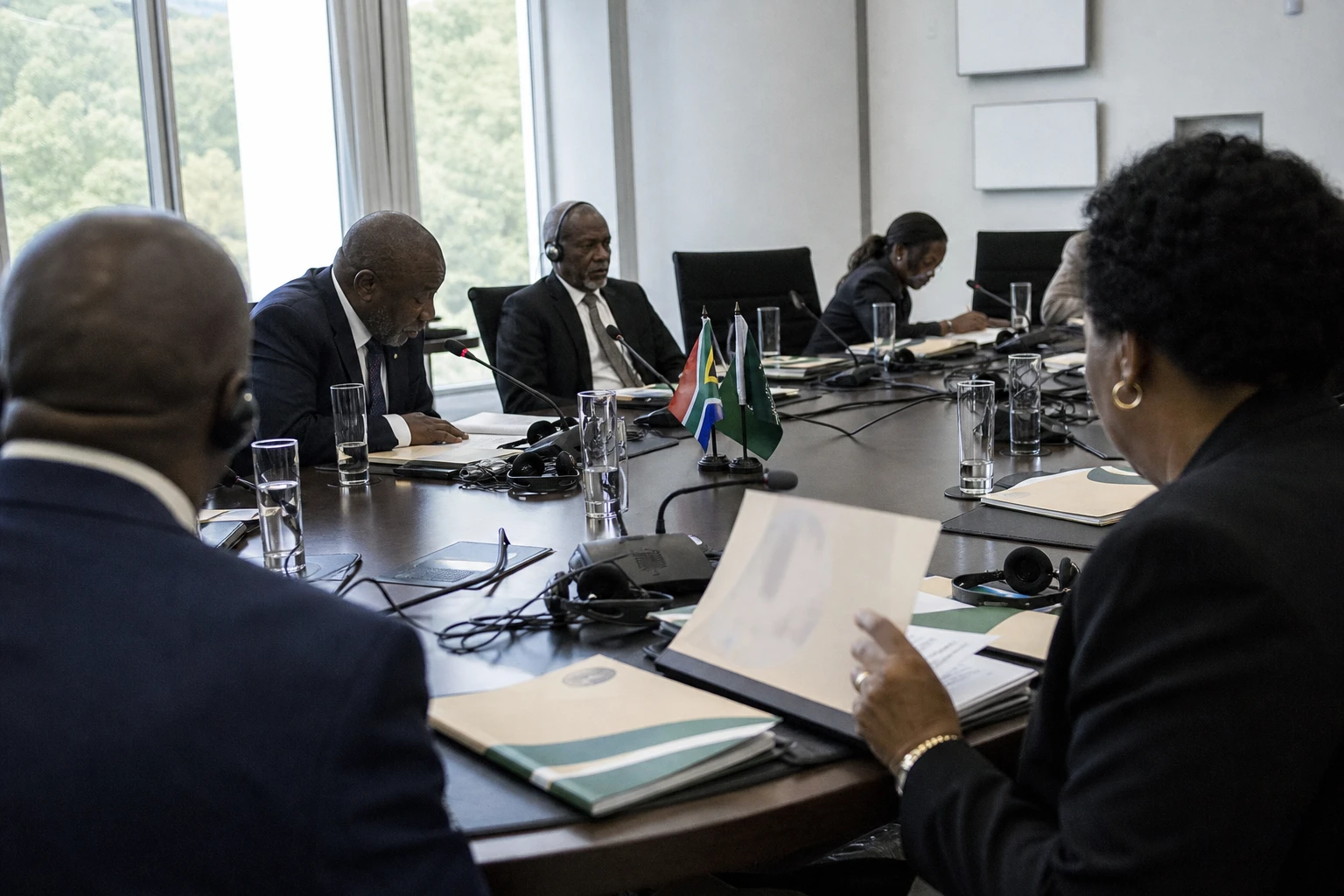
The case began on 6 July 2025, when KwaZulu-Natal provincial commissioner Nhlanhla Mkhwanazi made serious allegations against political and police officials public. He said criminal networks had allegedly received support at the highest levels, while some sensitive investigations had been obstructed or bypassed. The allegations led President Cyril Ramaphosa to place Police Minister Senzo Mchunu on immediate leave and establish a judicial commission of inquiry.
The inquiry was formalised through an official instrument published in the government gazette. The commission, chaired by former Constitutional Court judge Mbuyiseli Madlanga, also includes advocates Sesi Baloyi and Sandile Khumalo. Its mandate covers crime, political interference and corruption in the criminal justice system, with the option of recommending disciplinary or criminal proceedings where appropriate.
Public hearings began on 17 September 2025, following a preparatory phase. The timetable was later extended. In 2026, the presidency said the final report was due on 16 November 2026, following an extension granted to allow the commission to complete its examination of issues raised during the hearings.
What the case reveals about South Africa
The case sheds light on a broader reality. South Africa continues to face high levels of crime, including murders, violent robberies and repeated threats to public safety. Official figures from the SAPS and Statistics South Africa also point to a problem of trust. Households do not always report offences, and a significant proportion of citizens believe the police will not follow up. This lack of trust undermines investigations as well as cooperation between residents, police and the justice system.
KwaZulu-Natal has a particular place in this story. The province has often been described as a hotspot for political assassinations, local rivalries and illicit protection networks. When a senior provincial official publicly warns of alleged obstruction within the state, it sends a powerful signal. It says something about the balance of power between local police, the ministry, investigative units and the political apparatus. It also shows that crime is not just a street-level issue: it runs through administrations, appointments and decision-making channels.
The government faces a twofold challenge. On the one hand, it must show that the executive is not protecting anyone. On the other, it must ensure that an inquiry does not become a mere institutional performance. Criticism has focused on this point. In South Africa, a commission can shed light, document and make recommendations. But its findings are not automatically enforceable. What follows depends on the president, prosecutors, police and disciplinary authorities. In other words, judicial truth is not enough unless it leads to administrative and criminal action.
In this context, the Mkhwanazi-Mchunu case also has political significance. It tests the reform pledge Pretoria has made over several years, continuing the work on state capture and repeated commitments to fighting corruption. Above all, it tests the idea that a state can still address its own blind spots without waiting for a more serious crisis.
A South African case, but a continental warning
At continental level, the case matters to every administration facing the same dilemma: how to fight armed or mafia-style networks when part of the security system is suspected of being susceptible to their interests. South Africa is not alone in this situation, but it has more visible institutions, a more structured public debate and a more closely watched judicial system than many of its neighbours. What happens there often serves as a regional test.
For SADC, South Africa’s institutional stability also matters for economic reasons. A police force under challenge, obstructed investigations or a justice system suspected of weakness weigh on investment, logistics flows and security in major cities as well as mining and port areas. Conversely, a credible show of resolve could strengthen the belief that state reform remains possible, even amid violence and mistrust.
The next step to watch is therefore straightforward: what the hearings produce, and what the executive does with it. The interim report should shed light on the initial findings, but it is above all the concrete implementation of the recommendations that will show whether this commission marks the start of a cycle of institutional reform or joins the long list of warnings with no lasting effect.



