
 Algeria
 Egypt
 Libya
 Morocco
 Sudan
 Tunisia
 Benin
 Burkina Faso
 Cabo Verde
 Côte d'Ivoire
 Ghana
 Guinea
 Guinea-Bissau
 Liberia
 Mali
 Mauritania
 Niger
 Nigeria
 Senegal
 Sierra Leone
 The Gambia
 Togo
 Cameroon
 Central African Republic
 Chad
 DR Congo
 Equatorial Guinea
 Gabon
 Republic of the Congo
 São Tomé and Príncipe
 Burundi
 Comoros
 Djibouti
 Eritrea
 Ethiopia
 Kenya
 Madagascar
 Malawi
 Mauritius
 Mozambique
 Rwanda
 Seychelles
 Somalia
 South Sudan
 Tanzania
 Uganda
 Angola
 Botswana
 Eswatini
 Lesotho
 Namibia
 Zambia
 Zimbabwe
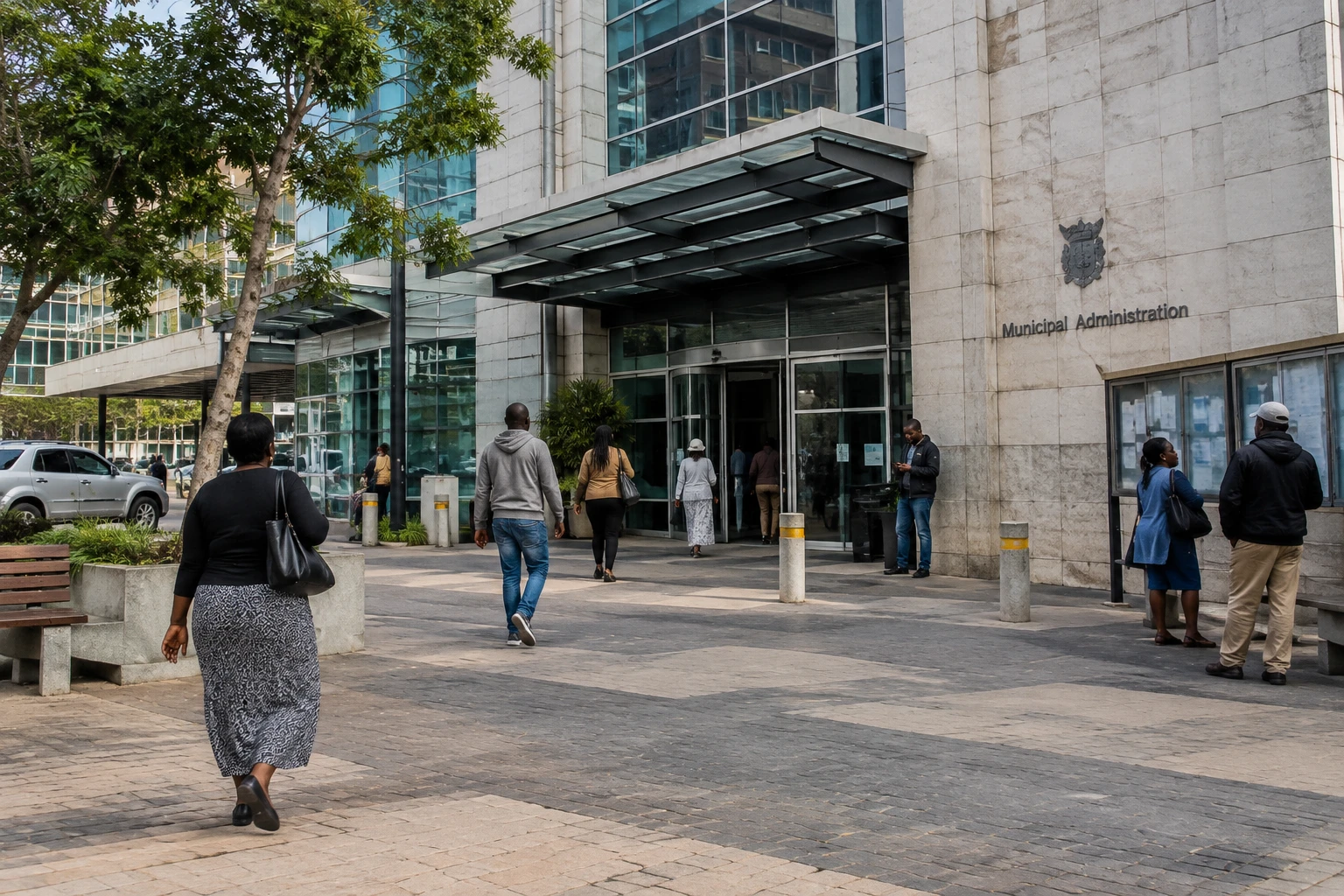
In several South African neighbourhoods, the municipal vote comes down to very practical matters: turning on a tap, using a toilet without fear or getting home safely. Just days before the vote, these expectations put local councils on the spot over their day-to-day responsibilities.
Local needs at the heart of the vote
South Africans will vote on Wednesday 4 November 2026 to elect new municipal councils. The date has been officially set by the authorities and confirmed by the Independent Electoral Commission (IEC), which is responsible for organising the vote. Municipal elections determine who runs local authorities responsible for many essential services.
In Cape Town, 53-year-old Ntombekhaya Makeleni says she stopped using the public toilets in her Khayelitsha neighbourhood after men tried to force the door while she was inside, before dawn. Since then, she has used a bucket, which she empties outside. Her experience illustrates the intersection of sanitation, security and access to public facilities. These incidents were reported in a dispatch carried by South African radio station East Coast Radio; on their own, they do not constitute a general measure of crime in the neighbourhood.
In Durban, in KwaZulu-Natal province, Nikesh Nunkoo describes water cuts which, he says, last from three days to two weeks in his area of Shallcross. Other residents quoted say they do not want to vote, convinced that their ballot will not change their daily lives. These accounts highlight a political challenge: distrust can be expressed both at the ballot box and through abstention.
Distrust that cuts across party lines
Discontent concerns water, electricity, the state of infrastructure, unemployment and security. Municipalities are responsible for some of these issues, but resolving them also depends on relations with provincial and national governments. Residents of informal settlements, which are often less well served, face different consequences from those living in areas where facilities and services are more accessible.
Political distrust can be measured, although opinion polls alone cannot predict the outcome of the vote. A survey published by Ipsos on 26 March 2026 found that 47% of South Africans polled felt that no party represented their views. Only 38% felt their municipality was doing its job properly. The same poll, however, found that 61% of eligible voters said they were looking forward to voting: disillusionment and participation can therefore coexist.
This discontent comes after an electoral turning point. In 2021, the African National Congress (ANC), in power since the end of apartheid, fell below the 50% mark in municipal elections for the first time. In 2024, it also lost its majority in the national parliament. The Democratic Alliance (DA), which governs Cape Town, is seeking to extend its influence, while the uMkhonto weSizwe (MK) party, associated with former president Jacob Zuma, is part of an increasingly fragmented political landscape.
Coalitions under pressure
Fragmentation is not confined to election campaigns. When no party holds a majority on a council, several parties must negotiate to form a coalition or support a minority administration. Such agreements can broaden representation, but they require ongoing compromises to pass budgets and local decisions. Their stability therefore has a direct bearing on municipal services.
A report by the Mapungubwe Institute for Strategic Reflection, cited in the material available, says that in February 2026, 74 municipalities were governed by coalitions or minority administrations. This figure should be treated as attributed to the institute: it has not been confirmed here by a second independent publication. It nevertheless suggests the scale of the political work that a lack of a majority can entail, without allowing the conclusion that all these administrations are equally unstable or ineffective.
The vote will also test participation. Turnout in the 2021 municipal elections was 46%, compared with 58.6% in the 2024 national and provincial elections, according to figures cited in the source material. These elections do not draw voters in the same way: their issues and campaigns differ. But low municipal-election turnout can give greater weight to the most engaged electorates, even as local decisions affect the entire population.
A South African issue, a regional signal
The campaign also reveals divisions that cannot be reduced to the performance of public services. Analysts quoted in reports point to the influence of political identities and history, particularly in historically black townships and DA strongholds. For young voters facing unemployment, the promise of local change can seem remote if it is not accompanied by job prospects and reliable access to services.
Across southern Africa, South Africa’s municipal elections will be watched as a test of parties’ ability to govern in a pluralistic system and respond to local demands. South Africa is a member of the Southern African Development Community (SADC), a regional co-operation organisation; the vote does not directly determine its foreign policy, but the quality of its municipal governance feeds into the wider debate about democratic trust.
For voters, however, the immediate stakes will remain local: whether elected teams can improve water distribution, sanitation, infrastructure maintenance and the safety of public spaces. The results on 4 November, followed by coalition negotiations where no party wins a majority, will show whether frustration translates into a change of power, increased abstention or new alliances.
The election date has been confirmed by the South African government and the South African Government News Agency. The opinion data were published by Ipsos South Africa. The accounts from Khayelitsha and Durban were carried by East Coast Radio.



