
 Algeria
 Egypt
 Libya
 Morocco
 Sudan
 Tunisia
 Benin
 Burkina Faso
 Cabo Verde
 Côte d'Ivoire
 Ghana
 Guinea
 Guinea-Bissau
 Liberia
 Mali
 Mauritania
 Niger
 Nigeria
 Senegal
 Sierra Leone
 The Gambia
 Togo
 Cameroon
 Central African Republic
 Chad
 DR Congo
 Equatorial Guinea
 Gabon
 Republic of the Congo
 São Tomé and Príncipe
 Burundi
 Comoros
 Djibouti
 Eritrea
 Ethiopia
 Kenya
 Madagascar
 Malawi
 Mauritius
 Mozambique
 Rwanda
 Seychelles
 Somalia
 South Sudan
 Tanzania
 Uganda
 Angola
 Botswana
 Eswatini
 Lesotho
 Namibia
 Zambia
 Zimbabwe
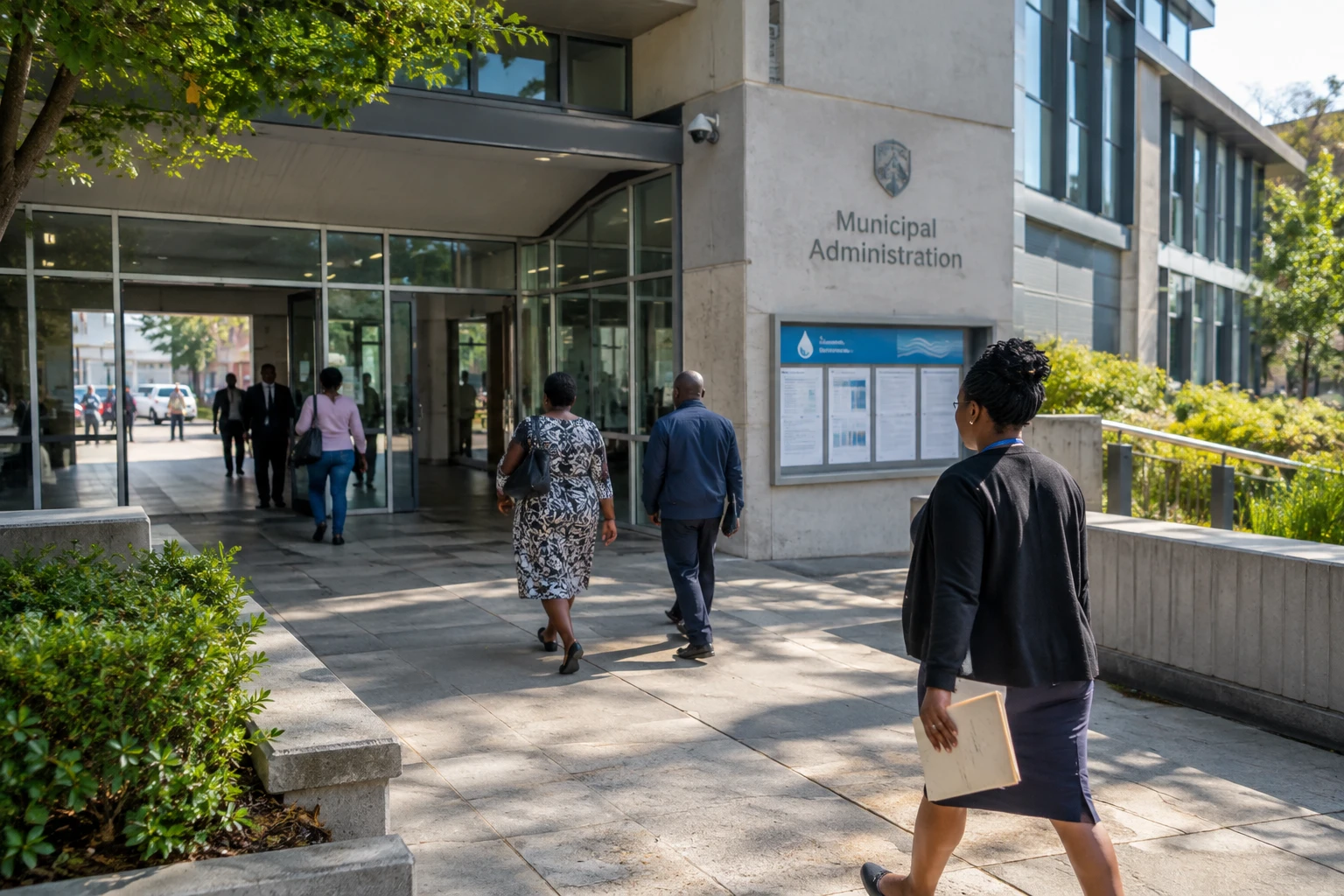
In Johannesburg, municipal choices are measured against everyday realities: water flowing from the tap, rubbish being collected, roads being maintained. The vote on Wednesday 4 November 2026 puts these services at the centre of a major political test for South Africa, as the ANC, in national power since the end of apartheid, faces more fragmented competition.
Municipal councils at the heart of everyday life
Local elections do not directly elect mayors. Voters choose municipal councillors, who then elect the executives responsible for running cities and municipalities. These authorities organise, among other things, water supply, sanitation, road maintenance and rubbish collection.
The vote renews the councils of the eight major metropolitan municipalities, 44 districts and 205 local municipalities, according to data released before polling. A total of 546 parties were contesting the election, President Cyril Ramaphosa said after voting in Johannesburg. The figure illustrates the range of political choices, but also the difficulty for any party of governing alone in several areas.
The date of 4 November was set by the minister responsible for Cooperative Governance and Traditional Affairs, then confirmed by the Electoral Commission of South Africa. The institution oversees the organisation of the vote and the counting. Final results have not been established in the information cross-checked here, so it is too early to attribute municipal gains or losses.
Voters went to the polls amid discontent over the quality of services. In Alexandra, a Johannesburg neighbourhood, residents spoke of damaged roads, sewage leaks and uncollected rubbish. Water cuts had also preceded the vote in some parts of the metropolitan area. These local accounts do not describe every municipality, but show why management issues weigh directly on voters’ choices.
A dominant party faces a new landscape
Since the first democratic elections in 1994, the African National Congress (ANC) has long dominated national politics. Its decline has nevertheless accelerated. In 2021, the party fell below the 50% mark in municipal elections for the first time since the end of apartheid. In 2024, it lost its majority in parliament and formed a government of national unity with the Democratic Alliance (DA) and other parties.
This national co-operation has not ended rivalry in the cities. At municipal level, parties compete for control of budgets, services and executive posts. The 2026 vote is therefore an indicator of their local presence, as well as of the ANC’s ability to retain its electoral base after two successive setbacks.
The challengers are not limited to the DA. The uMkhonto weSizwe (MK) party, led by former president Jacob Zuma, is taking part in municipal elections for the first time. It made a breakthrough in the 2024 national elections and has significant support in KwaZulu-Natal, Zuma’s home province. The Economic Freedom Fighters (EFF), ActionSA and numerous local parties are also seeking to turn their electoral presence into municipal seats.
In Johannesburg, the stakes go beyond symbolism. The city, home to nearly five million people and a large share of the country’s corporate headquarters, is governed by fragile coalitions. It has had nine mayors in ten years. This political instability has complicated the continuity of decision-making and unfolded against a backdrop of infrastructure and financial management problems. Local results will determine the composition of the council; elected councillors will then choose the mayor.
Different expectations across communities
For households, municipal politics is often judged by tangible services. Water supply difficulties affect both poorer neighbourhoods and wealthier areas, although people’s means of adapting differ. Families able to buy water or turn to private solutions do not experience the same consequences as those entirely dependent on the public network.
The issues also vary between metropolitan areas, small towns and rural areas. Large cities must meet high demand and manage extensive infrastructure. In less densely populated municipalities, access to services and administrative capacity pose different challenges. Everywhere, councils must balance residents’ needs, available resources and the stability of coalitions.
National debates have also featured in the campaigns, particularly on unemployment, crime and immigration. These issues can mobilise voters, but they do not all fall directly within municipal responsibilities. The distinction matters: local councillors can act on certain services and regulations, while migration and national security policies fall under other levels of government.
A signal to watch in southern Africa
South Africa’s vote is of interest to the Southern African Development Community (SADC), a regional organisation bringing together southern African states and promoting, among other things, political and economic co-operation. South Africa’s regional weight means that institutional changes there have significance beyond its borders. But a municipal election does not, on its own, determine the country’s foreign policy or regional direction.
The next indicator will be the distribution of seats and the formation of municipal executives. Councils without a clear majority could prolong negotiations and make governance more difficult. Conversely, a stable majority would not automatically guarantee better services: that also depends on budgets, administrative skills and the implementation of decisions.
For the ANC, the results will show whether its national decline is reflected more strongly in municipalities. For its opponents, they will measure their ability to govern beyond the campaign and build lasting alliances. For residents, the test will begin after the count: elected officials will have to respond, neighbourhood by neighbourhood, to the expectations that shaped this vote.



