
 Algeria
 Egypt
 Libya
 Morocco
 Sudan
 Tunisia
 Benin
 Burkina Faso
 Cabo Verde
 Côte d'Ivoire
 Ghana
 Guinea
 Guinea-Bissau
 Liberia
 Mali
 Mauritania
 Niger
 Nigeria
 Senegal
 Sierra Leone
 The Gambia
 Togo
 Cameroon
 Central African Republic
 Chad
 DR Congo
 Equatorial Guinea
 Gabon
 Republic of the Congo
 São Tomé and Príncipe
 Burundi
 Comoros
 Djibouti
 Eritrea
 Ethiopia
 Kenya
 Madagascar
 Malawi
 Mauritius
 Mozambique
 Rwanda
 Seychelles
 Somalia
 South Sudan
 Tanzania
 Uganda
 Angola
 Botswana
 Eswatini
 Lesotho
 Namibia
 Zambia
 Zimbabwe
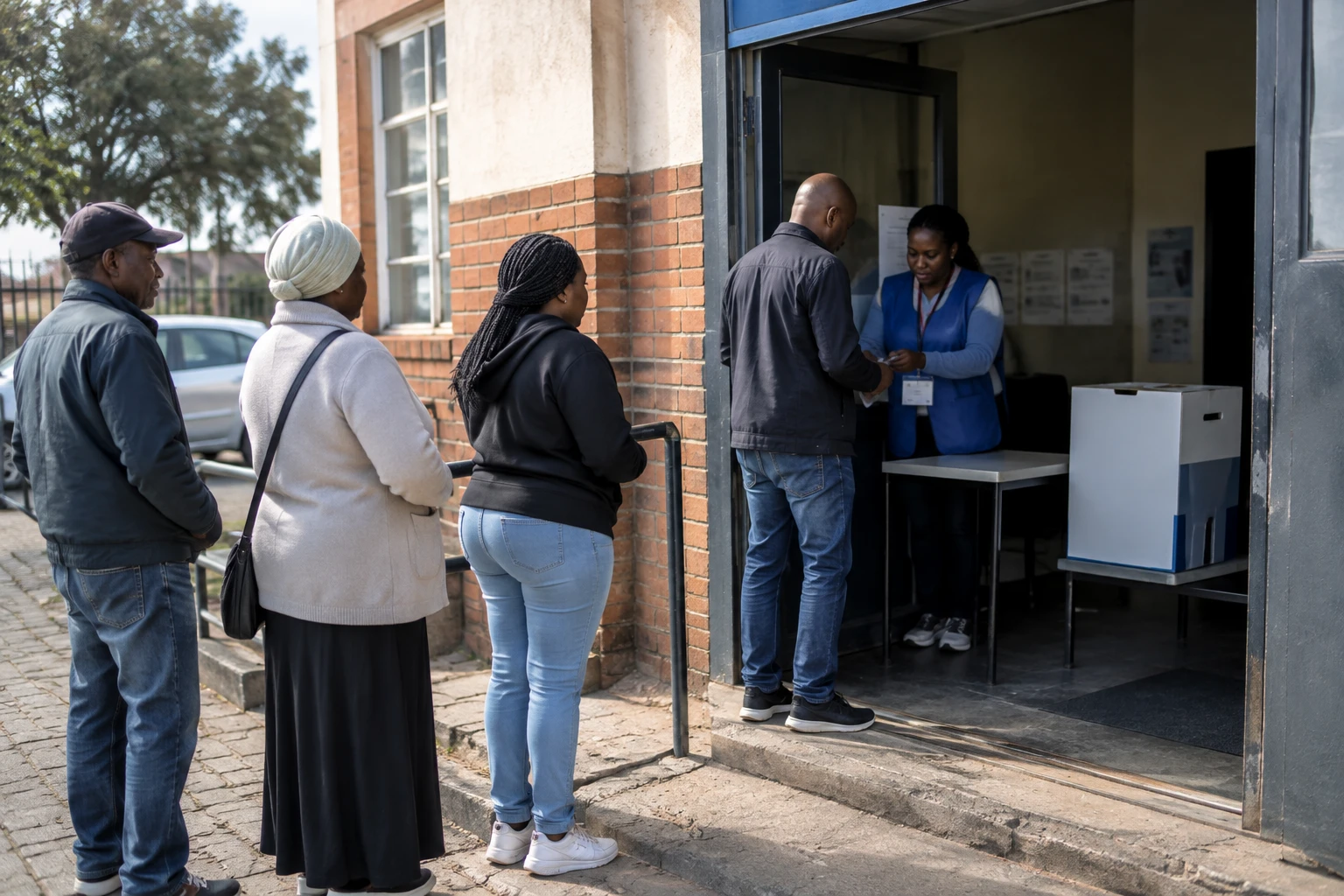
In Johannesburg, the state of taps, streets and municipal services has a direct bearing on daily life. It is at this level, closer to residents than national politics, that South African voters go to the polls on Wednesday 4 November 2026 to elect new municipal councils.
The vote is decided closest to residents
Municipal councillors set local priorities, including water, sanitation, waste collection and infrastructure. They then appoint mayors. The results will therefore determine who runs the major cities, as well as the country’s districts and local municipalities.
The election comes amid a transformed political landscape. In 2024, the African National Congress (ANC), in power since the end of apartheid, lost its absolute majority in parliament. It has since governed with the Democratic Alliance (DA) and several other parties in a government of national unity.
This national shift has not resolved municipalities’ difficulties. Instead, it raises a practical question: will parties able to share power in Pretoria also manage to build lasting local majorities, sometimes with political opponents?
A test for the ANC and its rivals
The ANC’s electoral decline is already visible in municipal elections. In 2021, the party won 45.59% of votes cast nationwide, according to the results of the Independent Electoral Commission (IEC). It was the first time it had fallen below the 50% mark in local elections since 1994.
The 2026 vote will show whether that erosion is continuing. The DA is targeting Johannesburg in particular, where the management of services and the stability of the municipal executive are fuelling debate. The uMkhonto weSizwe (MK) party, founded by former president Jacob Zuma, is seeking to consolidate its foothold in KwaZulu-Natal, his home province.
Voters are not, however, judging parties solely by their national labels. Municipal results also depend on service quality, councils’ financial position and confidence in local elected representatives. A poll published before the election by Afrobarometer found that 70% of respondents believe their municipal councillor is doing a poor job. This figure reflects the perceptions of those surveyed, not an audit of every municipality.
This lack of trust has different effects across the country. In major cities, water or electricity outages and deteriorating infrastructure are immediately visible. In rural areas, access to services and distance from local administrations may weigh more heavily. Small businesses and informal traders are also particularly exposed to failures in supplies and equipment.
Coalitions put to the test of time
Political fragmentation makes coalitions likely in councils where no single party wins a majority. These alliances are not new, but their growing number has sometimes led to repeated changes of mayor and budget deadlocks in several major cities.
A coalition can broaden voter representation. However, it requires parties to agree on budgets, appointments and public service priorities. If disagreements bring the council to a standstill, residents risk bearing the consequences before politicians do.
The experience of the government of national unity, formed after the 2024 elections, offers a precedent, but does not guarantee that co-operation will be easier at local level. Municipal councils must contend with their own power balances, resources and urgent needs. An alliance’s stability is therefore measured not only by its signing, but by its ability to keep services running.
In KwaZulu-Natal, the campaign also puts security in the spotlight
In KwaZulu-Natal, immigration and rhetoric targeting foreigners have become a sensitive part of political debate. Tensions and episodes of violence against people perceived to be foreign have already marked the province. In this context, campaign statements can increase risks for communities directly targeted.
Caution is nevertheless warranted: an allegation, a reported threat or a campaign account is not enough to establish the responsibility of a party or candidate. The election should be followed through verifiable facts, any complaints and the responses of the authorities, without conflating political rhetoric with documented acts.
The local dimension does not make these issues secondary. Residents’ safety, their access to services and their participation in the vote also depend on institutions’ ability to protect everyone’s rights. The Electoral Commission organises the election; the police and judicial authorities are responsible for dealing with reported offences.
A signal for southern Africa
These municipal elections will not renew the national government. They will nevertheless indicate the level of confidence in political parties and how voters assess local governance, two years after the political realignment of 2024. Results in the major cities will be closely watched, but the councils of smaller municipalities matter just as much to residents who depend on their services.
For the Southern African Development Community (SADC), a regional organisation bringing together southern African countries, South Africa’s institutional stability also matters beyond its borders. The immediate issue, however, is domestic: the make-up of councils, coalition agreements and their ability to meet local needs.
The next developments to watch are the IEC’s publication of the results, followed by the formation of councils and the election of mayors. That is when votes will translate — or not — into majorities able to pass budgets and maintain services. The ANC’s score will matter, but the longevity of alliances and their tangible record will be just as revealing.
For data from the 2021 election, see the IEC’s official municipal results. Perceptions of local governance are detailed in the Afrobarometer survey published before the elections.



