
 Algeria
 Egypt
 Libya
 Morocco
 Sudan
 Tunisia
 Benin
 Burkina Faso
 Cabo Verde
 Côte d'Ivoire
 Ghana
 Guinea
 Guinea-Bissau
 Liberia
 Mali
 Mauritania
 Niger
 Nigeria
 Senegal
 Sierra Leone
 The Gambia
 Togo
 Cameroon
 Central African Republic
 Chad
 DR Congo
 Equatorial Guinea
 Gabon
 Republic of the Congo
 São Tomé and Príncipe
 Burundi
 Comoros
 Djibouti
 Eritrea
 Ethiopia
 Kenya
 Madagascar
 Malawi
 Mauritius
 Mozambique
 Rwanda
 Seychelles
 Somalia
 South Sudan
 Tanzania
 Uganda
 Angola
 Botswana
 Eswatini
 Lesotho
 Namibia
 Zambia
 Zimbabwe
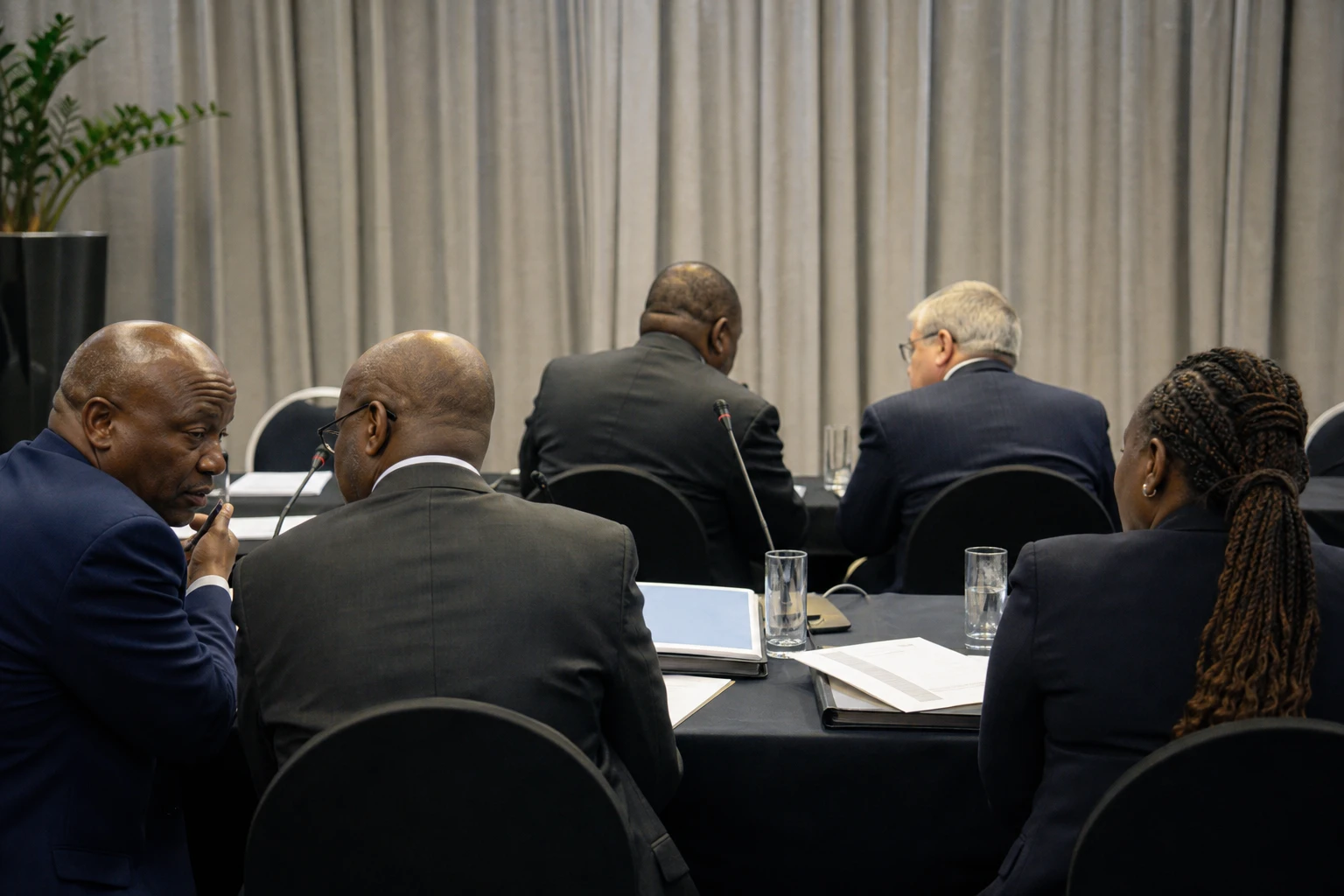
A brief pause for South Africa’s economy
In South Africa, the figures for the second quarter of 2026 serve as a reminder of a simple reality: an economy can move forward without yet maintaining its pace. After six quarters of growth, gross domestic product contracted by 0.2% between April and June, following growth of 0.4% in the first quarter. The signal may appear modest. Yet it says much about the fragility of South Africa’s recovery, which still depends on a few cyclical sectors and the state of supply chains.
This comes as Pretoria seeks to consolidate growth deemed too weak to absorb mass unemployment, support private investment and ease pressure on public finances. South Africa’s Treasury is still forecasting average growth of 1.8% over the medium term, with a target of 2% by 2028. But the second-quarter figures show that the recovery remains uneven.
The sectors that dragged, and those that cushioned the blow
The fall in GDP was primarily due to poor performances in mining, trade and manufacturing. The mining sector contracted by 3.0%, as production fell in platinum-group metals, manganese, gold and iron ore. Trade declined by 1.9%, driven down by wholesale trade, motor vehicles, and food and beverages. Manufacturing fell by 1.8%, with seven of its ten divisions in negative territory.
The details matter. Mining remains a pillar of the South African economy, in terms of employment, exports and foreign-exchange earnings. When it slows, the impact quickly spreads to transport, logistics, ports and tax revenues. Trade also suffers as soon as purchasing power weakens or financing costs remain high. Manufacturing, meanwhile, remains exposed to power cuts, freight costs, domestic demand and external competitiveness.
Not every sector contracted. Transport, storage and communications grew by 0.9%. Financial, real estate and business services also advanced, by 0.3%, while personal services rose by 0.6%. Construction and agriculture also provided support, though not enough to offset losses in major industrial sectors.
What the slowdown means for Pretoria and households
The contrast between the macroeconomic picture and daily life is stark. For the state, falling GDP complicates fiscal consolidation, as tax revenues grow more slowly. For households, it means fewer new jobs, greater difficulty securing wage increases and more cautious spending. For businesses, particularly in industry and trade, it means less predictable order books and deferred investment.
The pressure is not solely domestic. The second quarter also saw imports rise by 4.9%, while capital investment fell for a second consecutive quarter. This weighs on the country’s ability to turn a cyclical recovery into sustained growth. The problem is therefore not simply a short-term dip. It also reflects a lack of momentum in productive investment.
In this context, the South African Reserve Bank is maintaining a cautious stance. Monetary policy remains guided by an inflation target range of 3% to 6%, with the policy rate the main instrument. As long as growth remains sluggish and pressure from imported prices persists, the trade-off between supporting activity and controlling inflation will remain delicate.
A regional as well as national issue
South Africa’s case extends well beyond its national borders. The country is a central member of SADC, the Southern African Development Community, which brings together 16 states. Its industrial, financial and logistical weight shapes part of regional trade. When Pretoria slows, trade corridors, port flows and regional value chains also lose momentum.
The regional calendar is a reminder that industrial development remains a priority. In August 2026, the SADC summit welcomed the hosting of the annual industrialisation week in Durban, calling on member states to strengthen regional value chains, value addition and intra-SADC trade. In other words, a weak quarter in South Africa does not undermine this priority; it underscores its urgency.
For southern Africa, the lesson is clear: growth depends not only on raw materials, but on the ability to process, transport, finance and sell goods within the region. South Africa remains an engine. But an engine cannot run well at low revs. The coming months will show whether the second-quarter contraction was merely a statistical blip or a sign that the recovery is still too incomplete to fulfil the promise made by Pretoria and SADC.



