
 Algeria
 Egypt
 Libya
 Morocco
 Sudan
 Tunisia
 Benin
 Burkina Faso
 Cabo Verde
 Côte d'Ivoire
 Ghana
 Guinea
 Guinea-Bissau
 Liberia
 Mali
 Mauritania
 Niger
 Nigeria
 Senegal
 Sierra Leone
 The Gambia
 Togo
 Cameroon
 Central African Republic
 Chad
 DR Congo
 Equatorial Guinea
 Gabon
 Republic of the Congo
 São Tomé and Príncipe
 Burundi
 Comoros
 Djibouti
 Eritrea
 Ethiopia
 Kenya
 Madagascar
 Malawi
 Mauritius
 Mozambique
 Rwanda
 Seychelles
 Somalia
 South Sudan
 Tanzania
 Uganda
 Angola
 Botswana
 Eswatini
 Lesotho
 Namibia
 Zambia
 Zimbabwe
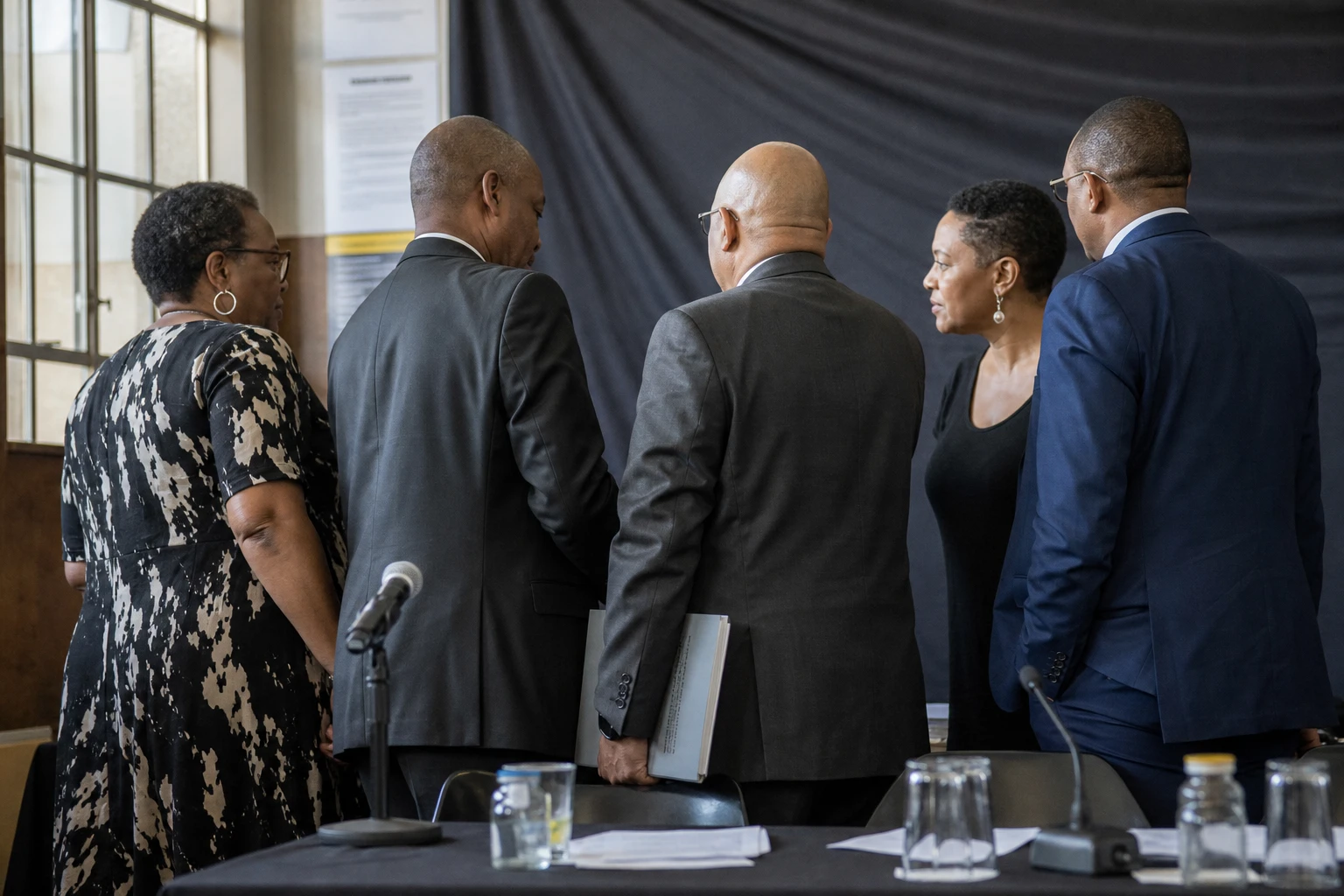
In South Africa, places where people gather can sometimes become scenes of deadly violence. Within hours, on 26 and 27 September 2026, two attacks struck poor communities near Johannesburg and Cape Town. They were a reminder of a broader reality: mass shootings remain linked to the circulation of firearms, criminal rivalries and control of territory.
Two attacks within hours
The first shooting took place on the evening of Saturday 26 September in Wedela, a town south-west of Johannesburg. According to the South African Police Service, eight armed men opened fire on customers gathered at a bar.
The initial toll was 17 dead and 15 wounded. On 28 September, South African police announced that another victim had died in hospital. The death toll from the attack therefore rose to 18. Several victims were outside the establishment when the shooting began. The assailants are then believed to have entered the bar.
Investigators said the suspects were carrying, among other weapons, AK-47-style rifles and pistols. They are believed to have searched some customers and taken their phones before fleeing in two vehicles. Two other vehicles were reportedly set alight at the scene. These details are based on the police’s initial findings.
A few hours later, a second attack targeted a restaurant and entertainment venue in Lwandle, near Cape Town. The shooting broke out shortly before 2am on Sunday 27 September. Ten people were killed and 11 others wounded, according to police. The authorities were searching for several suspects, but had not specified how many or identified them.
The two attacks initially brought the weekend’s death toll to 27. The subsequent death of a victim in Wedela raised it to 28. As of 29 September 2026, no public evidence had established an operational link between the two shootings.
A wave extending beyond the weekend
The violence came a few days after another attack in KwaMakhutha, south of Durban, in KwaZulu-Natal province. Armed men had stormed a house where a party was being held. At least 11 people had been killed, including a pregnant woman, according to authorities cited by several media outlets.
The Global Initiative Against Transnational Organized Crime, which monitors organised crime dynamics, estimates that at least 41 mass shootings have been recorded in South Africa since January 2026. They are believed to have caused about 196 deaths. This count should be treated with caution: its methodology does not always match the police’s, and some incidents may go unreported.
In the data cited, a mass shooting generally refers to an incident in which at least three people were killed. This definition does not describe a single phenomenon. It encompasses gang-related attacks, settling of scores, intimidation operations and violence whose motive remains unknown.
The influence of criminal networks
Available initial analyses point towards organised crime rather than ideological attacks or acts carried out by a lone gunman. Rivalries between gangs, illicit markets, extortion and the struggle for control of certain territories fuel some of this violence.
Bars and restaurants occupy a particular place in this dynamic. They bring together large numbers of customers, often stay open late into the night and can become meeting, recruitment or collection points for criminal networks. They are also ordinary social spaces for residents, which helps explain the trauma caused by these attacks.
The Global Initiative’s Western Cape Gang Monitor highlights, in its regional analyses, the connections between gang rivalries, extortion, drug trafficking and control of local networks. In the Western Cape, this pressure affects Cape Town’s neighbourhoods in particular. It is not, however, limited to this region: Gauteng, KwaZulu-Natal and some areas of the Free State also experience episodes of gun violence.
The circulation of firearms complicates investigators’ work. Assault rifles and pistols give attacks the capacity to cause rapid destruction. They also enable criminal groups to exert sustained pressure on residents, businesses and potential witnesses.
National statistics paint a contrasting picture
The latest quarterly statistics from the South African police nevertheless point to a less uniform trend. Between April and June 2026, 5,427 homicides were recorded, compared with 5,770 during the same period the previous year. The reported decline was 5.9%, or 343 fewer cases.
This decrease does not mean that all communities are seeing the same improvement. National statistics aggregate very different situations. An overall decline can coexist with a local rise in shootings, extortion or gang-related homicides.
Residents of the affected neighbourhoods bear a particular burden. Bereaved families must arrange funerals and support wounded survivors. Businesses may reduce their opening hours. Witnesses sometimes hesitate to speak for fear of reprisals. In rural or outlying areas, the distance from healthcare services and security forces adds a further challenge.
An issue for southern Africa
South Africa occupies a central position in the southern African economy. It is a member of the Southern African Development Community, or SADC, which co-ordinates regional policies on issues such as security, borders and economic co-operation.
Criminal networks exploit borders, logistics chains and differences in enforcement between countries. Tackling illegal firearms therefore cannot rely solely on patrols in affected neighbourhoods. It also requires weapons tracing, regional police co-operation and monitoring of financial flows linked to clandestine markets.
In Pretoria, the challenge now is to distinguish national trends from local centres of organised crime. The next quarter’s figures will be scrutinised, as will progress in the investigations into Wedela and Lwandle. For the families affected, the need is more immediate: find the perpetrators, protect witnesses and restore the ability to live and gather without turning every local meeting place into a place of danger.



