
 Algeria
 Egypt
 Libya
 Morocco
 Sudan
 Tunisia
 Benin
 Burkina Faso
 Cabo Verde
 Côte d'Ivoire
 Ghana
 Guinea
 Guinea-Bissau
 Liberia
 Mali
 Mauritania
 Niger
 Nigeria
 Senegal
 Sierra Leone
 The Gambia
 Togo
 Cameroon
 Central African Republic
 Chad
 DR Congo
 Equatorial Guinea
 Gabon
 Republic of the Congo
 São Tomé and Príncipe
 Burundi
 Comoros
 Djibouti
 Eritrea
 Ethiopia
 Kenya
 Madagascar
 Malawi
 Mauritius
 Mozambique
 Rwanda
 Seychelles
 Somalia
 South Sudan
 Tanzania
 Uganda
 Angola
 Botswana
 Eswatini
 Lesotho
 Namibia
 Zambia
 Zimbabwe
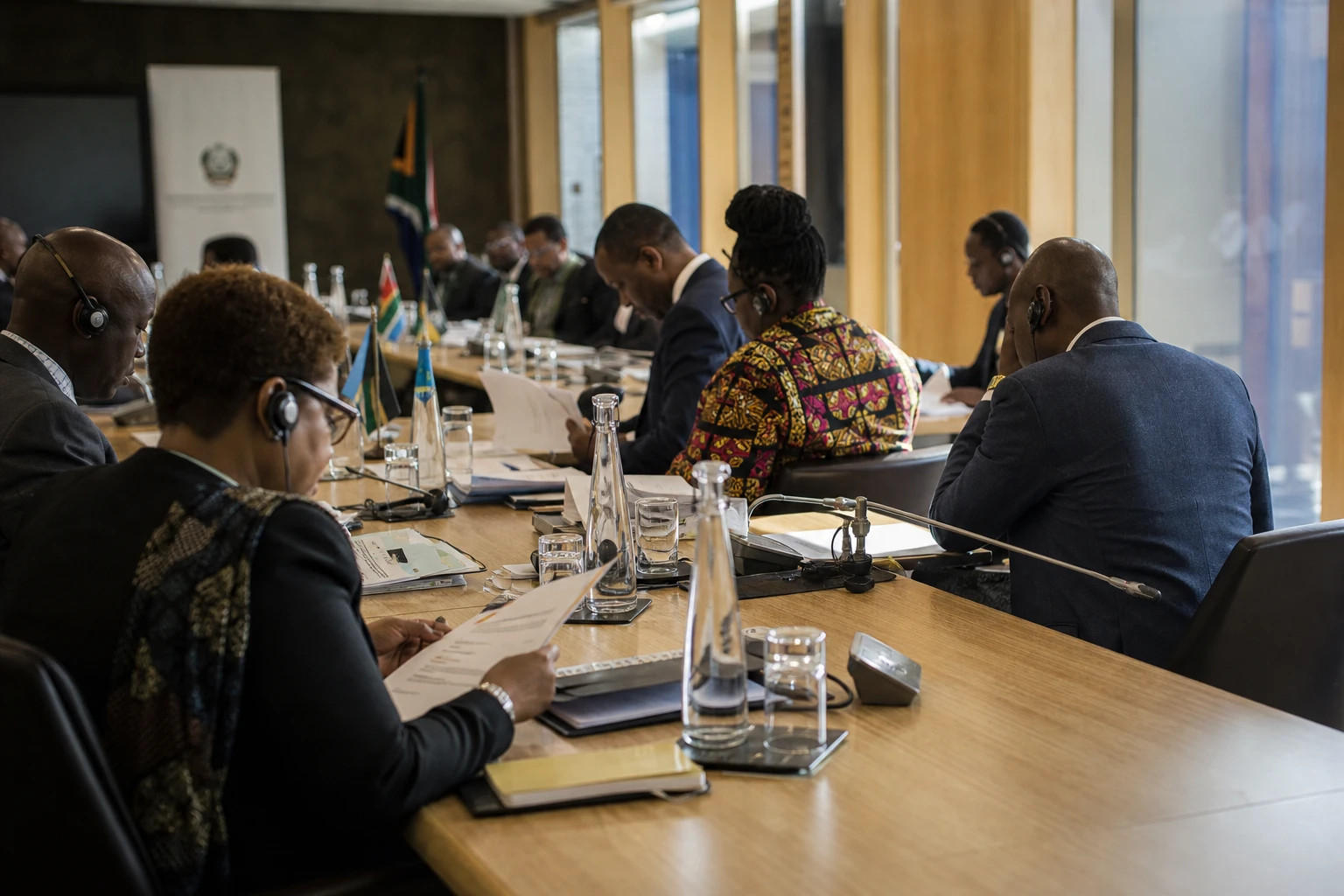
In South Africa, violence against women is no longer merely a succession of isolated news stories. It is testing the state’s ability to protect, investigate and prevent. The challenge now is to turn public alarm into measurable results, in urban neighbourhoods and rural areas alike.
A crisis embedded in everyday life
Femicide refers to the killing of a woman or girl because of her sex or in a context of gender-based domination. In South Africa, this violence often occurs within close relationships. Suspects are frequently partners, former partners or people known to the victims.
Available data remain incomplete, however. Police statistics record homicides, but do not always identify a gender-related motive or the relationship between the victim and the perpetrator. This limitation makes comparisons difficult and can lead to the scale of the phenomenon being underestimated.
A national strategy published in September 2026 nevertheless estimates that about three women are killed each day by an intimate partner. It puts the rate at 5.6 deaths per 100 000 women, nearly five times the global level cited in the document. These figures should be treated with caution, as counting methods and reference periods are not always the same.
The South African parliament, for its part, has cited a femicide rate of 9 per 100 000 women and recorded 957 women killed between July and September 2024. The gap between this and other estimates mainly highlights the continued absence of a single national system for documenting femicides.
Causes that go beyond the justice system
Violence does not stem from a single factor. Unequal power relations, patriarchal norms, violence learned within the family, alcohol and drug use, and poverty can all combine. They never justify these crimes. They do, however, help explain why responses limited to arrest often come too late.
The legacy of apartheid also shapes living conditions. Spatial segregation has left areas far from public services, courts and health facilities. In several communities, expensive transport, insecurity and economic dependence can prevent a victim from leaving home or reporting violence quickly.
The situation varies across the country. Major cities have more specialist services, but also a high population density and gun violence. In rural areas, the distance to a police station, health centre or court can delay support. Women with disabilities also face specific barriers. A study cited by the government indicates that the prevalence of sexual violence by a partner is twice as high among women with disabilities as among other women.
A better-organised state, still judged by its results
South Africa has strengthened its institutional framework. The country has a national strategic plan to combat gender-based violence and femicide. It also has specialist police units, the Family Violence, Child Protection and Sexual Offences units, tasked in particular with dealing with sexual violence and crimes against children.
Between April 2024 and March 2025, these units secured 2 941 convictions and made 22 219 arrests for offences related to gender-based violence, femicide, sexual offences and crimes against children. These results show that significant judicial work is being done. On their own, however, they do not measure prevention or the quality of the support offered to survivors.
The government has classified gender-based violence and femicide as a national disaster. The decision is intended to facilitate coordination between national government, provinces and local authorities. It also raises a central question: what funding will actually be available for shelters, social services, investigations and legal support?
In 2026, the National Council on Gender-Based Violence and Femicide began a new three-year term. Its role is to guide national policy and coordinate public action. To be credible, the body will have to publish specific targets, timetables and verifiable results.
The warning sign in emergency calls
Requests for help provide another measure of the crisis. Between 1 and 16 September 2026, the national gender-based violence helpline received 6 782 calls. The daily average reached 424, up from 350 in August. On 16 September, 589 calls were recorded in a single day.
An increase in calls does not necessarily mean that violence has risen by the same proportion. It may also reflect greater awareness of the service, increased mobilisation or greater confidence that callers will be heard. It nevertheless confirms the pressure on frontline services.
These platforms play an essential role for women who cannot immediately go to a police station. Yet their effectiveness depends on what happens after the call. Referring someone to a full shelter, a distant police station or a service without available staff is not enough to keep a victim safe.
Prevention must be the next turning point
A pilot femicide review project has been launched in Gauteng, KwaZulu-Natal and the Eastern Cape. Its aim is to examine the circumstances of each killing and identify missed opportunities: a complaint ignored, a protection measure not enforced, a weapon not seized or a lack of social support.
This approach could help shift the response from action after a crime to evidence-based prevention. It will, however, need to involve families, associations, researchers, health professionals and local organisations. Communities are not only places where violence occurs. They can also identify warning signs and support victims.
The issue extends across Southern Africa. South Africa plays a central role in the Southern African Development Community, SADC, which brings together 16 states. Differences in legislation, social protection and data collection make it harder to tackle cross-border violence, particularly when a victim moves to another country or a perpetrator flees.
The next step will therefore be practical rather than symbolic. Pretoria will have to show that classifying femicide as a national disaster leads to budgets, better investigations and protections that are actually enforced. The credibility of South Africa’s response will ultimately be measured by a simple question: how many women at risk will be protected before the violence becomes irreversible?



