Algeria
 Egypt
 Libya
 Morocco
 Sudan
 Tunisia
 Benin
 Burkina Faso
 Cabo Verde
 Côte d'Ivoire
 Ghana
 Guinea
 Guinea-Bissau
 Liberia
 Mali
 Mauritania
 Niger
 Nigeria
 Senegal
 Sierra Leone
 The Gambia
 Togo
 Cameroon
 Central African Republic
 Chad
 DR Congo
 Equatorial Guinea
 Gabon
 Republic of the Congo
 São Tomé and Príncipe
 Burundi
 Comoros
 Djibouti
 Eritrea
 Ethiopia
 Kenya
 Madagascar
 Malawi
 Mauritius
 Mozambique
 Rwanda
 Seychelles
 Somalia
 South Sudan
 Tanzania
 Uganda
 Angola
 Botswana
 Eswatini
 Lesotho
 Namibia
 Zambia
 Zimbabwe
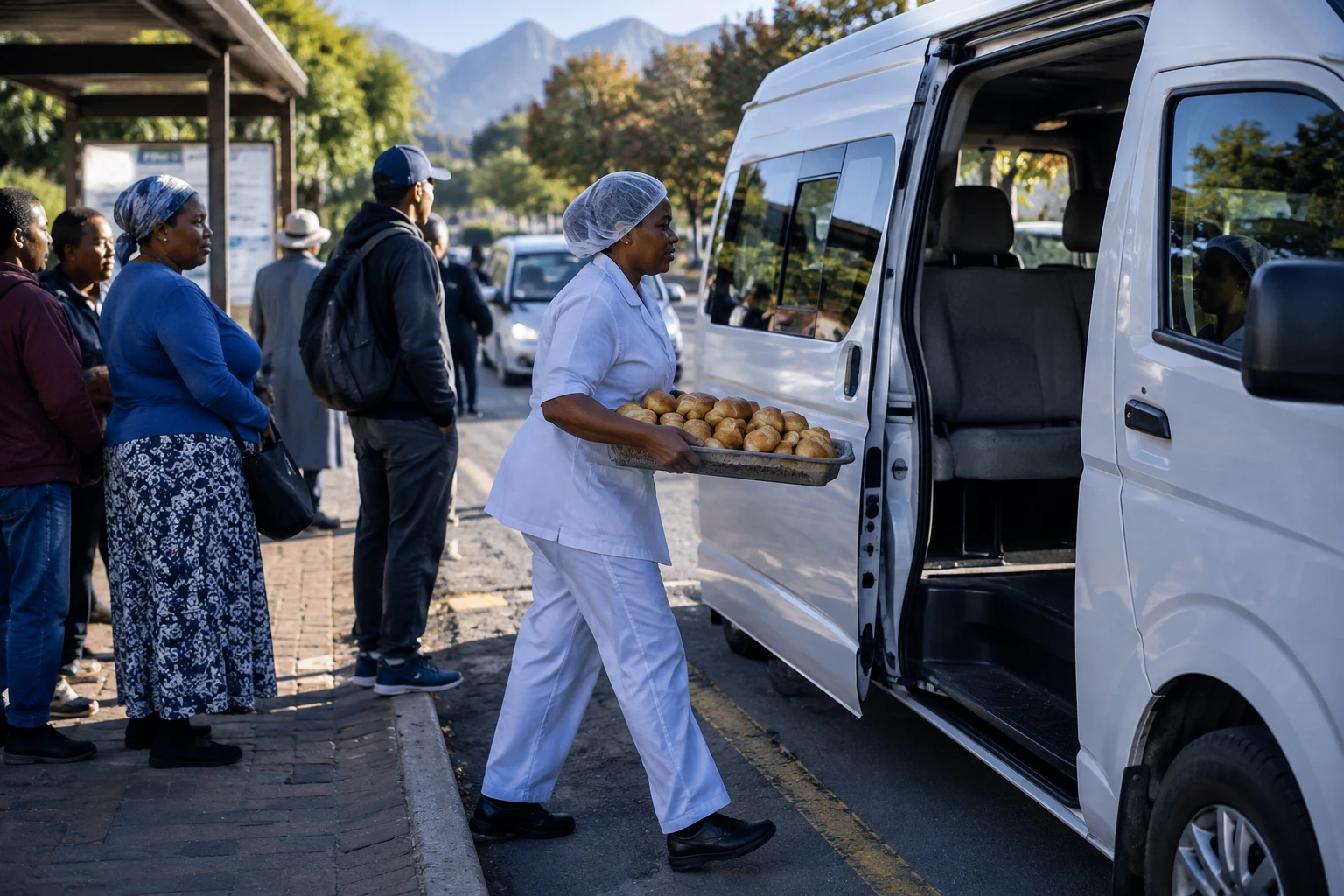
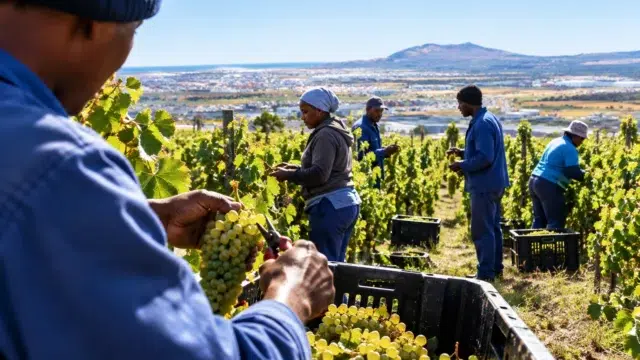
In Franschhoek, in the Cape vineyards, grape juice does not end up only in bottles. During the harvest, it also goes into the dough of a sweet bread roll. Ricardo Slawers, a 42-year-old South African baker, has devoted a thesis and a new recipe to this regional speciality. His work earned him the title of bread sommelier in Germany.
A bread born to the rhythm of the harvest
Mosbolletjies are soft bread rolls, similar to brioche. Their name combines “mos”, fermenting grape must, and “bolletjie”, a small roll. The traditional recipe uses flour, fermented grape juice and spices such as anise or fennel. They are eaten fresh, sometimes with butter, or dried and made into rusks.
This preparation is linked to the Cape’s wine-making history. French Huguenots, Protestant refugees, settled in the region at the end of the 17th century. Mosbolletjies are associated with this tradition and with the harvest, when must is available. They also bear witness to skills shaped locally over generations, rather than simply to a recipe imported unchanged.
In the vineyards of the Western Cape, seasonality still gives this baking a particular rhythm. The bread takes time: fermentation and baking require careful attention. At the bakery on the La Motte wine estate in Franschhoek, batches are limited. The bread is offered in season, when the grapes are harvested.
A qualification built around taste and knowledge
Slawers gained his qualification at the German National Bakery Academy in Weinheim. He submitted a thesis on a new mosbolletjies recipe and prepared a bread for assessment by a jury. He is described as the first African to earn the title of bread sommelier.
The qualification is not limited to knowing how to knead or bake dough. It covers knowledge of baking traditions, ingredients and the sensory qualities of bread. Slawers said that his training, undertaken alongside his work at the bakery, had required a year of effort and careful organisation. At 42, he has been studying the profession since the age of 18.
The distinction recognises a professional career and a commitment to study. It is not, however, equivalent to a Michelin star: the two titles belong to different assessment systems. The comparison may evoke gastronomic recognition, but should not suggest an official equivalence.
Making use of an ingredient, extending a tradition
Must is a product of grape processing, used here as a baking ingredient. This recipe gives a different purpose to a material directly linked to the harvest. At La Motte, the dried bread can then be made into rusks, according to the estate restaurant’s manager, Jaap-Henk Koelewijn. This practice reduces waste, but does not by itself turn the bakery into a general zero-waste model.
For consumers, the seasonal nature of the bread and the small quantities available make it sought after. For the teams making it, this demand comes on top of an already busy workload and a process that takes longer than baking everyday bread. Slawers’ recognition therefore highlights the daily work of artisans as much as the recipe itself.
It is also a reminder that culinary heritage is not fixed. A tradition can evolve through experimentation while keeping its ingredients and history at its heart. Slawers’ thesis links a regional practice to methods for studying taste and bread-making taught abroad. This exchange does not mean the South African recipe needs European validation to have value; rather, it gives it new professional visibility.
A Cape story with broader significance
Franschhoek is in the Western Cape, in the west of South Africa, whose administrative capital is Pretoria. The country has a wide variety of culinary traditions, linked in particular to migration, languages and agricultural activity. Mosbolletjies tell part of this story: that of Cape communities and the development of wine-making, without representing South African culinary identity in its entirety.
At regional level, South Africa is a member of the Southern African Development Community (SADC), an organisation for co-operation between countries in the region. Slawers’ distinction is not a SADC decision and has no institutional effect. Its regional significance lies instead in the exchange of expertise, the links between agriculture, food processing and artisan trades, and the visibility given to a local speciality beyond the country’s borders.
The next challenge is practical: to see how this new recipe is received at the next harvest and whether it remains associated with seasonal production. For La Motte, the bread is already part of an offering linked to the estate and its wine-making business. For Slawers, the title opens up opportunities to pass on knowledge about bread, its flavours and its history. International recognition thus becomes an opportunity to tell the story of a Cape tradition on its own terms.
His career may also draw attention to professional training in baking, a trade in which technical mastery is built through practice as much as study. In this story, the foreign distinction is a milestone, not a starting point: the recipe, the artisan’s work and South African consumers’ habits all existed before the title.