
 Algeria
 Egypt
 Libya
 Morocco
 Sudan
 Tunisia
 Benin
 Burkina Faso
 Cabo Verde
 Côte d'Ivoire
 Ghana
 Guinea
 Guinea-Bissau
 Liberia
 Mali
 Mauritania
 Niger
 Nigeria
 Senegal
 Sierra Leone
 The Gambia
 Togo
 Cameroon
 Central African Republic
 Chad
 DR Congo
 Equatorial Guinea
 Gabon
 Republic of the Congo
 São Tomé and Príncipe
 Burundi
 Comoros
 Djibouti
 Eritrea
 Ethiopia
 Kenya
 Madagascar
 Malawi
 Mauritius
 Mozambique
 Rwanda
 Seychelles
 Somalia
 South Sudan
 Tanzania
 Uganda
 Angola
 Botswana
 Eswatini
 Lesotho
 Namibia
 Zambia
 Zimbabwe
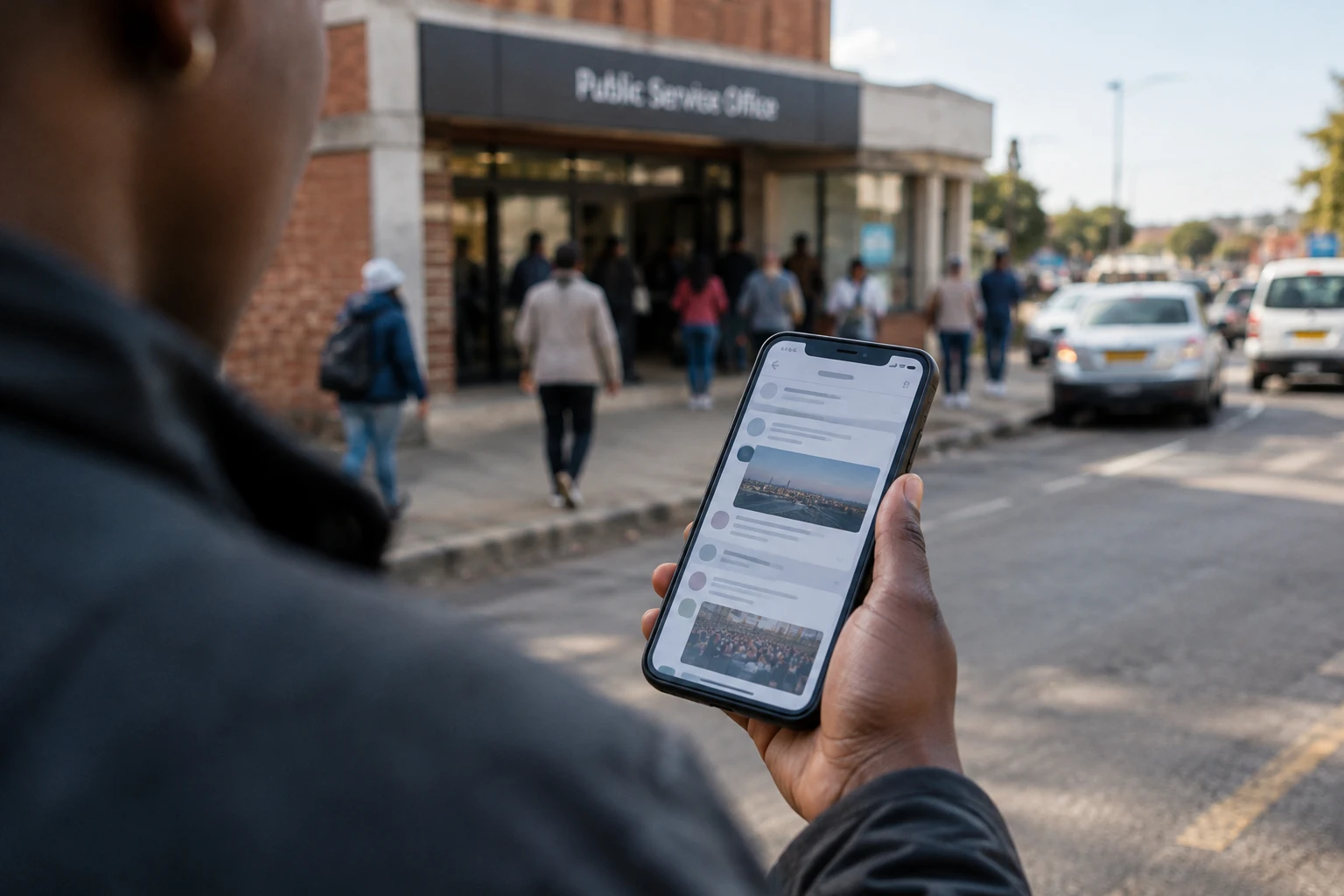
In Soweto and Durban, queues outside asylum offices suddenly took on a different meaning: for some, they represented access to a legal process; for others, proof of a feared influx. Following attacks on shops and vehicles, the South African government withdrew a directive intended to implement a court ruling. But this administrative U-turn does not erase the Constitutional Court’s decision.
The right to be heard, not automatic status
On 7 July 2026, the Constitutional Court invalidated several provisions that could prevent people from accessing the asylum process because of their migration history. The barriers concerned included irregular entry, the absence of a transit visa and failure to meet certain deadlines for presenting themselves to the authorities. The Court found that these barriers could prevent the substantive examination of an application and raise concerns under fundamental rights and the principle of non-refoulement, which prohibits returning someone to a place where they risk serious persecution. The South African Constitutional Court ruling on access to asylum sets out the scope of the judgment.
The ruling does not automatically recognise as a refugee everyone who walks through the doors of a reception centre. It means that the authorities must be able to assess applications according to the criteria set out in law. Status depends on an individual assessment of the case, not solely on the presence of a visa or prior compliance with entry formalities.
The Department of Home Affairs issued a directive on 28 September to organise the receipt of the applications concerned. Offices were overwhelmed by people seeking to submit applications, and the government acknowledged that its services were overstretched. In Pretoria, the challenge is therefore twofold: to implement the Court’s ruling and make the system clear and workable, while reception and processing capacity remains limited.
Directive withdrawn after violence
Tensions escalated on 8 and 9 October in Soweto, near Johannesburg, and in Durban, in KwaZulu-Natal province. Vehicles were set alight and shops looted. The authorities increased the police deployment; soldiers were also reported in Soweto. Figures reported by several media outlets put the number of vehicles set alight in the two cities at at least 24. This figure describes documented damage to property, but does not in itself establish the full extent of losses or arrests. Associated Press’s account of the violence and coverage by South African public broadcaster SABC confirm the extent of the damage and the directive’s withdrawal.
The government then suspended and withdrew the department’s text. Deputy President Paul Mashatile said the pause would allow the authorities to better inform the public and stressed that nobody would automatically be granted refugee status. Gauteng province also acknowledged that the decision had been poorly communicated.
This distinction is central. The withdrawal of an administrative instruction does not, by itself, overturn a Constitutional Court ruling. The obligation to bring the law into line with the ruling remains. The department must therefore find another way to receive and assess applications without reintroducing the barriers the judges declared invalid.
Between local pressure and the rule of law
The reaction highlights a tangible political tension. Residents have voiced concerns about immigration, the capacity of public services and border control. These concerns justify neither attacks on people nor the destruction of property. Foreign-owned shops, asylum seekers and residents of affected neighbourhoods are directly bearing the consequences; reception services, meanwhile, must manage longer queues with resources already under strain.
For South African organisation Lawyers for Human Rights, the government’s retreat after violent protests risks giving greater weight to xenophobic groups. This interpretation points to an institutional challenge: if a court ruling becomes unenforceable under pressure from the streets, confidence in equality before the law is weakened. Conversely, implementing a judgment without explaining the criteria or expanding capacity at service counters leaves the way open to rumours and confusion. Lawyers for Human Rights’ position on the ruling and applicants’ rights stresses the need for individual case assessments.
The issue also forms part of a South African history marked by recurring episodes of xenophobic violence and heated political debate about immigration. Asylum applications are governed by the national Refugees Act, but displacement and protection also affect neighbouring countries. The Southern African Development Community (SADC), a regional organisation of southern African states, has adopted frameworks for co-operation on refugees and migration management. The SADC Declaration on Refugee Protection highlights the value of co-ordinated approaches between states.
The next test: implementing the ruling without fuelling rumours
The government must now clarify how people will be able to submit applications, how offices will process the cases and how the criteria for obtaining status will be communicated. Residents want answers about how services operate and about security; applicants need an accessible and predictable process. Violence can replace neither the assessment of an application nor border control through legal channels.
The implications extend beyond South Africa’s borders. For SADC countries and, more broadly, African institutions responsible for human rights, the case raises a practical question: how can migration management, the protection of people and public confidence in shared rules be reconciled? The answer will lie in the department’s next steps and the state’s ability to respect the ruling while restoring an effective reception system. The directive is gone; the constitutional obligation remains.



