Algeria
 Egypt
 Libya
 Morocco
 Sudan
 Tunisia
 Benin
 Burkina Faso
 Cabo Verde
 Côte d'Ivoire
 Ghana
 Guinea
 Guinea-Bissau
 Liberia
 Mali
 Mauritania
 Niger
 Nigeria
 Sierra Leone
 The Gambia
 Togo
 Cameroon
 Central African Republic
 Chad
 DR Congo
 Equatorial Guinea
 Gabon
 Republic of the Congo
 São Tomé and Príncipe
 Burundi
 Comoros
 Djibouti
 Eritrea
 Ethiopia
 Kenya
 Madagascar
 Malawi
 Mauritius
 Mozambique
 Rwanda
 Seychelles
 Somalia
 South Sudan
 Tanzania
 Uganda
 Angola
 Botswana
 Eswatini
 Lesotho
 Namibia
 South Africa
 Zambia
 Zimbabwe
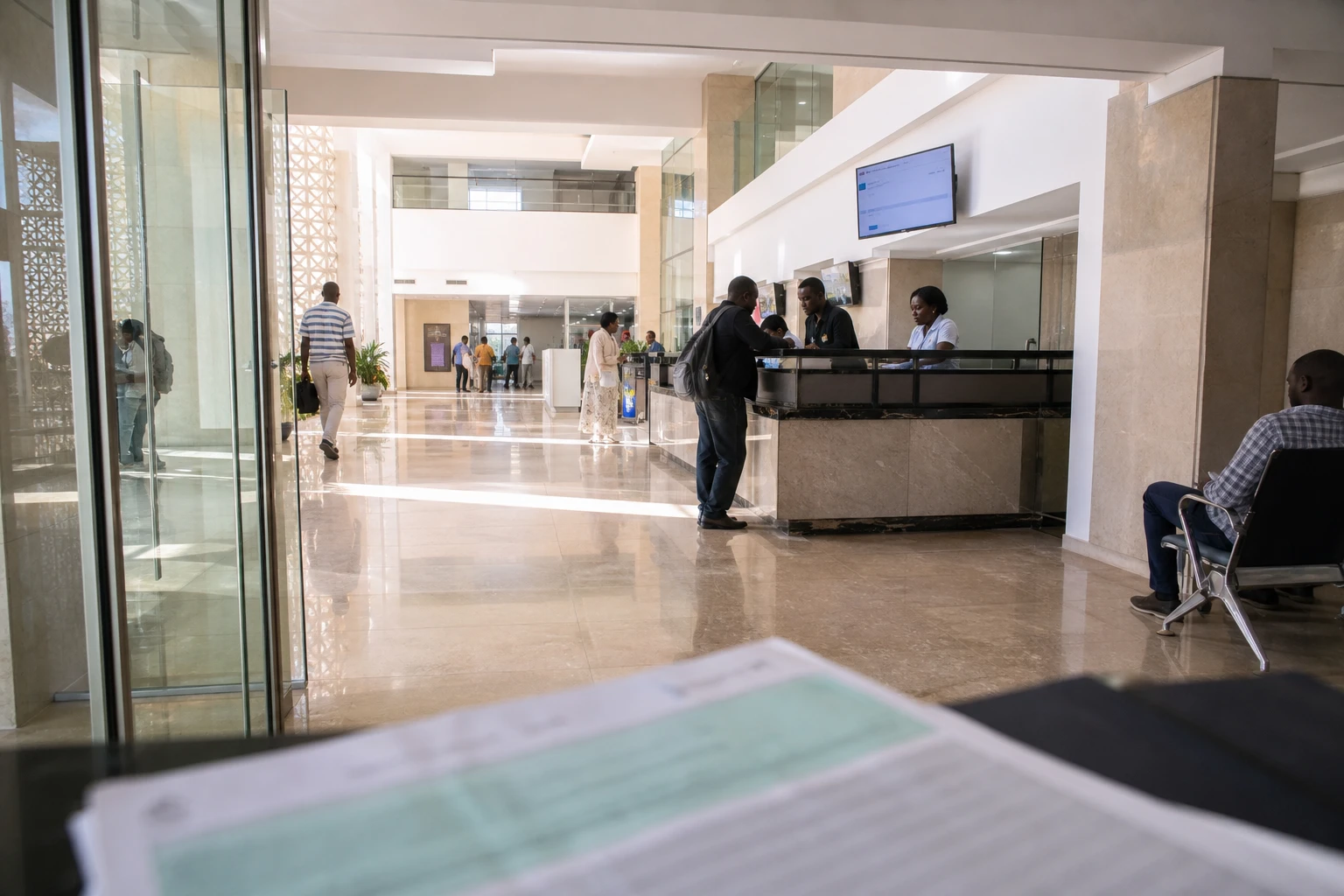
A record half-year that says something about the Senegalese market
When a company crosses the CFAF 1,000 billion threshold in six months, the figure is impressive. But the real significance lies elsewhere: it shows how far an operator that has become central to the digital economy in Senegal and parts of West Africa can go.
In the first half of 2026, Sonatel reported revenue of CFAF 1,049.8 billion, according to its financial statement published on the BRVM, the regional stock exchange of the West African Economic and Monetary Union (WAEMU), and reproduced on its official website in its consolidated results for 30 June 2026. Consolidated net profit reached CFAF 230 billion. The group, which operates in Senegal, Mali, Guinea, Guinea-Bissau and Sierra Leone, also reported CFAF 510.8 billion in EBITDAAL, an indicator that measures operating performance before certain accounting effects.
The milestone has symbolic significance. It shows that a player born in traditional telecommunications has now moved into a different league. Mobile, fixed internet, fibre and mobile financial services now outweigh voice alone by a wide margin. For Senegalese people, this means that an entire part of daily life — communicating, connecting, paying and transferring money — runs through a company whose financial strength has become an economic issue in its own right.
The context: a sector under pressure, but still buoyant
Senegal’s telecoms market is no longer what it was in the early days of 4G. It is more mature, more competitive and more tightly regulated. The Telecommunications and Posts Regulatory Authority, ARTP, is also pushing for greater infrastructure sharing, particularly for fibre, to promote very high-speed broadband within a more open and efficient framework.
This shift matters because Sonatel no longer sells just mobile packages. The group is investing in fibre, mobile data, 4G networks and financial services. These segments are driving growth, but they also require more capex — substantial investment in networks and equipment. The group said it spent CFAF 154 billion on eCAPEX during the half-year, equivalent to 15% of revenue. This points to a still-strong expansion strategy, but also to greater pressure to deliver returns.
The wider Senegalese context reinforces this reading. The finance ministry has been working for several months to consolidate public revenues and modernise the tax framework amid tighter budgetary conditions. In this climate, profitable, high-profile businesses that are difficult to relocate naturally attract the state’s attention.
What the accounts show: growth, but more selective growth
Sonatel’s revenue growth is not simply the result of higher volumes. It reflects the growing use of digital services. The group says it has 43 million customers, 23.7 million mobile data customers and 13.7 million active Orange Money users. Fibre is also gaining ground, with 648,427 customers reported as at 30 June 2026.
In other words, growth is now coming from a more diversified range of services. That is good news for the group, but also a signal for the Senegalese market. Traditional telephony is no longer enough. Value is being created in data, home connectivity, digital payments and more technology-intensive services.
But this momentum has a downside. The model is becoming more capital-intensive and more exposed. Margins must be defended, as competition is fierce in mobile money, internet prices and access packages. In this context, every percentage point of profitability matters more than growth alone.
Net profit of CFAF 230 billion should also be viewed with caution. Part of the increase reflects a more favourable tax environment than in 2025, as the published accounts suggest. This does not detract from the performance, but it is a reminder that profit can be supported by non-recurring factors. For a group such as Sonatel, the real question is therefore not only: “how much did it earn?” It is also: “how much of this performance is sustainable?”
Competition, regulation and taxation: the three fault lines
In Senegal, competition does not come only from established telecoms operators. It also comes from new uses and new channels. The irregular sale of Starlink terminals, for example, has brought the question of satellite access back to the fore in areas less well served by fibre or mobile networks. In a statement, ARTP said that providing internet access requires prior authorisation and that all services must comply with Senegalese law.
In mobile money, the debate is less about the number of users than about the value captured from each transaction. The market has become more sensitive to prices, commissions and service speed. Sonatel retains a major asset in Orange Money, but competitive pressure means it must defend margins rather than simply add active accounts.
Taxation remains the other fault line. The Senegalese state is at once regulator, tax collector and, to some extent, a stakeholder in the telecoms ecosystem. This gives it leverage, but also creates constant tension: how can the appeal of a strategic sector be preserved without burdening it with excessive levies? At a time when public finances need to be consolidated, this question is becoming central.
For households, the stakes are immediate. A price increase quickly weighs on budgets. For businesses, the cost of connectivity affects competitiveness. For the state, meanwhile, telecoms remain a reliable source of revenue. Sonatel therefore sits at the intersection of three interests that sometimes converge and sometimes conflict.
A regional perspective: the group’s reach extends beyond Dakar
Sonatel’s performance cannot be read solely through Dakar. The group also operates in Mali, Guinea, Guinea-Bissau and Sierra Leone. Its regional presence allows it to offset the maturity of the Senegalese market with growth in neighbouring markets. This is one reason for its resilience.
But diversification also brings exposure to other risks: foreign exchange, energy, political stability, infrastructure quality and site security. When a currency depreciates, energy becomes more expensive or operating conditions deteriorate, the contribution of some subsidiaries is mechanically reduced once converted into CFA francs.
The continental significance is clear. Sonatel illustrates what major African operators are becoming: infrastructure, financial services and data groups at the intersection of digital sovereignty and public revenue. Their role goes beyond telephony. They contribute to economic integration, the spread of broadband and the architecture of payments.
The second half of 2026 will bring several tests: sustaining margins, the pace of investment, tax developments, competitive pressure on mobile money and the rollout of very high-speed networks. For Senegalese people and partners across the sub-region, the message is already clear: Sonatel remains powerful, but its growth is entering a more demanding phase in which size alone will no longer be enough. It will now have to turn its market-leading position into sustainable profitability.