Algeria
 Egypt
 Libya
 Morocco
 Sudan
 Tunisia
 Benin
 Burkina Faso
 Cabo Verde
 Côte d'Ivoire
 Ghana
 Guinea-Bissau
 Liberia
 Mali
 Mauritania
 Niger
 Nigeria
 Senegal
 Sierra Leone
 The Gambia
 Togo
 Cameroon
 Central African Republic
 Chad
 DR Congo
 Equatorial Guinea
 Gabon
 Republic of the Congo
 São Tomé and Príncipe
 Burundi
 Comoros
 Djibouti
 Eritrea
 Ethiopia
 Kenya
 Madagascar
 Malawi
 Mauritius
 Mozambique
 Rwanda
 Seychelles
 Somalia
 South Sudan
 Tanzania
 Uganda
 Angola
 Botswana
 Eswatini
 Lesotho
 Namibia
 South Africa
 Zambia
 Zimbabwe
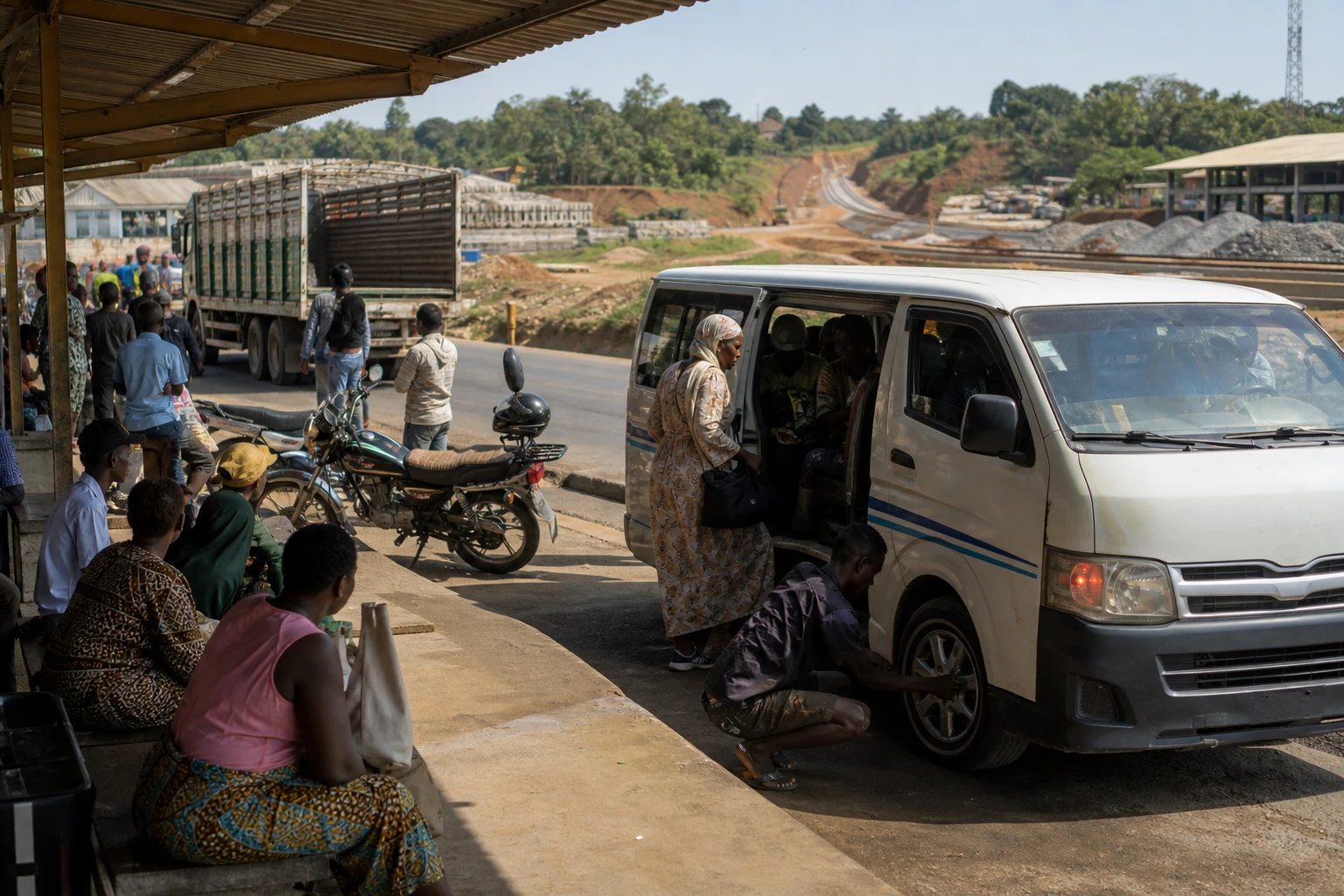
In Guinea, the Simandou project is entering a phase in which day-to-day performance will matter as much as the rails laid and locomotives delivered. The Compagnie du TransGuinéen (CTG) has signed a services agreement worth more than $700 million with US company Wabtec to provide long-term maintenance for its future rail fleet.
A new stage for the Simandou corridor
The agreement was formally announced in New York on 21 September 2026. It covers the operation and maintenance of Evolution Series locomotives, intended to transport iron ore from Simandou. Wabtec describes it as its largest rail services contract in Africa.
Including locomotive orders placed since 2024, the cumulative value of the US equipment maker’s commitments to the project now exceeds $1.2 billion. This figure covers several components: the supply of rolling stock and the services required to keep it operational.
The maintenance contract goes beyond mechanical work. It is to cover technical monitoring of the locomotives, spare-parts management, logistical support, staff training and remote diagnostics. Overhauls and component replacements are also planned to reduce service interruptions.
The locomotives concerned belong to the Evolution Series range. They are fitted with engines producing about 4,500 horsepower, designed to haul heavy trains along a mining route of more than 600 kilometres. In 2024, Wabtec had already secured a $277 million order from SimFer, the joint venture bringing together the Guinean state, Rio Tinto and Chalco Iron Ore Holdings.
A separate order, awarded in 2025 by Winning Consortium Simandou, was worth $248 million. It also covered locomotives and services related to the project’s rail operations. These commitments have helped build the initial fleet for the operation of the TransGuinéen.
Wabtec’s official announcement of the rail services agreement confirms the amount and the network’s intended role in transporting not only ore but also passengers and non-mining freight.
Beyond the mine, making a network useful
The TransGuinéen is to link mining areas in south-eastern Guinea with the port of Morebaya on the country’s coast. Its primary role will be to transport iron ore. However, it is also designed for civilian and commercial uses, including the transport of passengers and goods unrelated to mining.
This versatility changes the nature of the project. The railway will not simply be an export infrastructure. It could become a route linking areas far from the main economic centres, provided non-mining services are actually organised and accessible.
For mining operators, the priority will be regular train services. A locomotive out of service can delay several trains, disrupt supply to the port and increase operating costs. For CTG, maintenance is therefore becoming a central part of network governance, rather than simply a technical service.
For Guinea’s population, the stakes will be different. The benefits will depend on the frequency of passenger trains, ticket prices, service to prefectures and the network’s ability to support domestic trade. The creation of skilled jobs will also be an important measure. The training announced will need to enable Guinean technicians to participate in the long-term operation and maintenance of the equipment.
The project could also shift the balance between the capital, mining areas and coastal regions. Conakry will remain the main administrative and financial centre, but some of the value created will need to circulate in the regions along the route. This will require additional investment in stations, logistics, connecting roads and services around rail hubs.
CTG announced in April 2026 that work had begun on the first stations. Ten facilities are planned in several prefectures, with different functions depending on their locations: serving passengers, handling freight or supporting logistics activities. They are due to be completed by the end of 2026.
A test of Guinea’s industrial strategy
Simandou is one of the largest mining and infrastructure projects ever undertaken in Guinea. It combines ore extraction, railway construction, port development and the creation of an integrated transport operation. The success of the whole project will therefore depend on coordination between several public and private actors.
The challenge is also institutional. CTG must operate as a company capable of managing shared infrastructure, while the mining blocks are being developed by several consortia. The allocation of responsibilities, access to facilities and scheduling of train movements will need to remain clear enough to prevent conflicts over their use.
The maintenance contract with Wabtec offers investors a sought-after industrial guarantee. However, it does not in itself resolve questions of governance, financing and local benefits. Locomotive availability will also depend on the quality of the tracks, workshops, fuel supply, signalling and corridor security.
The project is also part of a West African context in which countries are seeking more integrated transport corridors. Guinea is a member of ECOWAS, the organisation bringing together West African states and working to facilitate regional trade. In this context, an efficient network could strengthen links between production areas, ports and neighbouring markets, even though the TransGuinéen is primarily designed for Simandou’s needs.
The next stage will therefore be operational. The gradual arrival of the locomotives, the opening of the first stations and CTG’s ability to accommodate mining transport, general freight and passengers will all need to be monitored. For Guinea, the TransGuinéen’s real performance will not be measured solely by the volume of ore exported. It will also be judged by the network’s reliability and its tangible contribution to the economies of the areas it crosses.