Algeria
 Egypt
 Libya
 Morocco
 Sudan
 Tunisia
 Benin
 Burkina Faso
 Cabo Verde
 Côte d'Ivoire
 Ghana
 Guinea-Bissau
 Liberia
 Mali
 Mauritania
 Niger
 Nigeria
 Senegal
 Sierra Leone
 The Gambia
 Togo
 Cameroon
 Central African Republic
 Chad
 DR Congo
 Equatorial Guinea
 Gabon
 Republic of the Congo
 São Tomé and Príncipe
 Burundi
 Comoros
 Djibouti
 Eritrea
 Ethiopia
 Kenya
 Madagascar
 Malawi
 Mauritius
 Mozambique
 Rwanda
 Seychelles
 Somalia
 South Sudan
 Tanzania
 Uganda
 Angola
 Botswana
 Eswatini
 Lesotho
 Namibia
 South Africa
 Zambia
 Zimbabwe
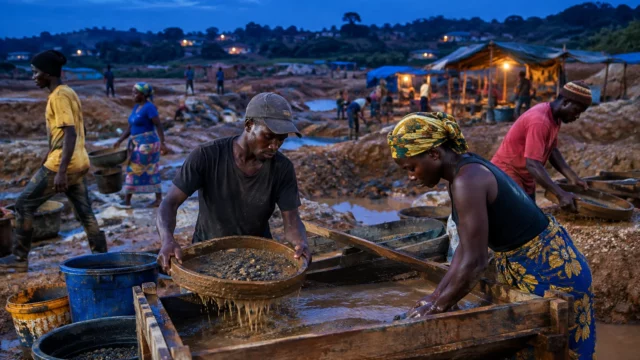
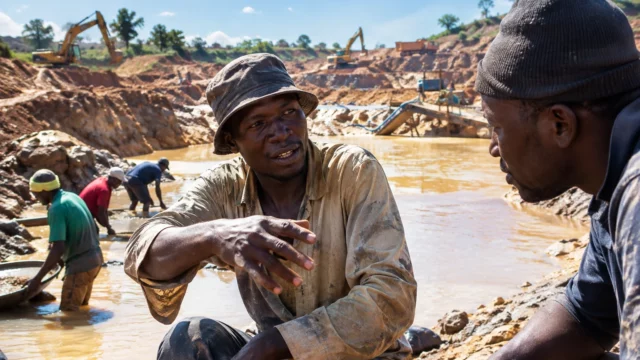
In Siguiri, gold supports thousands of people, but unregulated extraction can also damage the land and waterways on which villages depend. The measures announced by Conakry therefore have a dual aim: enforcing mining rules without abruptly cutting off communities’ incomes.
A new step after repeated warnings
In north-eastern Guinea, artisanal gold mining has long been part of the economy of Upper Guinea. It often supplements agricultural incomes and supports not only miners but also traders and people who process or buy gold. Research conducted by the International Organization for Migration also describes workers’ movements to gold-mining sites in Siguiri and Mandiana.
This activity is not confined to the pits. It shapes part of local economic life, particularly in villages where alternatives are scarce. A survey of rural incomes in Upper Guinea notes that artisanal gold mining is among the sources of income for the households surveyed. A blanket restriction could therefore affect workers, as well as small businesses and families that depend on these incomes.
Guinean authorities had already taken measures against non-compliant mining practices. In July 2025, they announced inspections in Siguiri after an assessment mission conducted in June. In March 2026, a statement banned the use of certain heavy machinery in artisanal mining. Reports in June of the suspension of officials subsequently highlighted the difficulties of enforcing these decisions.
The pressure extends beyond public-order concerns. Recent scientific studies of Siguiri’s soil and water examine the risks associated with metals found in gold-mining areas. The researchers nevertheless highlight an important difficulty: local geology naturally contains certain metals, complicating efforts to identify the share attributable to human activity. This nuance makes ongoing monitoring and field analyses necessary, rather than general claims about every site.
Tighter controls and regulated sales
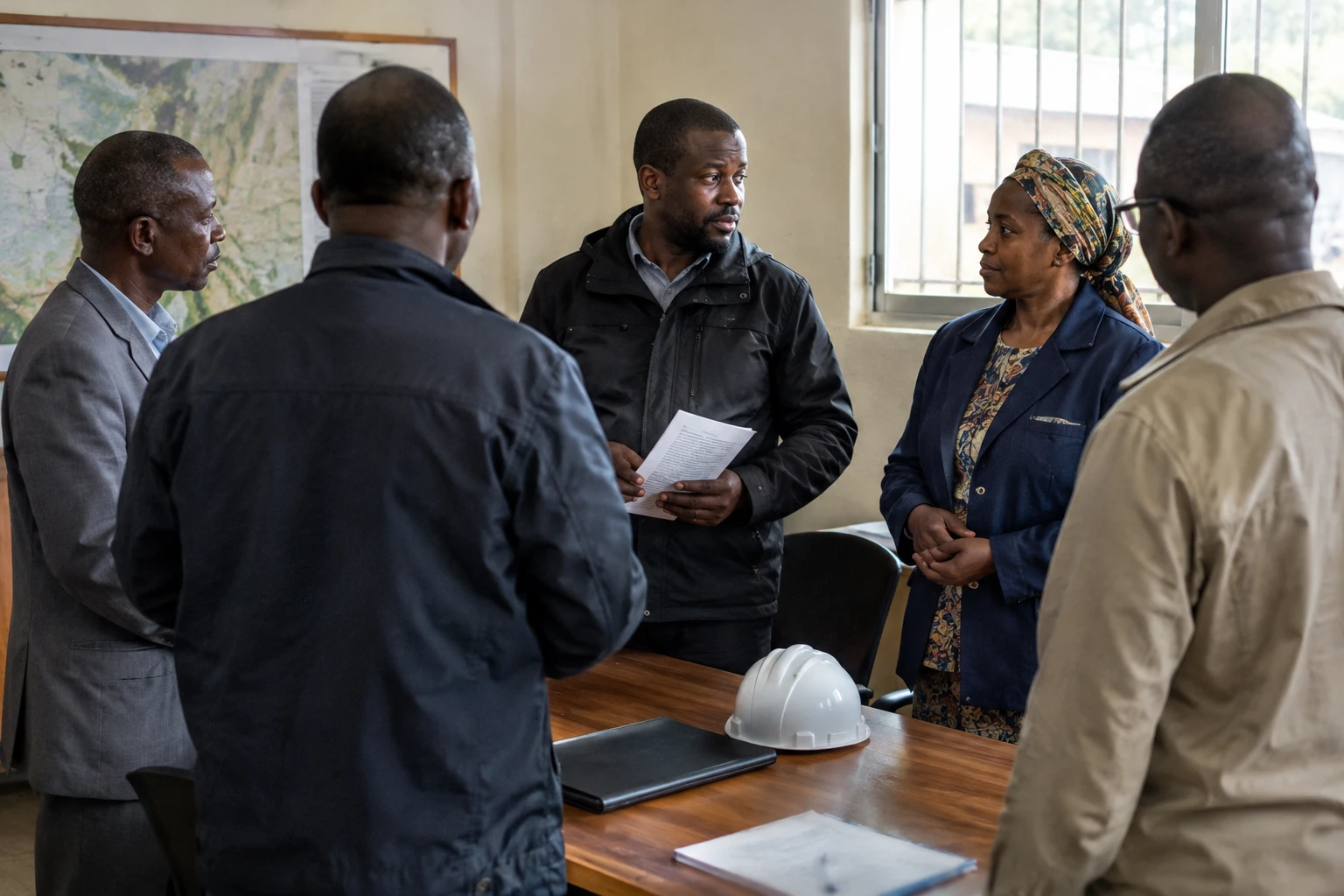
On 2 November 2026, five members of the government announced a ban on so-called “anarchic” gold mining in the administrative region of Siguiri. The statement provides for the permanent deployment of defence and security forces, with checks on roads, waterways and at the region’s entry points.
The measures are intended in particular to prevent the transport of heavy machinery, dredgers, explosives and chemicals for illegal activities. The text also bans extraction from riverbeds and riverbanks, agricultural land, pastureland, classified forests and protected areas. Gold produced in the area must be bought and sold through licensed trading offices.
Local defence and security committees are responsible for monitoring, with weekly reports to be sent to the national level. Administrative authorities, district officials and sector chiefs are also held responsible for implementing the measures. Those engaged in illegal activities, as well as their accomplices and anyone providing them with protection, face penalties under the law.
The government presents the operation as a response to damage to farmland and vegetation, as well as pollution and the silting of waterways. It names the Niger and the Tinkisso in particular; their waters and tributaries run through inhabited and cultivated areas. Guinean media have also reported on the measures and the planned restrictions on gold mining and trading.
The challenge: enforcing the rules without undermining villages
Inspections can limit the use of dangerous machinery and substances. But a ban alone does not resolve the economic difficulties that drive residents to gold-mining sites. If operations shut down sites without providing alternatives, the loss of income could affect far more than the directly targeted operators. Women, young people and workers who earn a living from processing or trading gold may be affected differently depending on their activities.
The announced measures rely heavily on the presence of security forces. Their credibility will also depend on clear rules, transparent checks and a clear distinction between authorised artisanal gold mining and illegal operations. Sales through licensed trading offices can improve traceability, provided these channels are genuinely accessible to small-scale producers and procedures do not push them towards the informal market.
Local governance will be another test. Previous measures, followed by further restrictions and sanctions against officials, show that enforcement does not take place only at mining sites. It also depends on monitoring equipment, combating illegal protection and overseeing purchasing channels. The announced weekly reports will make it possible to assess the committees’ activity, but their content and the results achieved remain to be verified over time.
An issue extending beyond Siguiri
Siguiri lies in the Niger Basin, a river system shared by several West African countries. Pollution upstream can therefore have consequences that do not stop at Guinea’s administrative borders. For Guinea, protecting waterways and farmland is thus linked to public health, food production and regional cooperation over water resources.
What happens next will depend on the long term: will the announced checks continue, will banned activities genuinely decline, and will communities have access to less harmful practices and legal markets? In Siguiri, the decision’s effectiveness will be judged as much by the condition of sites and waterways as by the ability to protect livelihoods. The information published on 2 November sets out the measures announced, but not yet their effects on the ground.
For further reading, see the statement reproduced by the Guinean embassy in Senegal, Guinéenews’ report on mining restrictions in Siguiri, the IOM’s research on movements linked to gold mining in Upper Guinea and the AFD study on the social and environmental issues facing the mining sector.