Algeria
 Egypt
 Libya
 Morocco
 Sudan
 Tunisia
 Benin
 Burkina Faso
 Cabo Verde
 Ghana
 Guinea
 Guinea-Bissau
 Liberia
 Mali
 Mauritania
 Niger
 Nigeria
 Senegal
 Sierra Leone
 The Gambia
 Togo
 Cameroon
 Central African Republic
 Chad
 DR Congo
 Equatorial Guinea
 Gabon
 Republic of the Congo
 São Tomé and Príncipe
 Burundi
 Comoros
 Djibouti
 Eritrea
 Ethiopia
 Kenya
 Madagascar
 Malawi
 Mauritius
 Mozambique
 Rwanda
 Seychelles
 Somalia
 South Sudan
 Tanzania
 Uganda
 Angola
 Botswana
 Eswatini
 Lesotho
 Namibia
 South Africa
 Zambia
 Zimbabwe
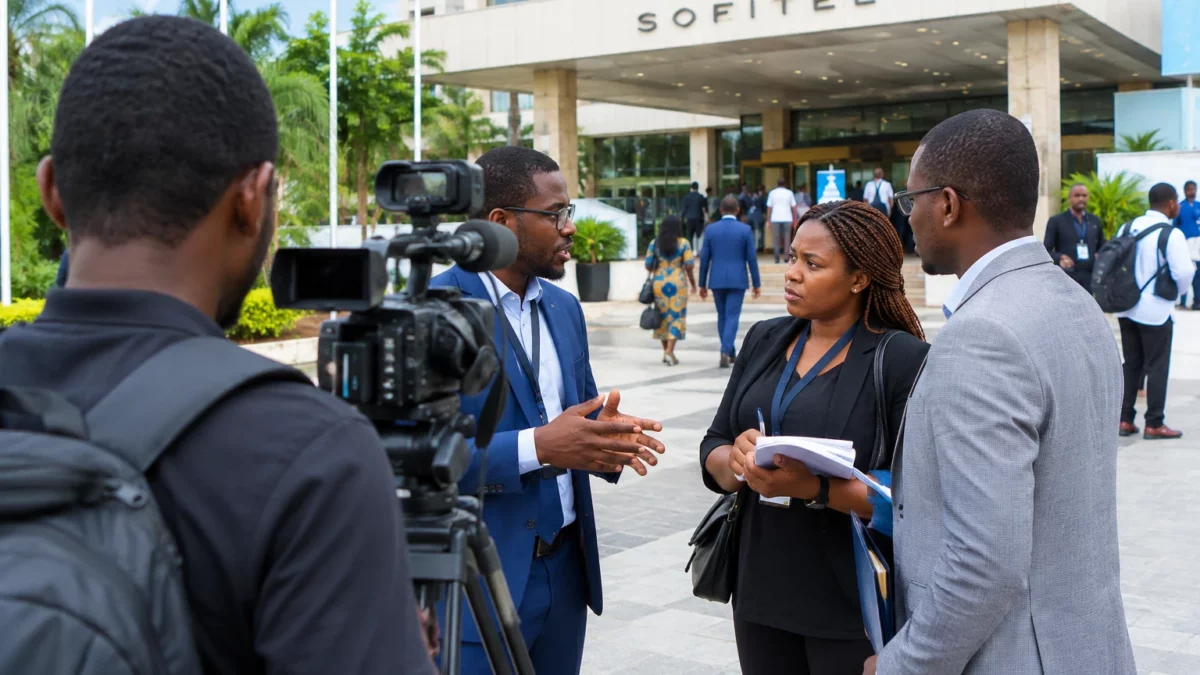
For an Ivorian production company, securing a meeting with investors is not always enough: it must also convince a bank that its projects can generate predictable revenues. This is one of the issues at the heart of the Abidjan International Audiovisual Content Market, which opens on 26 November.
A market focused on structuring the sector
The fourth edition of SICA will take place from 26 to 28 November 2026 at the Sofitel Abidjan Hôtel Ivoire, in Cocody. Côte d’Ivoire’s Ministry of Communication has confirmed the edition and its dates. The market centres on the content economy and cultural diplomacy, with the stated aim of better structuring Africa’s audiovisual and film industries.
The event brings creators, producers, broadcasters, institutions and financiers around the same table. This proximity matters in a sector where a film, series or programme can require teams and expenditure before broadcast revenues start coming in. The market plans professional discussions, opportunities to build partnerships and the promotion of works.
Côte d’Ivoire is seeking to consolidate its position in the production and circulation of content. Abidjan, the country’s main economic centre, is hosting the event; Yamoussoukro remains the political capital. This distinction helps locate where sector activities are concentrated, on the one hand, and national institutions, on the other.
Financing, a decisive link
NSIA Banque Côte d’Ivoire has announced its participation as a Platinum partner. The bank says it will meet professionals at its dedicated stand and take part in a SICA Forum panel on financing the cultural and creative industries. These details come from the bank’s announcement: specific financing terms and quantified commitments have not been disclosed.
The question goes beyond a bank’s presence at a market. Cultural businesses often have to finance writing, filming, editing and promotion before selling their rights or earning revenues. Their assets can be difficult to assess using conventional banking criteria. Guarantees, revenue stability and the formalisation of business activities can therefore affect access to credit.
For banks, the challenge is to assess projects whose revenues depend on several factors: broadcast contracts, audience numbers, overseas sales or digital exploitation. For producers and small businesses, the task is to present sufficiently documented budgets, rights and forecasts. A panel can open a dialogue; it cannot replace an appropriate financing mechanism or the decision to grant a loan.
Potential facing practical obstacles
The cultural and creative industries include audiovisual media, film, music, books, fashion and the arts. In Côte d’Ivoire, UNESCO identifies persistent difficulties: limited access to finance, insufficiently structured sectors, a lack of statistical data and challenges in protecting intellectual property. These constraints particularly affect young businesses, which often have fewer guarantees and more limited access to markets.
Financing is only part of the equation. For a work to generate lasting revenue, ownership of rights must also be clarified, creations protected against unauthorised use, and distribution channels found. Digital platforms expand potential audiences, but visibility alone does not guarantee fair remuneration for authors and producers.
The impact of cultural investment is also determined beyond Abidjan’s major events. Businesses based in the economic capital do not necessarily face the same conditions as creators working in other cities or regions. Training, access to equipment and the circulation of works within the country therefore remain essential if the benefits are not to be concentrated in a handful of businesses or locations.
National ambitions with regional reach
SICA also seeks to promote cooperation and the circulation of African works. For Ivorian producers, selling beyond the domestic market can diversify revenues and spread production costs. But this opening depends on concrete partnerships between creators, broadcasters and distributors. It also requires clear agreements on rights and revenue sharing.
Côte d’Ivoire is part of ECOWAS, the Economic Community of West African States, where regional exchanges can facilitate collaboration and the distribution of content. The market’s pan-African reach will therefore depend less on declarations than on the ability of participants to turn meetings into co-productions, contracts and lasting outlets.
The event on 26, 27 and 28 November will provide an opportunity to assess the place financing holds in this strategy. For cultural entrepreneurs, the test will be practical: obtaining responses suited to production cycles, exploitation rights and the realities of small businesses. For NSIA Banque, its announced participation creates an opportunity to present its approach; the details of its support remain to be clarified.