Algeria
 Egypt
 Libya
 Morocco
 Sudan
 Tunisia
 Benin
 Burkina Faso
 Cabo Verde
 Ghana
 Guinea
 Guinea-Bissau
 Liberia
 Mali
 Mauritania
 Niger
 Nigeria
 Senegal
 Sierra Leone
 The Gambia
 Togo
 Cameroon
 Central African Republic
 Chad
 DR Congo
 Equatorial Guinea
 Gabon
 Republic of the Congo
 São Tomé and Príncipe
 Burundi
 Comoros
 Djibouti
 Eritrea
 Ethiopia
 Kenya
 Madagascar
 Malawi
 Mauritius
 Mozambique
 Rwanda
 Seychelles
 Somalia
 South Sudan
 Tanzania
 Uganda
 Angola
 Botswana
 Eswatini
 Lesotho
 Namibia
 South Africa
 Zambia
 Zimbabwe
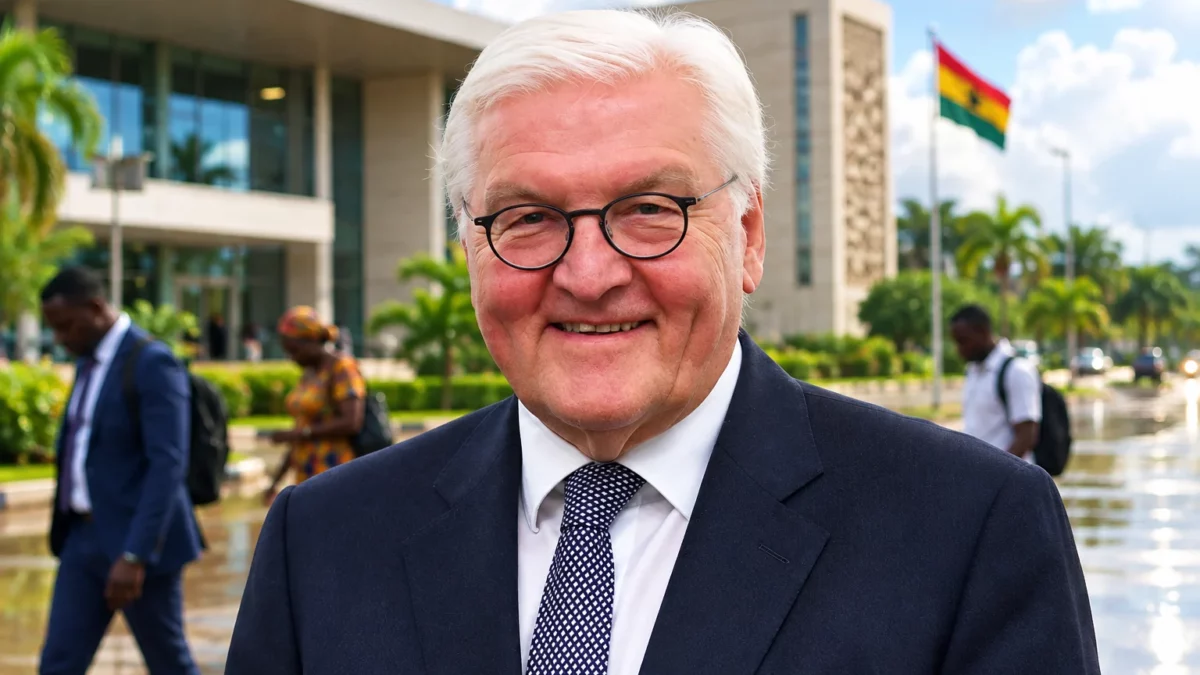
A presidential tour can open doors. It guarantees neither contracts, jobs nor the transfer of expertise. By visiting Côte d’Ivoire, Ghana and Kenya from 22 to 26 November 2026, German President Frank-Walter Steinmeier is promoting a relationship that Berlin wants to make more economic. For the three countries, the challenge is also to turn this interest into useful investment and local skills.
Three stops, three economic spaces
The countries visited occupy different positions. Côte d’Ivoire is one of the leading economies in the West African Economic and Monetary Union (WAEMU), which shares a currency and common economic rules. English-speaking neighbour Ghana is a member of the Economic Community of West African States (ECOWAS), a regional integration organisation. Further east, Kenya is an economic and logistics hub in East Africa, within the East African Community (EAC).
This geography explains the interest in a tour linking the Gulf of Guinea to East Africa. It enables Berlin to engage with governments whose priorities differ, as well as to meet businesses and training providers. The programme announced in Kenya includes visits to the digital services, vocational training and arts sectors.
Economy, climate and security on the agenda in Abidjan
On 23 November, Frank-Walter Steinmeier met Ivorian President Alassane Ouattara in Abidjan. The Ivorian presidency said the two leaders had discussed bilateral relations and issues of common interest. The visit comes, according to the presidency, 43 years after the previous visit to Côte d’Ivoire by a German head of state.
The talks also covered economic cooperation, development, climate protection, peace and security. These subjects are closely interconnected: investment can support economic activity and training, while energy and climate choices affect infrastructure and agriculture.
The meeting comes within the framework of diplomatic relations established in 1960. For Abidjan, the opportunity lies in diversifying its partners and advancing its priorities in a regional context where trade, infrastructure and security play an important role. However, cooperation announcements will need to be judged by tangible results, not simply by the number of official meetings.
Accra puts trade and industry centre stage
In Ghana, Steinmeier met President John Dramani Mahama on 24 November. The two leaders opened the sixth German-African Business Summit (GABS) in Accra, a business event organised by the German-African Business Association and the German Chamber of Commerce in Ghana. The Ghana News Agency reports that discussions focused on trade, investment, technology transfers and industrial development.
The summit, held from 23 to 25 November, brings together public officials and businesses from several countries. Its value will not be measured by statements of intent alone: what follows will depend on agreements reached, funding secured and the ability of African businesses to access markets and value chains.
For Ghana, industrialisation and the creation of skilled jobs are major priorities. For Germany, businesses are looking for opportunities and partners in growing markets. These aims can converge, provided investment also strengthens local processing and skills, rather than being limited to exporting raw commodities or selling imported goods.
Kenya, a stop for services and training
Having arrived in Nairobi on the evening of 24 November, the German president is due to meet William Ruto on 25 November. Kenya’s foreign ministry announced talks on trade, investment and shared development priorities. The delegation is also due to visit projects linked to health, digital services, skills, culture and biodiversity.
This stop highlights sectors that go beyond raw-material exports. Digital services and customer contact centres can create jobs, but their contribution depends on the quality of those jobs, training and opportunities for career progression. Training centres therefore have a practical role: aligning the qualifications they offer with employers’ needs, without placing the entire responsibility on workers.
Official visits can facilitate contacts, but they cannot replace investment rules, access to finance or lasting partnerships with local businesses. For Nairobi, as for Abidjan and Accra, the question will be who benefits from projects, where value is created and what share of skills remains in the country.
Trade is growing, but the relationship remains modest
Statistics cited by Germany Trade & Invest, the German foreign trade and investment agency, show that German merchandise exports to Africa reached about €28.4 billion in 2025, up 8% year on year. This increase points to expanding trade, but does not on its own show which countries or sectors benefited most.
Berlin is seeking to diversify its trading partners and supply chains. African governments, for their part, want to attract capital, develop employment and increase local processing. The relationship will be balanced only if partner countries’ priorities carry weight in defining projects and local businesses can take part.
The tour thus links three important markets without conflating them or treating Africa as a homogeneous bloc. What happens next will depend on decisions made after the visits: funded projects, training partnerships, opportunities for local businesses and measurable results. In Nairobi, the presidential talks scheduled for 25 November are the immediate next step; beyond that, implementation will show whether this diplomatic initiative has changed economic realities.