Algeria
 Egypt
 Libya
 Morocco
 Sudan
 Tunisia
 Benin
 Burkina Faso
 Cabo Verde
 Ghana
 Guinea
 Guinea-Bissau
 Liberia
 Mali
 Mauritania
 Niger
 Nigeria
 Senegal
 Sierra Leone
 The Gambia
 Togo
 Cameroon
 Central African Republic
 Chad
 DR Congo
 Equatorial Guinea
 Gabon
 Republic of the Congo
 São Tomé and Príncipe
 Burundi
 Comoros
 Djibouti
 Eritrea
 Ethiopia
 Kenya
 Madagascar
 Malawi
 Mauritius
 Mozambique
 Rwanda
 Seychelles
 Somalia
 South Sudan
 Tanzania
 Uganda
 Angola
 Botswana
 Eswatini
 Lesotho
 Namibia
 South Africa
 Zambia
 Zimbabwe
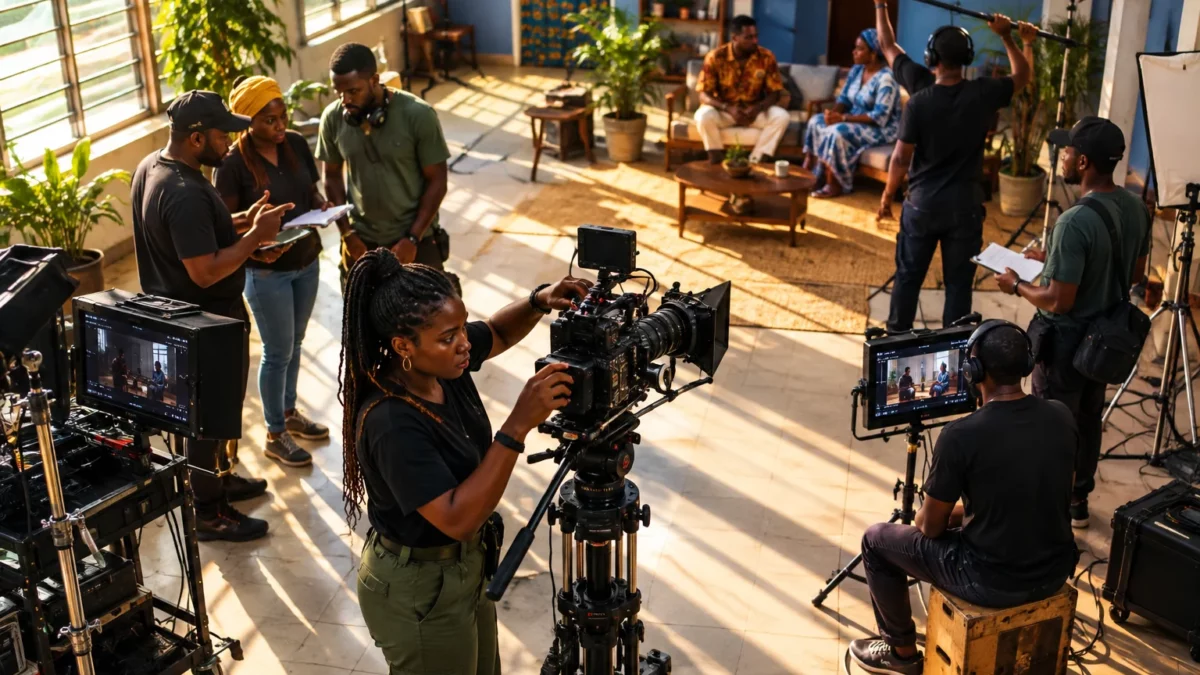
A film can travel far beyond the country where it was produced. But for African creators, finding funding, securing rights and reaching screens remain complex challenges. In Abidjan, the International Audiovisual Content Market (SICA) puts these obstacles at the centre of discussions, with one decisive question: how can cultural visibility be turned into sustainable economic activity?
Abidjan, a crossroads for an industry in the making
The fourth edition of SICA takes place from 26 to 28 November 2026 at the Sofitel Abidjan Hôtel Ivoire, in the Cocody district. Japan is the guest of honour. Organisers expect more than 5,000 visitors and professionals from around 40 countries. These figures describe expectations, not an attendance record already achieved.
The event forms part of Côte d’Ivoire’s strategy to develop its cultural industries. The country has, among other bodies, the Film Industry Support Fund (FONSIC) and the National Cinema Office (ONAC-CI), two public organisations tasked with supporting the sector. SICA aims to complement these initiatives by bringing creators, producers, broadcasters and investors together.
The event also comes at a time of rapid change in the audiovisual landscape. Television, digital platforms and video-on-demand services are competing for audiences’ attention. For Ivorian producers, the challenge is therefore not simply to create works, but to be able to finance and distribute them, and generate revenue beyond their first broadcast.
Funding, distributing and protecting works
The theme chosen for 2026 links the economics of content with cultural diplomacy. Behind this formula are several very concrete issues: access to funding, the international circulation of films and series, the development of streaming, intellectual property protection and the fight against piracy.
These issues are interconnected. A work that cannot find a distributor will struggle to reach its audience. Without an audience or revenue, producers then find it difficult to finance a new project. And when rights are poorly defined or exploited without authorisation, creators risk losing a share of the value generated by their work.
The announced programme includes professional meetings and discussions among industry players. Japan, the guest of honour, gives this edition an additional dimension: organisers want to encourage partnerships between Japanese and African cultural industries. Cooperation could cover expertise, co-productions or routes to market. It does not, however, in itself guarantee more equitable access to funding and markets.
The event also brings together film figures from different backgrounds. Announced guests include Jean-Pascal Zadi, Kunle Afolayan and Abderrahmane Sissako. Their presence may draw attention to African productions. The challenge remains to turn this moment of visibility into contracts, collaborations and opportunities for local teams.
Impact to be measured beyond the event
Professional meetings take place mainly in an institutional and business setting. SICA OFF, meanwhile, opens part of the programme to the general public, with screenings scheduled from 25 November to 6 December. This extension helps connect industry discussions with audiences, whose choices also determine whether works are viable.
The benefits are not necessarily shared equally. Producers and broadcasters seek commercial agreements; technicians and young creators need work and training; audiences want accessible works that reflect their experiences. Activity concentrated in Abidjan may strengthen the economic capital’s ecosystem, but its impact on professionals based in other regions will depend on the partnerships and funding mechanisms put in place.
Côte d’Ivoire wants to consolidate its position in the regional audiovisual industry. This ambition is being pursued in a West African landscape where content crosses borders, while markets, languages and distribution networks remain fragmented. ECOWAS, the economic community of West African countries, provides a relevant regional framework for considering these exchanges, even if the event alone cannot resolve difficulties with circulation and distribution.
SICA can therefore serve as a meeting point for creative industries seeking closer cooperation. Its impact will depend less on the announced number of participants than on what follows: co-production agreements, funding mobilised, rights negotiated and works actually distributed. For Ivorian professionals and their African partners alike, the next step will be to see whether the discussions in Abidjan lead to lasting opportunities.
Regional ambition, results to watch
By welcoming Japan as guest of honour, Côte d’Ivoire is also giving the event a cultural diplomacy dimension. This opening could foster new links with Asia, while raising a fundamental question: how can partnerships be built without relegating African creators to the role of content suppliers alone? Control of rights, funding and distribution channels will be decisive.
Across the continent, the issue extends beyond cinema alone. Series, animation and digital content all contribute to the circulation of languages, imaginations and expertise. SICA highlights an ambition shared by several African cultural industries: to increase production capacity and negotiate better access to audiences. Future announcements on agreements reached and works supported will help establish whether this ambition has produced tangible results.