Algeria
 Egypt
 Libya
 Morocco
 Sudan
 Tunisia
 Benin
 Burkina Faso
 Cabo Verde
 Côte d'Ivoire
 Ghana
 Guinea
 Guinea-Bissau
 Liberia
 Mali
 Mauritania
 Niger
 Nigeria
 Senegal
 Sierra Leone
 The Gambia
 Togo
 Cameroon
 Central African Republic
 Chad
 DR Congo
 Equatorial Guinea
 Gabon
 Republic of the Congo
 São Tomé and Príncipe
 Burundi
 Comoros
 Djibouti
 Eritrea
 Ethiopia
 Kenya
 Madagascar
 Malawi
 Mauritius
 Mozambique
 Rwanda
 Seychelles
 Somalia
 South Sudan
 Tanzania
 Uganda
 Angola
 Botswana
 Eswatini
 Lesotho
 Namibia
 Zambia
 Zimbabwe
A memory that will not fade
In Sharpeville, in Gauteng province, the past is more than a matter of commemorations. It continues to inhabit families, streets and court files. More than six decades after the shooting on 21 March 1960, survivors and relatives of victims are asking the South African state to answer a simple question at last: how can a wound that became a defining part of the country’s history be repaired?
The case goes beyond the memory of the massacre itself. It also touches on how democratic South Africa deals with harms inherited from apartheid, the system of racial segregation that shaped the country’s political, economic and social life until 1994. In Sharpeville, the demand for justice is about recognition as much as compensation.
From the 1960 crackdown to a 2026 court battle
On 21 March 1960, thousands of Black South Africans had gathered outside the Sharpeville police station to protest against the “pass” books imposed on Black people to control their movements. Police opened fire on the crowd. Official figures put the death toll at 69, with at least 180 injured. Research cited by the claimants suggests a higher toll, of at least 91 dead and more than 238 injured.
On Thursday, survivors and descendants brought legal action against South Africa’s president and the ministers of police and justice. They have two aims. First, to have a 1961 compensation law declared unconstitutional, arguing that it continues to block claims by victims and their dependants. Second, to have the group of claimants recognised as a legal entity so that they can seek individual damages.
The stakes are high. Lawyers say the law closed the door to civil claims for decades. The claimants argue that symbolic reparation is no longer enough. They are seeking a clear legal response in a country where the Constitution protects access to justice, but apartheid’s legacy remains visible in disparities in income, wealth and the quality of public services.
A family, social and political wound
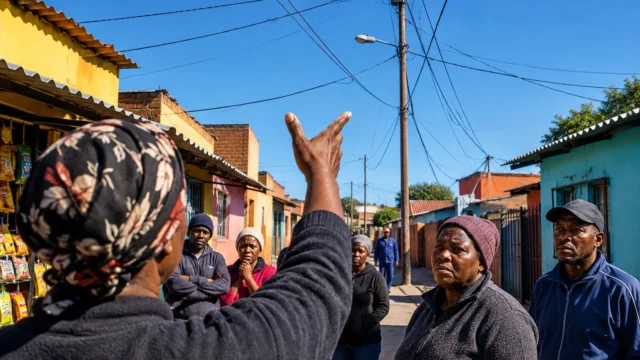
In Sharpeville, memory is passed down from one generation to the next. Abram Mofokeng, now 87, was 20 when bullets struck him in the foot and back. Other descendants, born long after 1960, also carry this history. Their claim is not solely financial. It concerns recognition of a lasting trauma passed on to victims’ children and grandchildren.
This family dimension explains the scope of the case. In South African townships, where inequalities inherited from apartheid remain severe, reparation is not an abstract concept. It touches on health, economic security, access to land and dignity. In Sharpeville, some residents are also calling for the neighbourhood to be rehabilitated, as several areas have deteriorated over time, and for the memorial site to be better preserved.
The debate is political, too. After the end of apartheid, the state made 21 March a public holiday, Human Rights Day. This helped place Sharpeville on the civic calendar. But some people in the township believe that the name tends to smooth over the meaning of the tragedy. For them, speaking only of human rights is not enough if the specific event that gave rise to the day is not forcefully named.
Sharpeville in South African and regional history
Sharpeville holds a singular place in South African political history. The shooting sent shockwaves around the world and accelerated the isolation of the Pretoria regime at the time. It also strengthened the global dimension of the anti-apartheid struggle, linking local fights to universal principles of human rights.
Across southern Africa, this memory remains significant. The Southern African Development Community, or SADC, still brings together states shaped to varying degrees by the legacies of colonisation, segregation and land inequality. The Sharpeville case is a reminder that political transitions in Africa do not automatically heal historical wounds. Democratic institutions must also respond to demands for reparation.
For the South African government, the case is sensitive. Broader legal recognition could open the way to other claims related to apartheid-era violence. But ignoring these survivors would leave unanswered one of the best-known episodes in the country’s modern history. Caught between the duty to remember and the demand for justice, Pretoria faces a promise long deferred.
What the case says about South Africa today
The Sharpeville case highlights a point that is often overlooked: transitional justice does not end with an election or a new constitution. It is also measured by the state’s ability to deal with reparations credibly, transparently and fairly. In a country where the divide between affluent neighbourhoods and townships remains stark, the question of compensation points to a broader debate about wealth redistribution and redress for historical wrongs.
It also says something broader about the continent. Many African countries still grapple with state violence, impunity and post-conflict reparations. The South African case is therefore both a point of reference and a test. If a state with strong institutions and a powerful public memory still struggles to resolve this kind of dispute, the message to other African democracies is clear: memory alone is not enough. Concrete mechanisms are needed to turn recognition into meaningful reparation.
In Sharpeville, bodies painted red and laid out in front of the memorial have served as a reminder of a simple truth: history cannot be brought to rest by decree. It takes time, political courage and verifiable action. Sixty-six years after the shots were fired, the survivors’ demand remains the same: for the state to turn remembrance into justice at last.