Algeria
 Egypt
 Libya
 Morocco
 Sudan
 Tunisia
 Benin
 Burkina Faso
 Cabo Verde
 Côte d'Ivoire
 Ghana
 Guinea
 Guinea-Bissau
 Liberia
 Mali
 Mauritania
 Niger
 Nigeria
 Sierra Leone
 The Gambia
 Togo
 Cameroon
 Central African Republic
 Chad
 DR Congo
 Equatorial Guinea
 Gabon
 Republic of the Congo
 São Tomé and Príncipe
 Burundi
 Comoros
 Djibouti
 Eritrea
 Ethiopia
 Kenya
 Madagascar
 Malawi
 Mauritius
 Mozambique
 Rwanda
 Seychelles
 Somalia
 South Sudan
 Tanzania
 Uganda
 Angola
 Botswana
 Eswatini
 Lesotho
 Namibia
 South Africa
 Zambia
 Zimbabwe
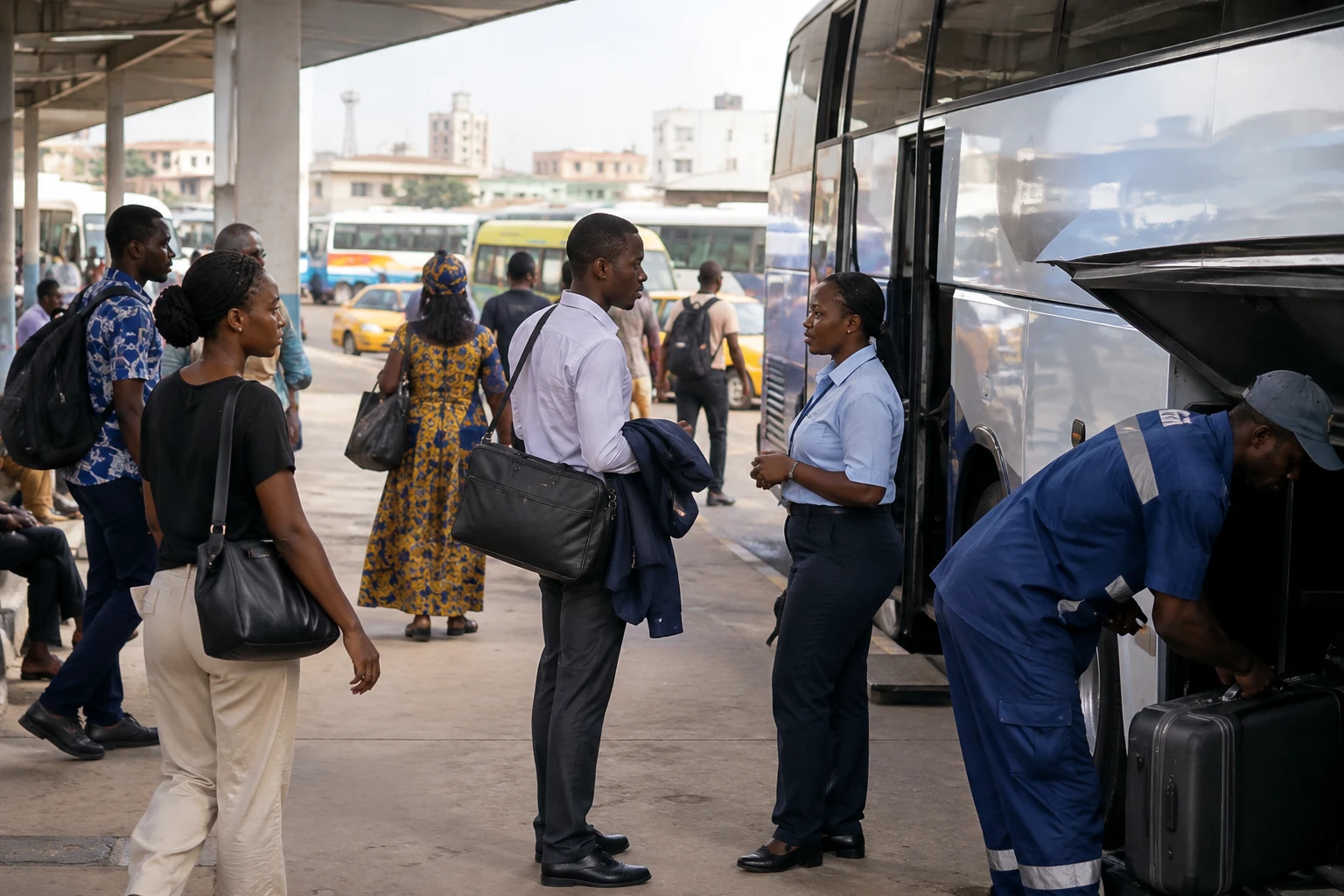
A contract abroad can open a door for a young Senegalese graduate. It also raises a fundamental question: how can this mobility be turned into useful experience without making it a substitute for job creation in Senegal?
Overseas opportunities amid youth unemployment
Senegal’s labour market remains under pressure. In the second quarter of 2026, broad unemployment reached 23.5% among 15- to 34-year-olds, compared with 14.7% among people aged 35 and over, according to the National Agency of Statistics and Demography (ANSD). The youth activity rate stood at 46.3%. In other words, a significant proportion of this age group does not participate in the labour market, while those seeking work face greater difficulties than adults.
These indicators reflect different realities depending on location and gender. The ANSD reports higher broad unemployment in rural areas than in urban areas, and greater difficulties for women. International mobility opportunities will therefore not meet the needs of young people in Dakar, other cities and rural regions in the same way.
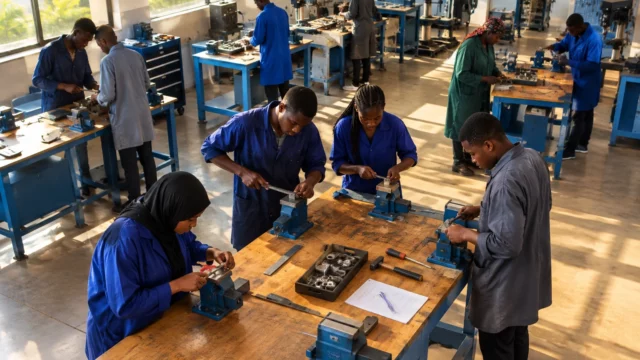
The challenge also concerns access to training and employment. The School-Enterprise Training Programme (PF2E) focuses on workplace-based learning: young people train mainly within a company, supplemented by learning at a training centre. The scheme covers occupations such as construction, industry, digital technology and agri-food. However, according to data provided by the authorities, it cannot meet all demand for training.
Forty departures to France’s construction sector announced
Speaking on a radio programme on Sunday 4 October 2026, Senegal’s minister responsible for employment and vocational training, Idrissa Samb, announced that 40 young people trained in Senegal would soon leave for France. They are due to work in the construction and public works sector on permanent contracts. The minister mentioned salaries of more than €2,000, as well as accommodation and insurance.
The minister presented these conditions; the contract details and their implementation have not been corroborated by a second independent publication consulted. They should therefore be treated as an announcement, rather than proof that the recruitment has already taken place. The precise occupations, employers, departure dates and arrangements for recognising qualifications remain to be specified.
Senegal already has several channels for professional mobility. The Franco-Senegalese agreement on exchanges of young professionals, signed in 2001, provides for an annual maximum quota of 100 people for both countries combined. It allows for temporary paid work experience and aims, in particular, to help participants acquire skills. This framework should not be confused with the recruitment announced in the construction sector, whose precise legal basis has not been made public in the information available.
Circular migration to Spain is another channel, particularly for seasonal agricultural jobs. In 2025, the Senegalese authorities announced 350 agricultural positions under this scheme, compared with 100 the previous year. The same debate has extended to Qatar, where a thousand job prospects were mentioned across several sectors. These announcements point to a search for opportunities, but the numbers alone do not show how many workers were actually recruited.
Regulating departures and retaining skills
Mobility can bring a salary, work experience and new skills. But its value depends on the actual conditions: an understandable contract, wages paid, social protection, safe housing and access to remedies in the event of a dispute. Workers recruited far from their family networks may be particularly dependent on the employer and the intermediary arranging their departure.
Another issue is the return of workers and the sharing of skills acquired abroad. Experience overseas can strengthen career paths in Senegal if qualifications are recognised, workers can return to their sector and local companies value that experience. Conversely, lasting departures from occupations already difficult to fill can reduce the workforce available in the country. This tension warrants analysis by profession, rather than a generalised choice between leaving and staying in Senegal.
The PF2E illustrates the other side of employment policy: aligning training with the needs of companies operating in the country. The programme’s website describes training carried out mainly in companies, supplemented by learning at a centre. For this approach to deliver results on a larger scale, available places, the quality of supervision and employment after certification matter as much as the number of young people enrolled.
In Dakar, government departments and recruitment services may handle a large share of the procedures. Yet access to job offers and information must also reach candidates in other regions. Transparent procedures and public criteria would limit unnecessary costs, dubious intermediaries and disparities in access between urban and rural young people.
A governance challenge for ECOWAS
In June 2026, Senegal began developing a national labour migration strategy with support from the International Labour Organization, the European Union and ECOWAS. This regional organisation, which brings together West African countries, is also working to better regulate mobility and workers’ rights. The strategy is expected to address fair recruitment, the recognition of qualifications and the protection of people on the move.
The regional dimension matters: professional mobility is not limited to departures for Europe or the Gulf. It also takes place between West African countries, where freedom of movement exists but practical access to jobs, social protection and recognition of qualifications remains decisive. Regional coordination can help make career paths clearer and curb cross-border abuses.
For the 40 announced recruits, the next decisive steps will be publication of the occupations and employers, the signing of the contracts, social guarantees and follow-up with workers after their arrival. In the longer term, an assessment of the national strategy should make it possible to distinguish announced offers from placements made and measure whether the skills acquired also benefit Senegal’s economy.