
 Algeria
 Egypt
 Libya
 Morocco
 Sudan
 Tunisia
 Benin
 Burkina Faso
 Cabo Verde
 Côte d'Ivoire
 Ghana
 Guinea
 Guinea-Bissau
 Liberia
 Mali
 Mauritania
 Niger
 Nigeria
 Sierra Leone
 The Gambia
 Togo
 Cameroon
 Central African Republic
 Chad
 DR Congo
 Equatorial Guinea
 Gabon
 Republic of the Congo
 São Tomé and Príncipe
 Burundi
 Comoros
 Djibouti
 Eritrea
 Ethiopia
 Kenya
 Madagascar
 Malawi
 Mauritius
 Mozambique
 Rwanda
 Seychelles
 Somalia
 South Sudan
 Tanzania
 Uganda
 Angola
 Botswana
 Eswatini
 Lesotho
 Namibia
 South Africa
 Zambia
 Zimbabwe
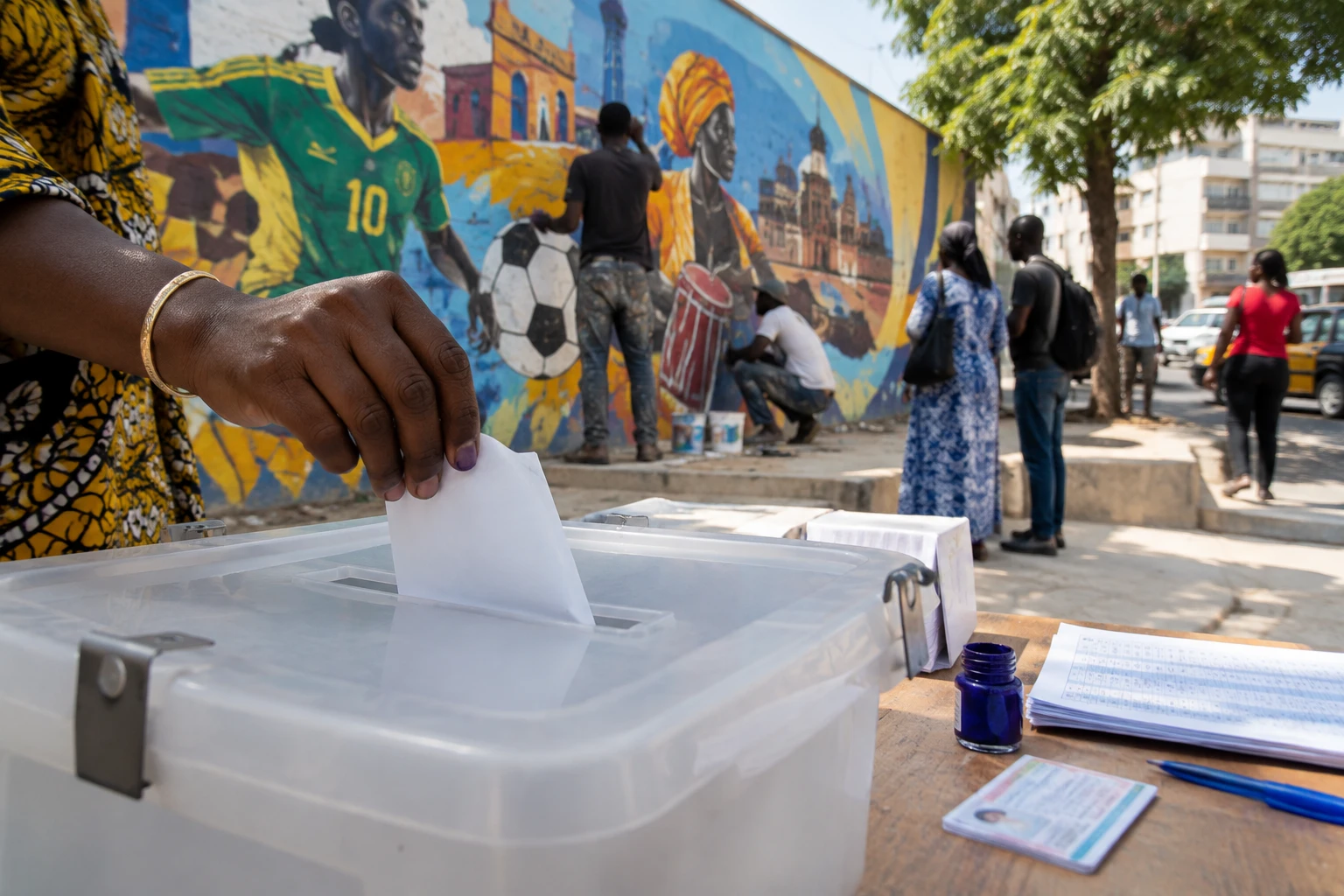
In Dakar, Diamniadio and Saly, walls are becoming spaces for storytelling as the Youth Olympic Games approach. Senegal’s challenge is not limited to hosting competitions: it also means making lasting space for the country’s artists and cultural practices.
Murals across the host neighbourhoods
The YEESAL urban art project is already giving visible form to this ambition. A mural measuring more than seven metres at Colobane TER station depicts Senegalese athletes Tening Faye, Combé Seck and Julie Marie Gomis. It was created by Zeinixx, a Senegalese artist, with Irish artist Kathrina Rupit.
The initiative was later extended to Dakar, Diamniadio and Saly. In September 2026, 43 Senegalese painters and graffiti artists had been selected following an open call, under the artistic direction of Madzoo TRK. The works draw inspiration from sport, African athletes and Senegalese cultures. RTS documented the murals’ rollout across the three host cities; Senegalese daily Le Soleil also reported on the selection of the 43 artists.
The programme announced by the Youth Olympic Games Organising Committee (YOGOC) goes beyond mural art. It includes concerts, dance, handicrafts, exhibitions, workshops and traditional games. At the Olympic Village in Diamniadio, visitors are expected to be able to discover yoté and awale, as well as musical traditions involving the sabar, djembe, kora and balafon.
Fashion and visual arts also feature in the announced schedule. Ten designers are due to present their work in a show at the Place du Souvenir Africain. An exhibition on African women in Olympism is planned with the Olympic Museum in Lausanne. At the Dakar Expo Center, “Movement and Matter” is set to bring together visual artworks.
A living heritage, not just a backdrop
The programme also refers to the Kankurang and the Faux Lions. The Kankurang is a Manding initiation rite practised in Senegal and The Gambia, particularly in Casamance and Mbour. Inscribed by UNESCO in 2008 on the Representative List of the Intangible Cultural Heritage of Humanity, it carries knowledge and practices passed down within communities. UNESCO’s entry details its roots in Manding traditions.
Its inclusion in a sports programme can raise awareness of this tradition. It nevertheless calls for particular care: a living rite cannot be reduced to entertainment or an image for visitors. How it is presented, the role of those who uphold these practices and respect for their customs will matter as much as its visibility.
The connection between sport and culture is not new to the Youth Olympic Games. Cultural and educational activities accompanied the competitions from the first edition in Singapore in 2010. In Senegal, the “Dakar en Jeux” festival served as a testing ground ahead of the Olympic edition. In 2022, its inaugural edition brought together sports workshops, artists and concerts in the areas due to host the Games.
The question of a legacy after the Games
The Summer Youth Olympic Games will take place from 31 October to 13 November 2026. According to the International Olympic Committee’s calendar, this will be the first Olympic event held on African soil. Competitions and activities will be time-limited. The murals, by contrast, can remain visible in public spaces. That is a more tangible legacy, although their long-term survival will depend on maintenance and whether residents make them their own.
For the selected artists, the event could bring visibility and work opportunities. But exposure alone does not guarantee sustainable income or better access to commissions. The benefits for Senegalese creators and cultural industries can only be assessed after the Games, by looking in particular at pay, contracts and whether projects continue.
The impact will not be the same everywhere. The announced initiatives are concentrated in Dakar, Diamniadio and Saly. Residents in neighbourhoods near the murals will encounter the works in their daily lives, while artists and craftspeople in other regions risk being left out if opportunities do not extend beyond the host locations. The question is therefore also how benefits are distributed, from cultural commissions to the economic activity surrounding events.
A West African event to watch
The 2026 cultural programme will not end with the closing of the Games. The 16th Dakar Biennale of Contemporary African Art is scheduled to run from 19 November to 19 December, a few days after the YOG end. Senegal’s Culture Ministry has confirmed these dates, which were also reported by RTS. The Biennale’s announcement places the event in the wake of this cultural year.
This sequence could strengthen Dakar’s place in African and international artistic exchanges. It also raises an organisational challenge: teams, exhibition venues and funding will have to support two closely spaced events without reducing artistic creation to an event showcase.
For Senegal, the YOG are thus a test on several levels: welcoming young athletes, showcasing the diversity of its cultural expressions and turning some of the world’s attention into local opportunities. The project’s real significance will be measured less by the number of performances than by what remains accessible to artists and residents once visitors have left.



