Algeria
 Egypt
 Libya
 Morocco
 Sudan
 Tunisia
 Benin
 Burkina Faso
 Cabo Verde
 Côte d'Ivoire
 Ghana
 Guinea
 Guinea-Bissau
 Liberia
 Mali
 Mauritania
 Niger
 Nigeria
 Sierra Leone
 The Gambia
 Togo
 Cameroon
 Central African Republic
 Chad
 DR Congo
 Equatorial Guinea
 Gabon
 Republic of the Congo
 São Tomé and Príncipe
 Burundi
 Comoros
 Djibouti
 Eritrea
 Ethiopia
 Kenya
 Madagascar
 Malawi
 Mauritius
 Mozambique
 Rwanda
 Seychelles
 Somalia
 South Sudan
 Tanzania
 Uganda
 Angola
 Botswana
 Eswatini
 Lesotho
 Namibia
 South Africa
 Zambia
 Zimbabwe
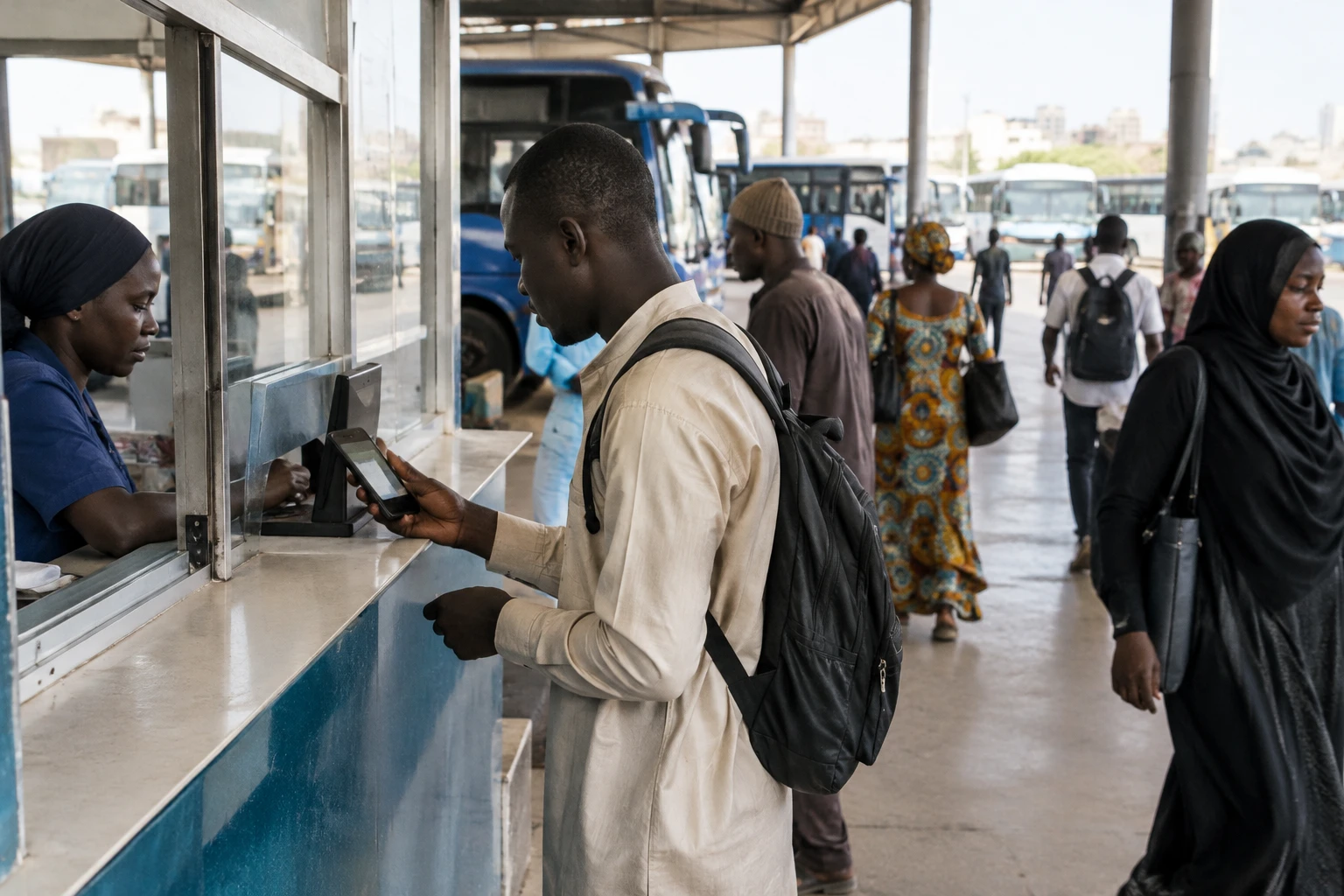
When a Senegalese citizen pays a tax or waits for public assistance, the quality of the service also depends on how the money moves. Senegal and Visa want to explore ways to make these exchanges simpler and more traceable. But the announced agreement launches a study process: it does not mean that new services are already available.
An exploratory agreement, not a service launch
Senegal’s ministry responsible for digital affairs and Visa announced a two-year cooperation agreement on Friday 30 October 2026. The announcement was reported by several media outlets, including SénégalDirect and Wassare News. The two partners plan to share expertise and identify areas for collaboration in digital payments, cybersecurity, regulation and financial innovation.
The work will focus in particular on two types of transaction. Payments from individuals to the state can include taxes or administrative fees. In the other direction, transfers from the state to individuals include assistance, scholarships or benefits. So far, no rollout timetable or new platform has been announced.
This distinction matters. A memorandum of understanding establishes a framework for cooperation, but does not necessarily specify which solutions will be chosen, what they will cost or which parties will operate them. The next step will therefore be to turn the proposed areas of work into concrete arrangements, subject to public-sector decisions and applicable rules.
A project within Senegal’s digital strategy
The initiative is part of the New Deal technologique, launched on 24 February 2025 and linked to the Senegal 2050 National Agenda. The strategy includes plans to digitise the administration, improve access to public services and strengthen digital sovereignty. The Presidency of Senegal presents these objectives as national priorities.
The issue is not starting from scratch. In June 2026, the Council of Ministers called for an assessment of progress on digital projects and mentioned the launch, before the end of the year, of a pilot to digitise scholarship payments. This official deadline shows that some public payments are already part of the transformation programme. It does not, however, confirm that the pilot has begun or that it is linked to the new agreement with Visa.
In Dakar and the regions, digitised processes could reduce travel and waiting times at service counters. For administrations, they could make it easier to track receipts and disbursements. For households and small businesses, the benefits will depend on very practical conditions: reasonable fees, reliable network access, ease of use and the ability to seek redress when a transaction fails.
Inclusion will also depend on access and trust
Digital payments are not automatically accessible to everyone. People without suitable phones, stable internet connections or familiarity with apps risk remaining reliant on service counters and cash. Small businesses, which often transact in cash, will also need solutions that are simple, affordable and compatible with their practices.
Security will be just as important. Payment platforms handle sensitive personal and financial data. The partners have referred to sharing cybersecurity expertise, but the announced agreement does not set out technical safeguards, responsibilities in the event of fraud or channels for users to make complaints. These matters will need to be clarified before any large-scale rollout.
Minister Samba Diouf described the objective as moving “from intentions to results”, according to remarks reported at the announcement. Visa’s representative for West and Central Africa, Aminata Kane, also spoke of seeking concrete opportunities to facilitate access to digital services. These statements express the partners’ ambitions; they are not yet an account of implementation.
Regional rules will shape Senegal’s choices
Senegal operates within a payments ecosystem shared with the other countries of the West African Economic and Monetary Union (WAEMU). The Central Bank of West African States (BCEAO) regulates payment services across the Union. Its 2024 instruction sets out, among other things, the conditions that providers must meet. The agreement with Visa will therefore have to comply with common rules, rather than a purely national framework.
The regional momentum is already significant: according to the BCEAO’s 2024 report, the number of electronic money accounts recorded in WAEMU reached 248 million, up from 209 million in 2023. This figure counts accounts, not necessarily distinct individuals or active users. The BCEAO has also launched the Union’s interoperable instant payment system, designed to enable transactions between different providers in the eight member countries.
For Senegal, the challenge will therefore be to make these regional infrastructures work alongside existing operators and the expertise of an international player such as Visa. The question of digital sovereignty — who controls the data, infrastructure and terms of access — will accompany that of efficiency. The government itself has called for stronger sovereign protection of data and critical systems.
The next milestones will be the use cases actually selected, the rules to protect users and progress on public payments already planned. The agreement’s significance for Senegalese people and the West African digital ecosystem will be measured by these results, rather than by the signing alone.