Algeria
 Egypt
 Libya
 Morocco
 Sudan
 Tunisia
 Benin
 Burkina Faso
 Cabo Verde
 Côte d'Ivoire
 Ghana
 Guinea
 Guinea-Bissau
 Liberia
 Mali
 Mauritania
 Niger
 Nigeria
 Sierra Leone
 The Gambia
 Togo
 Cameroon
 Central African Republic
 Chad
 DR Congo
 Equatorial Guinea
 Gabon
 Republic of the Congo
 São Tomé and Príncipe
 Burundi
 Comoros
 Djibouti
 Eritrea
 Ethiopia
 Kenya
 Madagascar
 Malawi
 Mauritius
 Mozambique
 Rwanda
 Seychelles
 Somalia
 South Sudan
 Tanzania
 Uganda
 Angola
 Botswana
 Eswatini
 Lesotho
 Namibia
 South Africa
 Zambia
 Zimbabwe

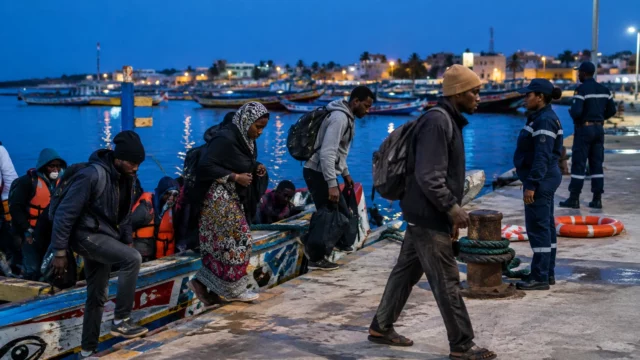
On Senegal’s Petite Côte, the safety of a trip to sea is determined before departure: by the condition of the pirogue, the equipment available and the crew’s ability to respond. A new public programme aims to strengthen this last link, as accidents continue to affect fishing communities.
Training at the heart of a local issue
Senegal relies heavily on artisanal fishing for the activity of its coastal towns and the supply of markets. In Mbour, Joal, Saly, Ndiaganiao and neighbouring communities, trips to sea are part of daily life for many households. They also expose crews to capsizing, falls, loss of bearings and breakdowns.
The Petite Côte is in the Thiès region, one of the areas particularly affected by recorded accidents. Fishing supports fishers there, as well as fish traders, processors, transporters and vendors. An accident can therefore affect far more than those on board: it deprives a family of income and can disrupt an entire chain of activity.
The programme comes as Senegalese authorities seek to strengthen vocational training and maritime skills. It concerns a sector that is both essential to the coastal economy and exposed to tangible risks, which training alone cannot address.
One thousand beneficiaries announced in Nianing
The Fund for the Financing of Vocational and Technical Training (3FPT) launched the ‘Marins de la Petite Côte’ programme in Nianing on 19 November 2026. According to announcements by the Fund and information published by Senegalese media, the course is intended to benefit 1,000 people working in artisanal fishing and maritime occupations.
The programme provides an introduction to maritime occupations and basic safety training. Participants are expected to learn survival techniques at sea, firefighting and first aid. Étoile Marine Sénégal, accredited by the National Agency for Maritime Affairs (ANAM), is involved in delivering the training.
The teaching is based on the international STCW and STCW-F conventions, which set training requirements for seafarers and fishing crews. These standards provide a framework for the skills taught; they do not, however, replace boat inspections or the actual availability of safety equipment.
The announced cost of the programme is 367.449 million CFA francs. A local media outlet has, however, reported a different figure of 377.4 million. In the absence of independent confirmation that would resolve this discrepancy, the amount should be treated as the figure given in the programme’s initial presentation, rather than as a corroborated fact.
Documented risks go beyond training
The 2024 statistical report of the Directorate for the Protection and Surveillance of Fisheries (DPSP) records 76 accidents at sea, compared with 100 in 2023. It says that 110 people died or went missing in these accidents. The Thiès region recorded 18 cases, after Saint-Louis, with 30. The causes cited include capsizing, getting lost and falls.
These figures require an important distinction: the 110 people include both deaths and missing persons. They should not be presented as 110 confirmed deaths. The report nevertheless shows the scale of the human toll and the concentration of risks along several stretches of Senegal’s coastline.
Prevention also depends on material resources. The DPSP says it distributed 25,210 life jackets in 2024, including 18,200 to fishers. It also reports boat inspections covering permits, life jackets and compliance with regulations, among other things. These figures describe the work of the authorities; on their own, they do not show what proportion of pirogues are properly equipped or whether life jackets are regularly worn at sea.
Safety therefore depends on several links: crew skills, the condition of the boat, suitable equipment, the weather and the ability to raise the alarm. Fishers can learn useful responses, but they cannot control all these factors alone. Monitoring boats and access to rescue equipment remain crucial.
Protecting the tools of the trade too
A damaged or lost pirogue represents far more than a material asset. It can halt a crew’s work and reduce the income of several families. Cover for small boats is also an issue. In a publication dated 9 January 2026, the Food and Agriculture Organization of the United Nations (FAO) estimates that only 5% of small fishing boats worldwide are insured. This is a global figure and is not an estimate specific to Senegal.
The FAO recommends linking safety inspections to assessments of boats’ value and risks, to make them easier to insure. For fishers, such protection could help limit the financial consequences of an accident. But it depends on accessible inspections, reliable information about boats and policies suited to the incomes and circumstances of artisanal fishing.
The programme launched in Nianing thus raises a broader question than training alone: how can the skills learned be put into practice aboard boats that are safe and sufficiently equipped? The announced number of beneficiaries gives an indication of the project’s ambition. Its impact will also depend on its rollout schedule, the effective participation of fishers and the continuity of inspection and prevention efforts.
A coastal issue extending beyond the Petite Côte
Fisher safety concerns the entire Senegalese coastline, from Saint-Louis to Casamance. It is also part of wider West African issues: marine resources, fishing activities and risks at sea extend beyond administrative borders. In this context, vocational training can strengthen local capabilities, provided it is accompanied by equipment, inspections and better protection for the tools of the trade.
For coastal communities, success will be measured less by the announcement of training places than by a decline in accidents and loss of life. The next steps to watch are the programme’s effective implementation and the publication of data that make it possible to assess its impact. In Senegal, the challenge is to turn one-off training into lasting prevention that is accessible to the crews who go to sea every day.
Sources consulted: 3FPT announcement of the launch in Nianing, coverage of the programme in Senegal, DPSP 2024 statistical report and FAO publication on safety and insurance for small boats.