Algeria
 Egypt
 Libya
 Morocco
 Sudan
 Tunisia
 Benin
 Burkina Faso
 Cabo Verde
 Côte d'Ivoire
 Ghana
 Guinea
 Guinea-Bissau
 Liberia
 Mali
 Mauritania
 Niger
 Nigeria
 Sierra Leone
 The Gambia
 Togo
 Cameroon
 Central African Republic
 Chad
 DR Congo
 Equatorial Guinea
 Gabon
 Republic of the Congo
 São Tomé and Príncipe
 Burundi
 Comoros
 Djibouti
 Eritrea
 Ethiopia
 Kenya
 Madagascar
 Malawi
 Mauritius
 Mozambique
 Rwanda
 Seychelles
 Somalia
 South Sudan
 Tanzania
 Uganda
 Angola
 Botswana
 Eswatini
 Lesotho
 Namibia
 South Africa
 Zambia
 Zimbabwe
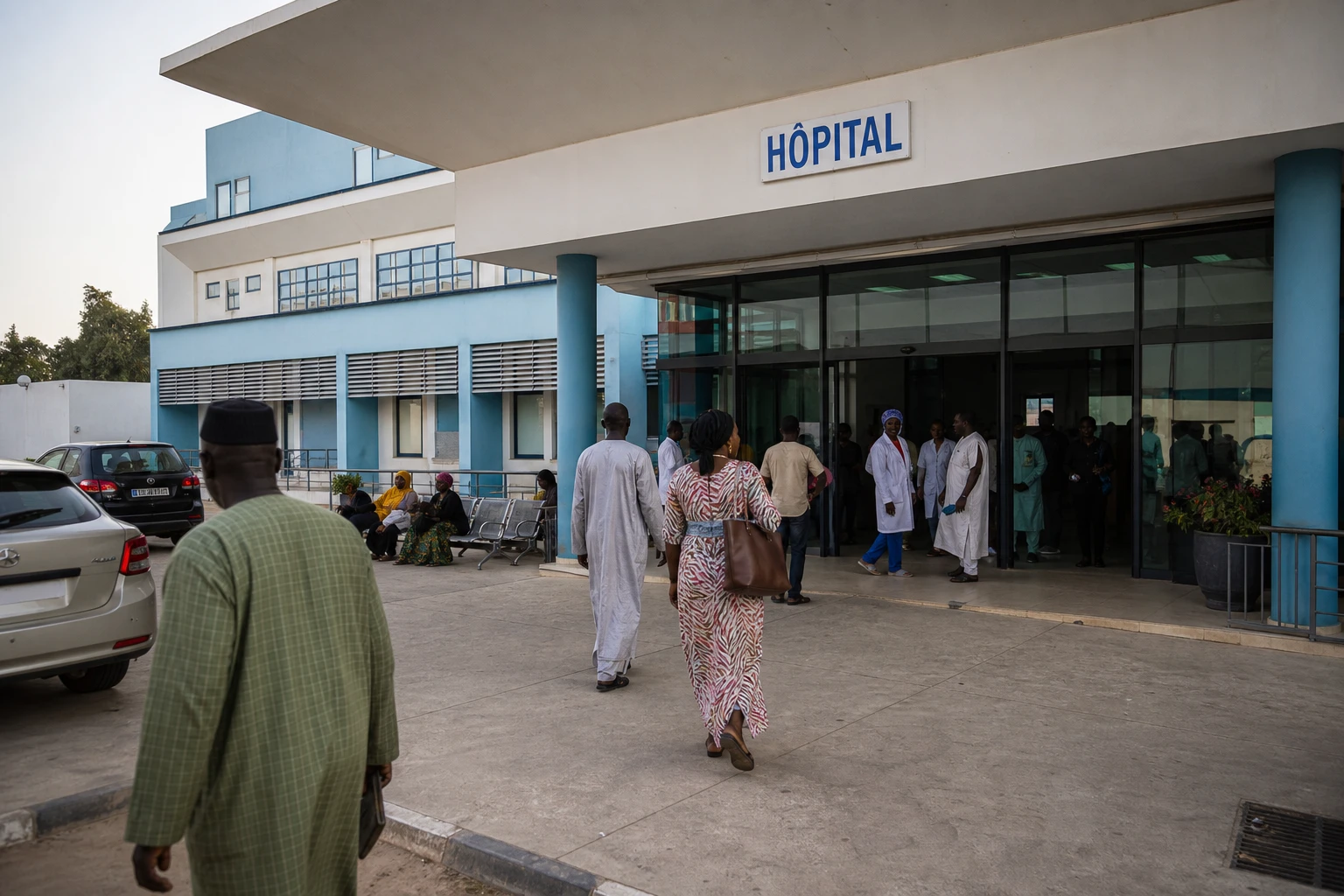
When technique meets the human touch
In an operating theatre, everything calls for silence, precision and control. Yet some gestures remind us that surgery is never a cold, mechanical process. For Senegalese surgeon Aïcha N’Doye, her voice has become a tool of care in its own right. She sings as anaesthesia begins, helping some patients to relax and creating a calmer atmosphere around them.
This choice says something important about modern medicine: technical skill is not always enough. Listening, presence and relationships matter too. In West Africa and Europe alike, healthcare professionals are increasingly looking for practical ways to reduce pre-operative anxiety, especially when surgery involves intimate parts of the body and serious illnesses such as breast cancer.
In Senegal, the issue resonates strongly. The Ministry of Health says breast cancer is among its public health priorities, while the World Health Organization notes that breast cancer survival remains markedly lower in the African Region than in other parts of the world.
A Senegalese path, a diaspora journey
Aïcha N’Doye represents more than a personal singularity. She also embodies a much broader Senegalese reality: skills acquired at home and then put to use in the diaspora. The Senegalese authorities have a department dedicated to assisting and promoting Senegalese people abroad, with a remit that also covers social and healthcare support. The government has also established a one-stop diaspora service to strengthen these ties.
Being abroad does not erase her national roots. It broadens them. Senegal relies on its citizens living overseas to support the economy, remittances, projects and, more broadly, the country’s profile. In this context, a Senegalese surgeon practising in France while embracing an artistic identity is no isolated curiosity. She also represents the movement of skills between Dakar, West Africa and Europe.
Her medical career lies in a sensitive field. Gynaecological surgery, breast surgery and breast reconstruction address issues that are medical, psychological and social at once. In these disciplines, the quality of dialogue with the patient often matters as much as surgical technique. This is precisely where singing has a role to play.
Singing as preparation, not performance
The most powerful scene is not one of performance. It is one of care. Before anaesthesia, Aïcha N’Doye sings softly, sometimes accompanied by instrumental music selected on her phone. The aim is not to entertain the team, but to soothe the patient. This approach aligns with practices seeking to reduce pre-operative stress and, sometimes, the amount of anaesthetic needed. Senegal’s Ministry of Health itself says that breast cancer care remains a major medical challenge, giving added significance to any approach that can make the hospital experience less harsh.
It is also worth considering what this gesture says about the relationship between medicine and dignity. In an operating theatre, people often disappear behind protocols, screens and surgical drapes. Singing puts the person back at the centre. It is a reminder that there is a story, a fear and a body to protect. That is what makes this practice more than an anecdote. It shows that a hospital department can be technically rigorous without becoming impersonal.
This approach resonates particularly strongly in Africa, where healthcare systems often have to contend with limited resources, high needs and unequal access to care. The WHO report on breast cancer in Africa highlights persistent gaps in governance, detection and treatment. In this context, every practice that improves the patient’s experience matters, even if it cannot replace screening or medical equipment.
Resonance for Senegal and West Africa
Aïcha N’Doye’s story matters to Senegal for two reasons. First, it shines a light on a professional who has pursued a demanding career, and comes from a country where women’s health remains a major issue. Second, it shows that the diaspora is about more than remittances and investment. It also generates practices, points of reference and models of success. This fits with Senegal’s strategy towards its citizens abroad.
At the regional level, the issue goes beyond the story of one surgeon who became a singer. Across ECOWAS, healthcare systems face the same challenges: cancers diagnosed too late, unequal access to specialist care, a lack of infrastructure and the role of informal channels in accessing treatment. Senegal is no exception, but it has strengths: an active health administration, growing attention to women’s cancers and a skilled diaspora able to champion other ways of providing care, communicating and bringing patients closer to treatment.
In the coming months, this kind of story will continue to travel well beyond the operating theatre. It raises questions about the place of empathy in hospitals, the recognition of Senegalese skills abroad and how care practices can engage with culture. For the continent, the message is clear: medical innovation is not just about machines. It also depends on relationships, voice and trust.