Algeria
 Egypt
 Libya
 Morocco
 Sudan
 Tunisia
 Benin
 Burkina Faso
 Cabo Verde
 Côte d'Ivoire
 Ghana
 Guinea
 Guinea-Bissau
 Liberia
 Mali
 Mauritania
 Niger
 Nigeria
 Sierra Leone
 The Gambia
 Togo
 Cameroon
 Central African Republic
 Chad
 DR Congo
 Equatorial Guinea
 Gabon
 Republic of the Congo
 São Tomé and Príncipe
 Burundi
 Comoros
 Djibouti
 Eritrea
 Ethiopia
 Kenya
 Madagascar
 Malawi
 Mauritius
 Mozambique
 Rwanda
 Seychelles
 Somalia
 South Sudan
 Tanzania
 Uganda
 Angola
 Botswana
 Eswatini
 Lesotho
 Namibia
 South Africa
 Zambia
 Zimbabwe
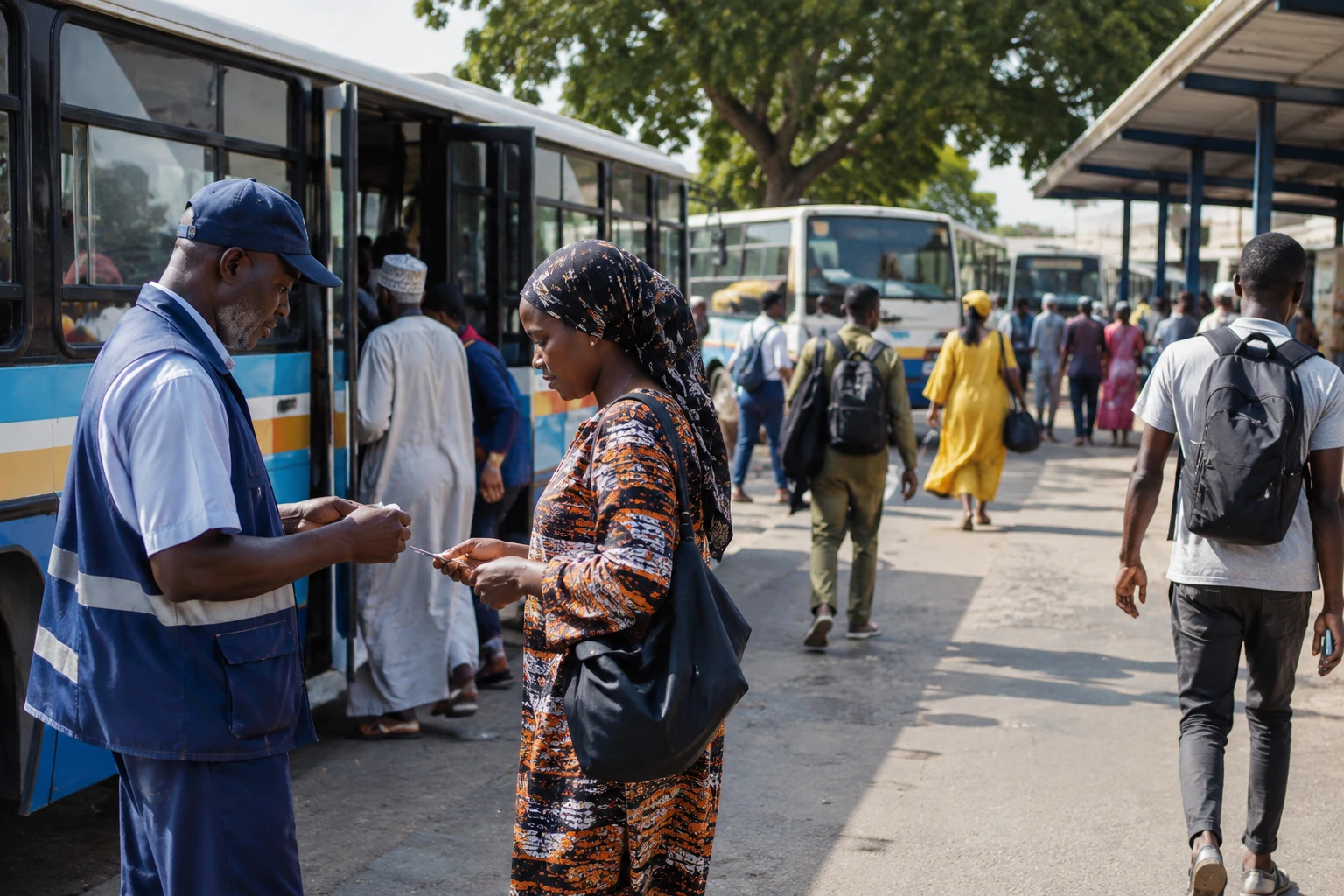
A strike can be measured by the number of services disrupted, but also by workers’ ability to put their demands back at the centre of discussions. In Senegal, the three-day action that ended on Friday 23 October did not bring the entire economy to a halt. It did, however, leave one question open: will talks with the government lead to concrete responses?
A national movement, but uneven effects
The Front syndical pour la défense du travail (FSDT), a coalition of unions, had called a strike from 21 to 23 October in the public, private and informal sectors. The action focused in particular on purchasing power, employment, pensions, social protection and the implementation of agreements reached with the state. The unions are also challenging proposed changes to labour law and demanding responses over dismissals and compensation.
The impact remains disputed. Mody Guiro, secretary-general of the Confédération nationale des travailleurs du Sénégal (CNTS) and a leading figure in the Front, said he was satisfied with the turnout in Dakar and across the country. He added, however, that the unions were not claiming to have brought the entire economy to a standstill, but to have affected important sectors. This assessment by the unions is not, on its own, an independent measure of participation.
Initial reports published by the Agence de presse sénégalaise (APS) described limited disruption to several services, including transport and education, on the first day. Some unions nevertheless gave a positive assessment of their mobilisation. These differing views underline how a national strike can be highly visible in some workplaces and less widely observed in others.
The strike also took place amid tensions over the right to strike. The government had called on the unions to suspend their action and reiterated the rules governing this right. Union leaders, for their part, denounced requisitions and threats of sanctions, which they regard as attempts to discourage strike action. These positions should remain attributed to their authors: on their own, they do not establish the scale of the measures taken or their effect on participation.
Talks resume, with no agreement announced
After three days of strike action, the dispute is back at the negotiating table. According to Mody Guiro, the president of the High Council for Social Dialogue met the unions to seek a way forward. A meeting with the minister responsible for labour followed. The union leader said the Front was now waiting for talks with the government to resume and wanted to meet the prime minister.
At this stage, no agreement to end the dispute has been announced. A meeting and a resumption of dialogue do not mean that the demands have been met. The challenge will be to determine which requests can be addressed quickly, which require sectoral negotiations, and how and when commitments will be reviewed.
The dispute forms part of a broader framework: the National Pact for Social Stability for Inclusive and Sustainable Growth, signed in 2025 by the state, unions and representatives of employers. The government has defended its record, saying that several commitments have been fulfilled or are under way. The trade union confederations, meanwhile, denounce delays and a failure to implement agreements. Monitoring the pact is therefore itself a point of disagreement, not sufficient proof that promises have been kept.
For employees, the consequences vary by sector and location. Disruption to public administration, education or transport can affect appointments, travel and lessons. In the informal sector, where incomes often depend on daily activity, a day without work can also mean a day without earnings. The true extent of these effects, however, cannot be inferred from a national strike call alone: it depends on local participation and the continuity of each service.
Dakar 2026, a scheduling issue — not a resolution of labour disputes
The proximity of the Youth Olympic Games (YOG), due to take place from 31 October to 13 November 2026 in Dakar, gives this episode particular significance. They will be the first Youth Olympic Games to be held in Africa. The organising committee and representatives of trade union confederations met during the strike. The unions said they wanted to take the event into account in planning their next actions to avoid disruption during the Games.
This position does not amount to abandoning their demands. It distinguishes between two issues: defending workers’ rights and ensuring the continuity of an important national and continental event. For the authorities, organisers and workers, the challenge is to preserve the services needed for the Games without turning the deadline into an argument for indefinitely postponing negotiations.
The dispute also concerns the credibility of social dialogue in Senegal and, more broadly, the role of workers’ organisations in the West African region. ECOWAS, the Economic Community of West African States, is not negotiating this national dispute; it is, however, the regional framework through which workers, businesses and investment move. How the state and unions follow through on their commitments will therefore be watched beyond Dakar.
The next step will be more than another meeting. It will be the decisions announced, their timetable and their verifiable implementation. Until those details are known, the strike’s impact remains twofold: the unions say the mobilisation was successful, while the economic impact appears uneven and an end to the dispute remains to be negotiated.