Algeria
 Egypt
 Libya
 Morocco
 Sudan
 Tunisia
 Benin
 Burkina Faso
 Cabo Verde
 Côte d'Ivoire
 Ghana
 Guinea
 Guinea-Bissau
 Liberia
 Mali
 Mauritania
 Niger
 Nigeria
 Sierra Leone
 The Gambia
 Togo
 Cameroon
 Central African Republic
 Chad
 DR Congo
 Equatorial Guinea
 Gabon
 Republic of the Congo
 São Tomé and Príncipe
 Burundi
 Comoros
 Djibouti
 Eritrea
 Ethiopia
 Kenya
 Madagascar
 Malawi
 Mauritius
 Mozambique
 Rwanda
 Seychelles
 Somalia
 South Sudan
 Tanzania
 Uganda
 Angola
 Botswana
 Eswatini
 Lesotho
 Namibia
 South Africa
 Zambia
 Zimbabwe
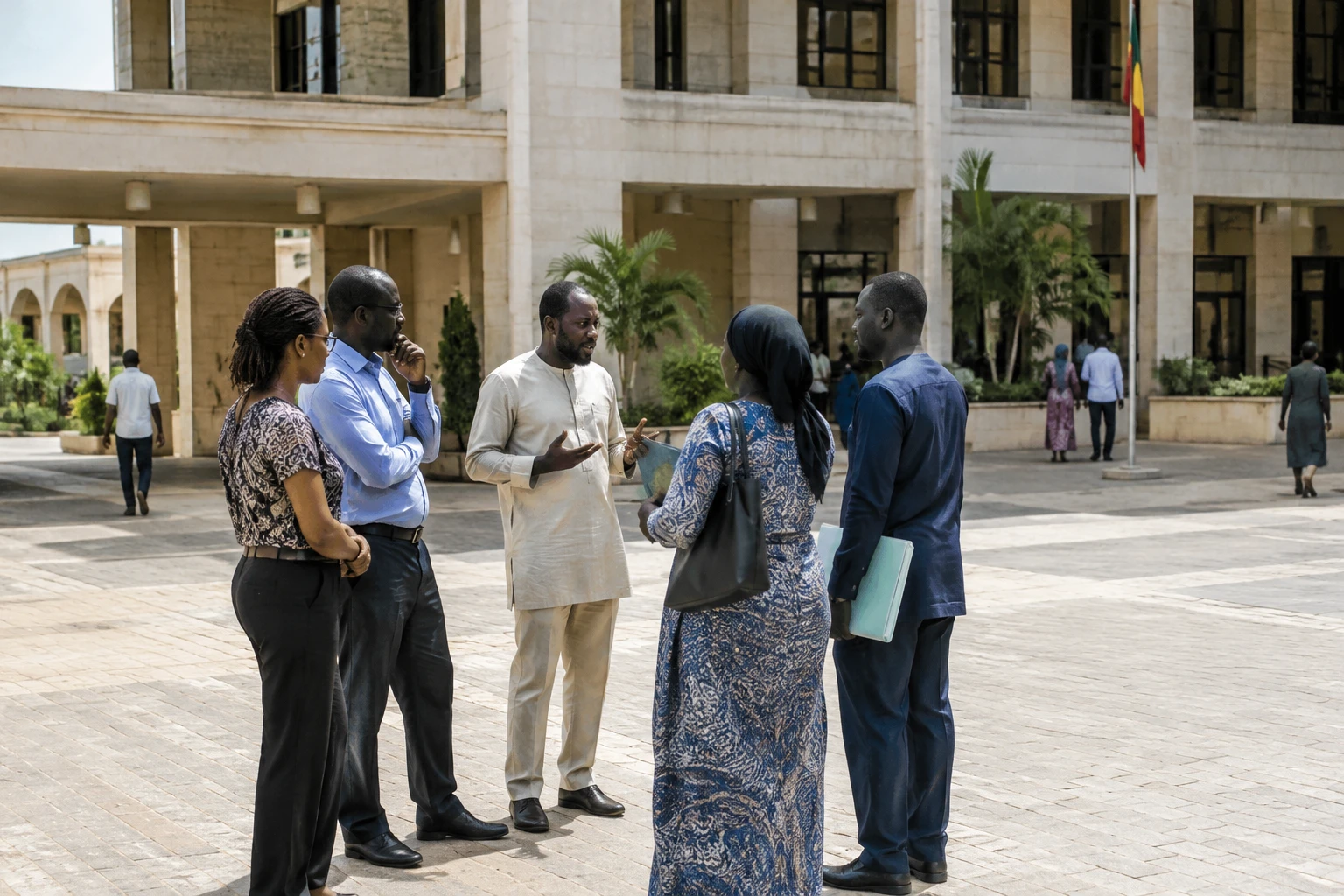
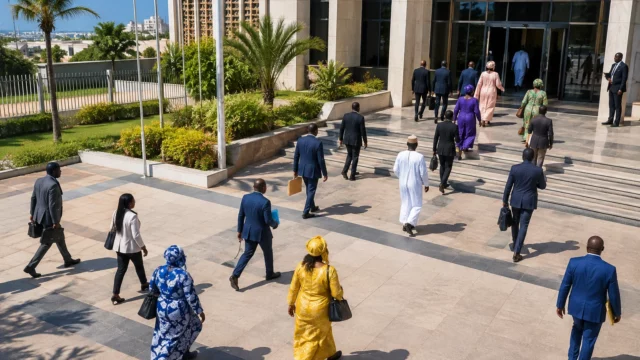
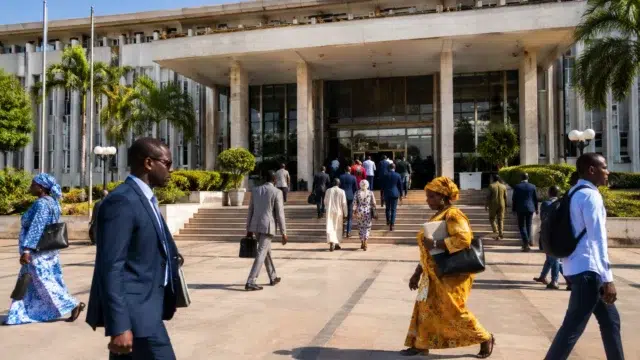
In Senegal, social unrest is playing out this week on two fronts: the content of labour reforms and unions’ right to mobilise. In Dakar, a march held on Tuesday 20 October came ahead of a call for a three-day strike, scheduled for 21 to 23 October. The government disputes the legality of the action. The unions, for their part, are sticking to their timetable.
Demands that extend beyond one sector
The Trade Union Front for the Defence of Workers (FSDT), which brings together thirteen unions, is making demands affecting education, health, transport and other sectors. The Dakar march is part of a campaign also being conducted in the regions, notably in Kolda and Kaolack. The concerns raised include the cost of living, disputed dismissals, employment conditions and the rights of public-sector workers. The Senegalese Press Agency reported on the demands voiced during union mobilisations in the regions.
Reform of the Labour Code is at the heart of part of the disagreement. Unions are particularly opposed to the possibility of keeping an employee on a fixed-term contract (CDD) for up to four years. They are calling for a two-year limit. They say this length of time risks making employment more precarious and hampers access to permanent contracts.
The legislation was promulgated on 3 September 2026, according to official Senegalese documents. But unions condemn its adoption without sufficient consultation with social partners. The disagreement is therefore not only about the length of contracts: it also concerns how labour rules are drawn up and the safeguards offered to employees.
In the civil service, some demands are more immediate. Workers are calling in particular for housing allowances to be paid to employees who say they are excluded despite performing duties comparable to those of colleagues who receive them. Teachers and health workers are also raising delays in payments and commitments they consider only partially fulfilled.
The stand-off also centres on procedure
The government has asked union confederations to suspend the strike and proposed continuing discussions under the National Pact for Social Stability, signed in 2025 by the state, unions and employers. Prime Minister Ahmadou Al Aminou Lô has notably proposed a three-month moratorium. The unions have not withdrawn their call for action on 21, 22 and 23 October. The APS reported on this proposed social truce.
On Tuesday, the Labour Ministry challenged the validity of the strike notice. In its view, a single notice addressed to the minister cannot cover the public, parapublic and private sectors simultaneously. It says separate procedures and deadlines apply depending on the sector. The ministry therefore considers that a strike carried out without complying with these formalities would be unlawful and could lead to salary deductions or disciplinary sanctions.
This is the government’s position; it does not, by itself, settle the dispute. It does, however, leave unions with a practical challenge: defending their demands while weighing the potential consequences for employees who heed the call. The ministry also says that no new written strike notice has been filed in education since the sectoral agreement of April 2026. The G7, which brings together seven teachers’ unions, for its part, cites unfulfilled commitments to justify its own action. The ministerial statement and the reasons put forward by the G7 were reported separately by the APS.
The impact of a strike would not be uniform for workers. A halt to teaching would first affect pupils and families, while stoppages in health or transport could affect access to care and travel. In the informal economy, where incomes often depend on daily activity, a day without work can also directly affect earnings. These consequences will depend on actual participation in each sector and across the different regions.
A sensitive timetable, without conflating social issues and the Games
The government also points to the approaching Youth Olympic Games (YOG), being held from 31 October to 13 November in Dakar, Diamniadio and Saly. The competition, the first edition of the YOG to be held in Africa, is an important milestone for Senegal. The authorities are emphasising the continuity of services and the reception of delegations. The unions, for their part, argue that workers’ difficulties cannot be put on hold as an international event approaches. The dates and venues for the Games have been confirmed by the APS.
This tension highlights a central issue in Senegalese social dialogue: agreements between the state and professional organisations must translate into concrete measures, with clearly identifiable follow-up. The National Pact for Social Stability provides a framework for discussion, but its credibility depends on progress in meeting commitments and on trust between the parties.
Across West Africa, the case will be watched for how a member of ECOWAS reconciles labour-law reform, continuity of public services and trade union freedoms. It is not a test for the whole region, whose social and legal systems differ, but it is a closely followed case ahead of an event with continental symbolism. In the immediate term, the issues to watch are participation in the strike, any negotiations and the authorities’ response to the demands, as well as what follows from the legal challenge.