Algeria
 Egypt
 Libya
 Morocco
 Sudan
 Tunisia
 Benin
 Burkina Faso
 Cabo Verde
 Côte d'Ivoire
 Ghana
 Guinea
 Guinea-Bissau
 Liberia
 Mali
 Mauritania
 Niger
 Nigeria
 Sierra Leone
 The Gambia
 Togo
 Cameroon
 Central African Republic
 Chad
 DR Congo
 Equatorial Guinea
 Gabon
 Republic of the Congo
 São Tomé and Príncipe
 Burundi
 Comoros
 Djibouti
 Eritrea
 Ethiopia
 Kenya
 Madagascar
 Malawi
 Mauritius
 Mozambique
 Rwanda
 Seychelles
 Somalia
 South Sudan
 Tanzania
 Uganda
 Angola
 Botswana
 Eswatini
 Lesotho
 Namibia
 South Africa
 Zambia
 Zimbabwe
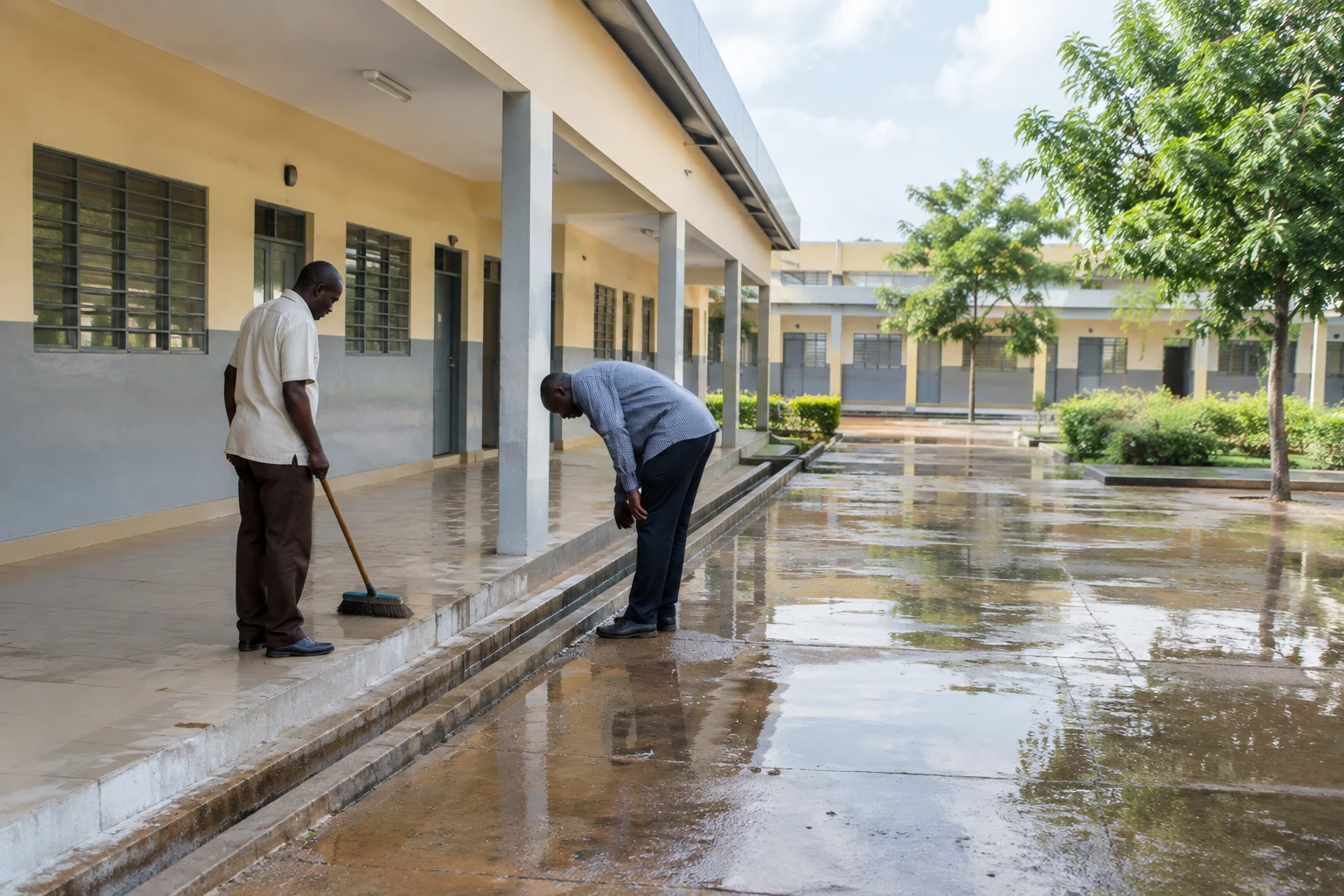
In Senegal, the challenge of reopening schools is measured not only by the day pupils return to class. It also depends on whether they can get there safely and study in clean, accessible and usable premises. After heavy rains in several regions, the Ministry of National Education postponed the resumption of classes to Monday 12 October 2026.
A national decision amid unequal local conditions
The school year was originally due to begin on Wednesday 7 October. Announced on Tuesday 6 October, the postponement applies across the country. The ministry cited changing weather conditions, pupil safety and the ongoing cleaning, sanitation and restoration of schools. The Senegalese Press Agency (APS) reported these details from the ministry’s statement.
Choosing a common date also addresses territorial equity. The rains did not affect all education districts with the same intensity. Yet postponing the reopening only in flooded areas would have left pupils following different calendars, with possible consequences for the organisation of lessons and learning time.
The measure affects a school reopening already disrupted by damage to school buildings. In Fatick, 77 schools were reported to have been affected by the 2026 rainy season, according to a report cited by APS. This local figure alone does not describe the national situation, but it shows that the difficulties are not confined to Dakar and its suburbs.
Classrooms to be restored
In its announcement, the ministry did not provide a consolidated national tally of the number of schools affected. Figures cited in the first reports issued during the rains are therefore not included here as a verified account of the whole country. The situation will need to be assessed district by district, particularly after cleaning and inspection work.
Restoration involves more than pumping out water. Access to buildings must be checked, classrooms cleaned, toilets inspected and classrooms and equipment confirmed as usable. The surrounding area matters too: a reopened school remains difficult to reach if nearby streets are impassable or transport services are not running normally.
Responsibility is shared among several parties. State services, local authorities and communities are being called on to help prepare. This coordination is crucial: municipalities often know the immediate needs of neighbourhoods, while education authorities must organise the resumption of classes and check that schools are ready to receive pupils.
The ministry says the additional five days should allow this work to continue. However, teachers’ unions, cited in available reports, believe the time may be too short to restore all damaged schools. Their concern highlights an important distinction: a national reopening date does not, by itself, guarantee that every school will be ready on the same day.
A recurring rainy-season challenge
In Senegal, the rainy season regularly puts urban infrastructure and public services to the test. In densely populated districts of Dakar and its outskirts, water can disrupt schools, travel and economic activity alike. But difficulties also affect places far from the capital, as the figures published for the Fatick region show.
The effects are not the same for everyone. For families, a few days without classes can create childcare and transport problems, especially when adults work in the informal economy and cannot easily change their hours. For pupils, missed days can have a greater impact when absences recur or home study conditions are limited.
Teachers and school heads must balance safety with continuity in education. Reopening too soon can expose pupils to buildings or access routes that are still damaged. A prolonged delay reduces the time available for learning. The decision therefore cannot be resolved by setting a date alone: it requires practical monitoring of schools and clear information for families.
Senegalese authorities had already identified the restoration of schools affected by the rainy season as a priority when preparing for the 2025-2026 school year. The issue is therefore a structural challenge, not an isolated incident: recurring intense rainfall underscores the need to maintain buildings, improve drainage and prepare solutions suited to the schools most at risk.
What the postponement will not solve
Moving the reopening to 12 October provides extra time, but is not a lasting response to flooding. Public officials will have to distinguish between schools that are genuinely ready and those that still need work or temporary measures. Families and staff will need clear guidance if some schools cannot receive pupils on the announced date.
What happens next will also depend on coordination between the Ministry of National Education, sanitation services, local authorities and local stakeholders. Rapid interventions can limit disruption, but preparation is just as important: maintaining drainage channels, monitoring high-risk areas and scheduling works before the return of heavy rains.
Across West Africa, where countries share rainy seasons and infrastructure challenges, this reopening highlights the direct link between climate resilience and access to education. ECOWAS, the regional integration organisation, does not set Senegal’s school calendar; that decision rests with the national authorities. The regional challenge is instead to adapt public services to climate hazards, without leaving pupils in the most exposed areas to bear the cost of interruptions alone.
The next milestone is therefore Monday 12 October, but the reopening will need to be assessed school by school. The ministry has set a national deadline. It remains to be seen whether the work will have enabled all pupils, from Dakar to Fatick and in other regions, to return to safe learning conditions.