Algeria
 Egypt
 Libya
 Sudan
 Tunisia
 Benin
 Burkina Faso
 Cabo Verde
 Côte d'Ivoire
 Ghana
 Guinea
 Guinea-Bissau
 Liberia
 Mali
 Mauritania
 Niger
 Nigeria
 Senegal
 Sierra Leone
 The Gambia
 Togo
 Cameroon
 Central African Republic
 Chad
 DR Congo
 Equatorial Guinea
 Gabon
 Republic of the Congo
 São Tomé and Príncipe
 Burundi
 Comoros
 Djibouti
 Eritrea
 Ethiopia
 Kenya
 Madagascar
 Malawi
 Mauritius
 Mozambique
 Rwanda
 Seychelles
 Somalia
 South Sudan
 Tanzania
 Uganda
 Angola
 Botswana
 Eswatini
 Lesotho
 Namibia
 South Africa
 Zambia
 Zimbabwe
With the hearing in Lausanne just days away, the administrative story of the 2025 Africa Cup of Nations final is still unfinished. On the pitch, Senegal beat Morocco 1-0 after extra time. In the records of the Confederation of African Football (CAF), Morocco is now declared the winner by a score of 3-0. The Court of Arbitration for Sport (CAS) is due to examine Senegal’s appeal on Thursday 8 October 2026.
A final won on the pitch, overturned by a disciplinary decision
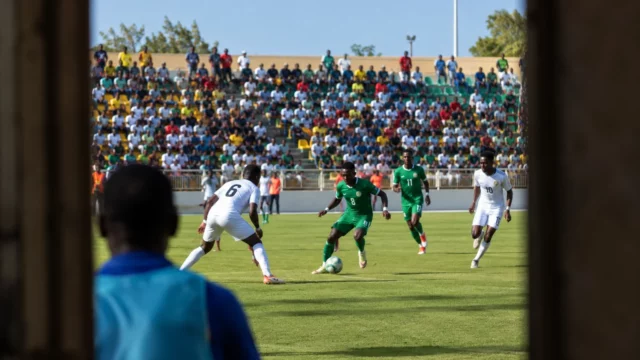
The match was played on 18 January 2026 at the Prince Moulay Abdellah Stadium in Rabat. Senegal scored the only goal of the match in extra time, before its victory was challenged several weeks later.
The turning point came in stoppage time at the end of the second half. After a Senegalese goal was disallowed, the referee awarded Morocco a penalty. Senegalese players and members of the coaching staff then briefly left the pitch in protest. The interruption lasted about 15 minutes. Play then resumed, Senegalese goalkeeper Édouard Mendy saved Brahim Díaz’s attempt, and Pape Guèye scored in extra time.
CAF’s Disciplinary Board had initially sanctioned several players, coaching staff members and federations. However, it did not change the sporting result. This first decision matters because it shows that the conduct seen in Rabat could be punished without automatically resulting in a forfeit.
On 17 March 2026, CAF’s Appeal Board adopted a different interpretation. It overturned the initial decision and declared Senegal to have forfeited the match, invoking Article 84 of the Africa Cup of Nations regulations. The result was then recorded as a 3-0 victory for the Royal Moroccan Football Federation.
The decision published by CAF is at the heart of the dispute. The Senegalese Football Federation (FSF) challenged it before the CAS, the independent court responsible for settling many international sports disputes.
The legal debate centres on what constitutes a forfeit
Morocco and CAF have a straightforward argument. The regulations provide that a team which leaves the pitch without the referee’s permission may be declared to have lost. The text does not clearly set a minimum period of absence. Nor does it distinguish in detail between a definitive abandonment and a temporary walk-off in protest.
This interpretation serves a disciplinary purpose. Under this reasoning, a team could not interrupt a final after disputing a refereeing decision, return later and retain the benefit of the result. For the Moroccan side, returning to the pitch therefore does not erase the initial breach of the regulations.
Senegal’s defence is likely to stress the need for a foreseeable sanction. A disciplinary rule must enable participants to know precisely what penalty they may face. The FSF can therefore argue that the articles cited primarily concern a refusal to continue a match or abandonment of the game, rather than a temporary interruption followed by a full resumption.
Senegal has another procedural point in its favour. The match was played to its conclusion, including extra time. A winner was determined under the rules of the game. The Senegalese team therefore returned to the pitch, unlike a team that had definitively refused to resume play.
The question before the CAS arbitrators will not be whether the protest was appropriate. Rather, they will assess the legal basis for the forfeit and the proportionality of the sanction that erased the sporting result.
A tribunal tasked with examining the facts and the law
The CAS generally has broad powers to review the facts and the applicable rules. It can uphold CAF’s decision, overturn it or replace it with a new measure. This authority distinguishes arbitration from a simple, limited review of procedure.
The announced panel comprises Gérald Simon, Luigi Fumagalli and Ulrich Haas. The Frenchman, a professor of sports law, is to chair the panel. The Italian specialises in international law and is a regular CAS arbitrator. The German is known for his work on sports arbitration procedure.
Their task will first and foremost be technical. They will have to examine the Africa Cup of Nations regulations, the official match reports, CAF’s successive decisions and the arguments of the federations concerned. The highly charged context of the final will inform their understanding of the case, but should not replace analysis of the rules.
An African precedent could also feature in the arguments. In 2019, the second leg of the African Champions League final between Espérance de Tunis and Wydad Casablanca was interrupted after a controversy over video assistant refereeing. The CAS subsequently reviewed CAF’s decisions and confirmed the Tunisian title following several legal proceedings.
Beyond the trophy, the credibility of African rules
For Senegal, the stakes go beyond the record books. Upholding the forfeit would establish that a temporary walk-off can lead to the retroactive loss of a continental final. Overturning CAF’s decision would, by contrast, reaffirm the need for a clearer distinction between a punishable protest and abandonment of a match.
Morocco is also affected by this uncertainty. The team has been declared champions by CAF, but Senegal’s appeal means the case cannot yet be considered definitively closed. The CAS ruling will determine the sporting and legal standing of the title awarded on 17 March 2026.
The case also concerns the governance of African football. CAF may have to clarify its regulations to prevent the same situation from receiving two successive interpretations by its disciplinary bodies. The issue is sensitive in a competition where refereeing decisions, federations’ protests and institutional power struggles are followed by millions of supporters.
The 8 October hearing will be held behind closed doors, according to information released about the proceedings. The CAS has not announced a date for its award. Until then, the 2025 Africa Cup of Nations will remain caught between two competing truths: the result on the pitch, which crowns Senegal, and the disciplinary rules applied by CAF, which award the title to Morocco.