Algeria
 Egypt
 Libya
 Morocco
 Sudan
 Tunisia
 Benin
 Burkina Faso
 Cabo Verde
 Côte d'Ivoire
 Ghana
 Guinea
 Guinea-Bissau
 Liberia
 Mali
 Mauritania
 Niger
 Nigeria
 Sierra Leone
 The Gambia
 Togo
 Cameroon
 Central African Republic
 Chad
 DR Congo
 Equatorial Guinea
 Gabon
 Republic of the Congo
 São Tomé and Príncipe
 Burundi
 Comoros
 Djibouti
 Eritrea
 Ethiopia
 Kenya
 Madagascar
 Malawi
 Mauritius
 Mozambique
 Rwanda
 Seychelles
 Somalia
 South Sudan
 Tanzania
 Uganda
 Angola
 Botswana
 Eswatini
 Lesotho
 Namibia
 South Africa
 Zambia
 Zimbabwe
A new party, but an old political test
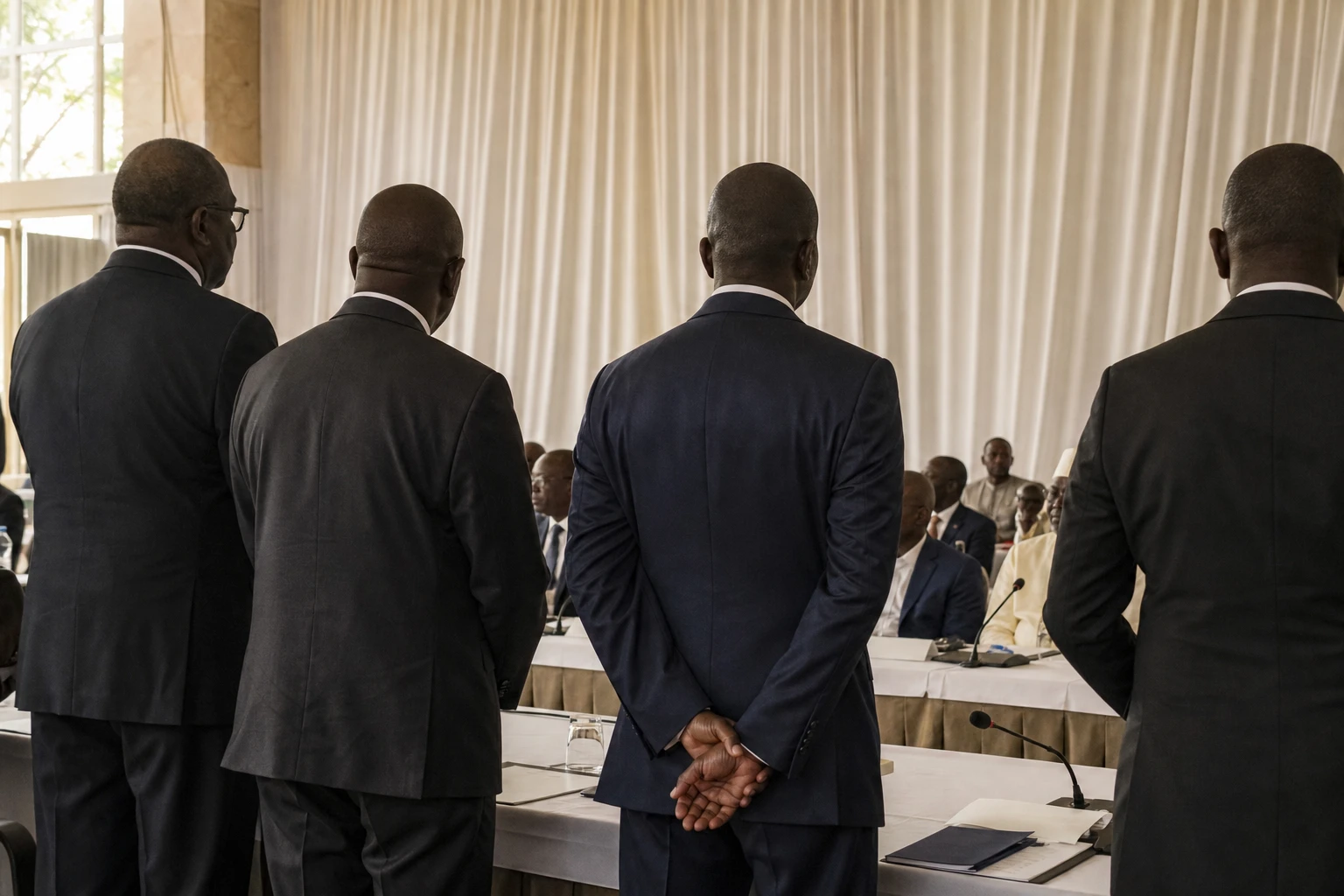
In Dakar, the creation of a presidential party is never just an administrative act. It is often a test of cohesion, a signal to allies, and sometimes the start of a new balance of power. In Bassirou Diomaye Faye’s Senegal, the launch comes as the government seeks to stabilise its majority, reassure its economic partners and keep control of the political timetable.
The new movement, Kiiraay – The Republican Patriots, was officially launched in Dakar on 25 July 2026. Senegalese public media and the national news agency confirmed that Bassirou Diomaye Faye is its honorary president and that the Diomaye President coalition has been transformed into a party. The same sources reported that hundreds of mayors and local elected officials attended the ceremony.
What Kiiraay changes in Senegal’s political equation
The political significance of this new party is clear. It brings to an end a campaign structure built around a broad coalition, useful for winning in 2024 but less suited to the day-to-day business of governing. It is also a way of structuring the presidential machinery in a highly fragmented party landscape, where alliances are quickly made and broken. This reading is reinforced by the already visible tensions between the head of state and Ousmane Sonko, whose falling-out has been widely discussed by the international and regional press.
In the case put forward by Aminata Touré, the new party’s general supervisor, Kiiraay is to serve as the political backbone of the executive. The message centres on institutional stability, dialogue, good governance and the fight against corruption. This framing continues the narrative of change that defined the 2024 campaign, but now seeks to establish it over the long term, with a more disciplined political machine.
The choice to focus on local government is no coincidence. By claiming the support of 346 of the country’s 557 mayors, the president’s camp wants to show that it is not relying solely on Dakar, but also on the municipal level, where networks, services and practical decisions are shaped. The figure was cited by Aminata Touré; above all, it reflects a strategy of building a territorial base, often seen in Senegalese political realignments.
But this political push also has a downside. It deepens the confusion between the party, the state and the parliamentary majority. In a country where the National Assembly remains dominated by Sonko’s camp, the de facto coexistence of several centres of gravity continues to make public policy harder to understand. The government is trying to move forward, but must contend with internal divisions that are still shifting.
Economy, debt and credibility: the crux of the matter
The debate is not limited to politics. It directly concerns the economy. Senegal is emerging from a period in which debt has taken centre stage, following revelations that financial commitments were under-reported under the previous administration and amid ongoing discussions with the IMF. In June and July 2026, the Fund confirmed that technical discussions were continuing to define the country’s financing needs and a possible programme to support reforms.
In this context, Aminata Touré has argued that the Senegalese state continues to honour its commitments and that the country must now create more wealth. Recent financing of 340 billion CFA francs announced by the World Bank for agriculture and infrastructure points in the same direction. It shows that lenders are not closing the door, but they expect guarantees of fiscal discipline, transparency and stability.
The government also highlights the continuation of social programmes, particularly family allowances and some public services, despite pressure on public finances. The message is as political as it is economic: austerity has not yet overturned the social contract. Still, Senegalese people will judge mainly by prices, jobs and the state’s ability to turn promises into tangible results.
On growth, Aminata Touré cited a rate of about 5%. This claim should be treated with caution, as the latest IMF and World Bank assessments focus above all on a fragile fiscal recovery in an environment where debt remains high. In other words, the trajectory is improving, but remains narrow.
Women, young people and regional integration: the government’s other battle
One of the clearest points in the interview concerns the position of women. Aminata Touré says without equivocation that women are not yet treated as they deserve. This is no marginal issue. According to the Inter-Parliamentary Union, women now hold 41.2% of seats in Senegal’s lower house, placing the country among the continent’s strongest performers. In 2010, the country also adopted a law on absolute parity on electoral lists, a significant achievement built on years of campaigning.
That progress, however, has yet to extend to executive appointments or senior administrative positions. This is where the debate becomes concrete: women’s representation in parliament has increased, but the ceiling remains visible in ministerial offices, directorates and major public bodies. Senegal has therefore made solid legal progress, but equality in practice remains incomplete.
The same applies to young people. The new government talks about jobs, training and economic sovereignty, but the promise will take shape only if agriculture, fishing, livestock, extractive industries and the oil and gas sectors create lasting opportunities. In a capital such as Dakar, this is measured in social tensions; in the regions, in mobility, incomes and access to credit.
Finally, the regional dimension is a reminder that Senegal also has an audience across West Africa. ECOWAS has confirmed that Senegalese General Birame Diop will take over as chair of its Commission from 1 September 2026, while the organisation continues to manage its divisions with the Alliance of Sahel States. Dakar therefore remains an important point of balance between dialogue, security and economic integration. The Kiiraay party and the Senegalese executive are operating in this context: that of a country seeking influence in the sub-region without breaking with its neighbours.
The continental significance is clear. Senegal illustrates a question facing many African states at the same time: how to turn an electoral victory into a lasting political structure, without diluting expectations of change or upsetting institutional balances. The coming months will show whether Kiiraay becomes a tool for consolidation or another layer in Dakar’s rapid reshaping of power.