Algeria
 Egypt
 Libya
 Morocco
 Sudan
 Tunisia
 Benin
 Burkina Faso
 Cabo Verde
 Côte d'Ivoire
 Ghana
 Guinea
 Guinea-Bissau
 Liberia
 Mali
 Mauritania
 Niger
 Nigeria
 Sierra Leone
 The Gambia
 Togo
 Cameroon
 Central African Republic
 Chad
 DR Congo
 Equatorial Guinea
 Gabon
 Republic of the Congo
 São Tomé and Príncipe
 Burundi
 Comoros
 Djibouti
 Eritrea
 Ethiopia
 Kenya
 Madagascar
 Malawi
 Mauritius
 Mozambique
 Rwanda
 Seychelles
 Somalia
 South Sudan
 Tanzania
 Uganda
 Angola
 Botswana
 Eswatini
 Lesotho
 Namibia
 South Africa
 Zambia
 Zimbabwe
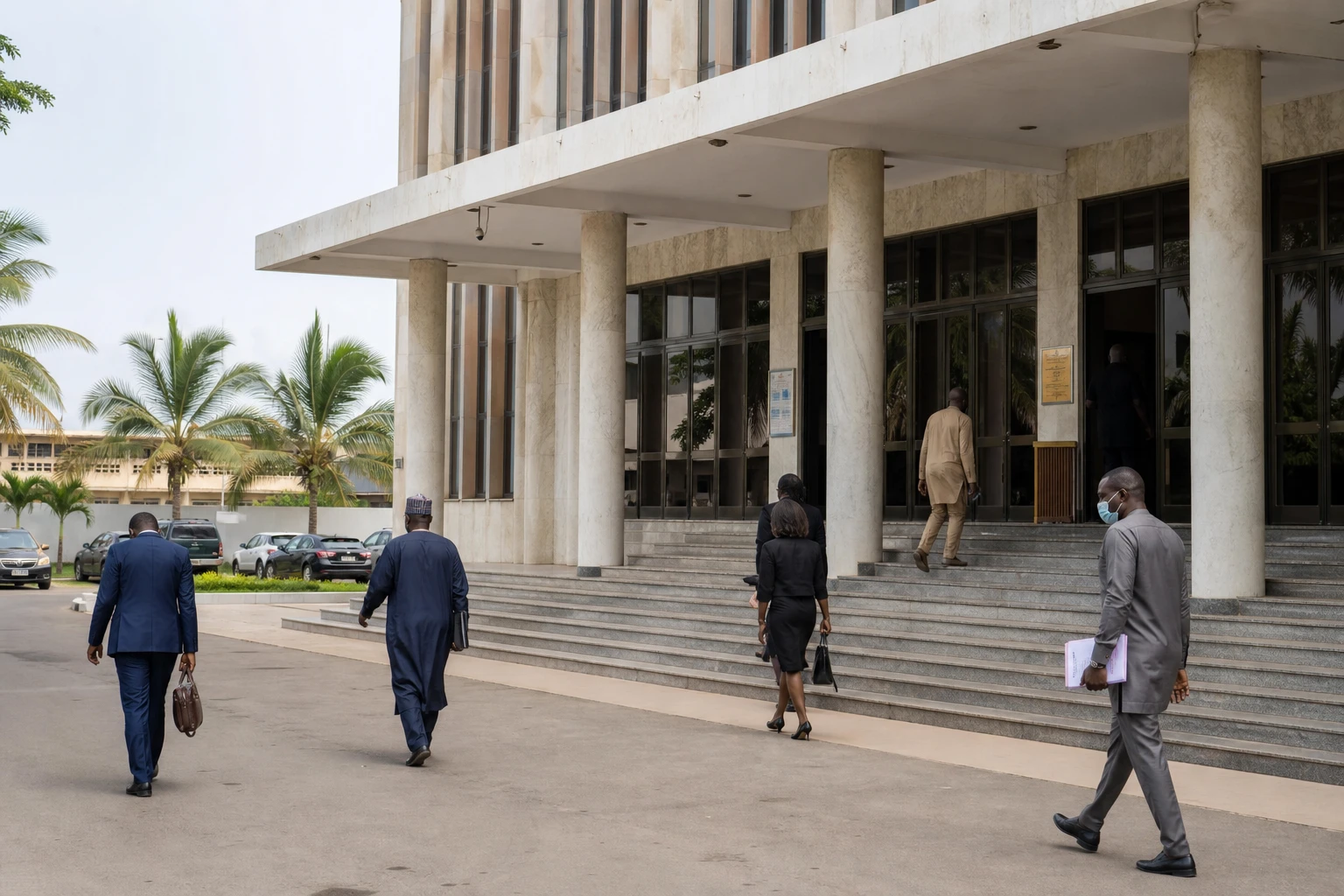
African judiciary under pressure at the heart of a global stand-off
In The Hague, a Senegalese judge finds himself at the centre of a clash that reaches far beyond the corridors of the International Criminal Court. Mame Mandiaye Niang, appointed ICC deputy prosecutor and tasked with ensuring continuity in the Office of the Prosecutor alongside Nazhat Shameem Khan since Karim Khan went on leave, now embodies a simple question: can an international court work freely when a major power decides to sanction it?
The case also has particular resonance for Senegal. Dakar has long asserted its strong commitment to the Rome Statute, the ICC’s founding treaty, and Senegal’s Ministry of Foreign Affairs recently reaffirmed its concern over US sanctions targeting Court officials. For the Senegalese state, the stakes are not merely institutional; they concern Africa’s place in the architecture of international law.
The context: the ICC, Senegal and the fight for judicial independence
The ICC tries the most serious crimes: genocide, crimes against humanity, war crimes and the crime of aggression. Its authority rests on a principle that is fragile but central: the independence of judges and prosecutors. Since Karim Khan went on leave, the two deputy prosecutors have taken operational charge of the Office. This continuity matters because the judicial calendar does not stop amid a political crisis.
Senegal, for its part, occupies a distinctive place in the Court’s history. The country presents itself as a consistent defender of multilateralism and international criminal justice. This position is not abstract. It is part of a diplomatic trajectory in which Dakar seeks to exert influence in African and global forums, even as debates over sovereignty, wars, sanctions and reform of international institutions run across West Africa, from ECOWAS to the African Union.
The regional context also matters. In several African capitals, the ICC is sometimes viewed with suspicion and accused of targeting Africa disproportionately. At the same time, other African states defend its usefulness in combating impunity. The case of Mame Mandiaye Niang therefore puts a Senegalese figure at the centre of a longstanding continental debate: how can international justice be protected without dismissing African criticism of how it operates?
The facts: US sanctions, continuity of judicial work and Dakar’s response
On 20 August 2025, the US Treasury Department placed Mame Mandiaye Niang on its sanctions list as part of measures linked to the ICC. The official action also names other Court officials, including Nazhat Shameem Khan, Nicolas Guillou and Kimberly Prost. Washington describes the sanctions as a response to prosecutions it considers hostile to US and Israeli interests.
US authorities subsequently maintained the measures as part of the broader sanctions targeting the ICC. The Treasury’s Office of Foreign Assets Control confirmed that Mame Mandiaye Niang had been added to the list of blocked persons, with assets under US jurisdiction frozen and certain transactions restricted. It is a political signal as much as an economic one.
Senegal responded to the move with a statement. Dakar said it had received the new sanctions « with deep concern » and reaffirmed that the ICC remains, in its words, an essential pillar in the fight against impunity. Senegal’s ministry also expressed solidarity with the officials targeted and recalled that carrying out an international judicial role should not invite external pressure.
Meanwhile, Senegalese diplomats received Mame Mandiaye Niang in Dakar on 21 August 2026. The meeting shows that the case is not being treated as an individual matter, but as a question of state policy. The issue goes beyond the career of a judge: it concerns the credibility of an international institution in which a Senegalese national holds a position of the highest importance.
The stakes: a test for the ICC and for Africa’s voice in the international order
These sanctions raise a practical question first. Can an international court investigate sensitive cases if its officials must constantly weigh the duty to prosecute against the risk of financial reprisals? The answer is far from theoretical. The balance between independence and institutional vulnerability has become a daily operational issue for the Office of the Prosecutor.
For Senegal, the stakes are different but just as tangible. The country is defending its image as a legal and diplomatic mediator in West Africa. It is also making the point that an African state can support international justice without surrendering its sovereignty. This position carries weight, particularly at a time when ECOWAS, weakened by military transitions and regional political tensions, is struggling to forge a common approach to major security and legal issues.
For African populations, the debate is broader still. Depending on the country and context, the ICC is seen either as a means of combating impunity or as an institution too exposed to global power politics. The presence of a Senegalese judge at the top of the prosecution service gives this controversy a new dimension. It shows that Africa is not merely an observer of the system: it also produces actors, norms and counterweights within it.
Continental significance: a case to watch in The Hague, Dakar and African capitals
The Mame Mandiaye Niang case resonates beyond Senegal. It comes at a time when several African states are questioning the ICC’s role, while others are calling for greater consistency and protection. This tension runs through the African Union, regional organisations and debates on reforming global governance.
What happens next will depend on several factors. The work of the Office of the Prosecutor in The Hague, the evolution of US sanctions and the position African states take in response to this pressure will all need to be watched. It will also be important to see whether Dakar turns its declared solidarity into sustained diplomatic action with its African and international partners. The Niang case is thus a revealing test: of an Africa that wants to shape global justice without accepting that justice be neutralised by force.