Algeria
 Egypt
 Libya
 Morocco
 Sudan
 Tunisia
 Benin
 Burkina Faso
 Cabo Verde
 Côte d'Ivoire
 Ghana
 Guinea
 Guinea-Bissau
 Liberia
 Mali
 Mauritania
 Niger
 Nigeria
 Sierra Leone
 The Gambia
 Togo
 Cameroon
 Central African Republic
 Chad
 DR Congo
 Equatorial Guinea
 Gabon
 Republic of the Congo
 São Tomé and Príncipe
 Burundi
 Comoros
 Djibouti
 Eritrea
 Ethiopia
 Kenya
 Madagascar
 Malawi
 Mauritius
 Mozambique
 Rwanda
 Seychelles
 Somalia
 South Sudan
 Tanzania
 Uganda
 Angola
 Botswana
 Eswatini
 Lesotho
 Namibia
 South Africa
 Zambia
 Zimbabwe
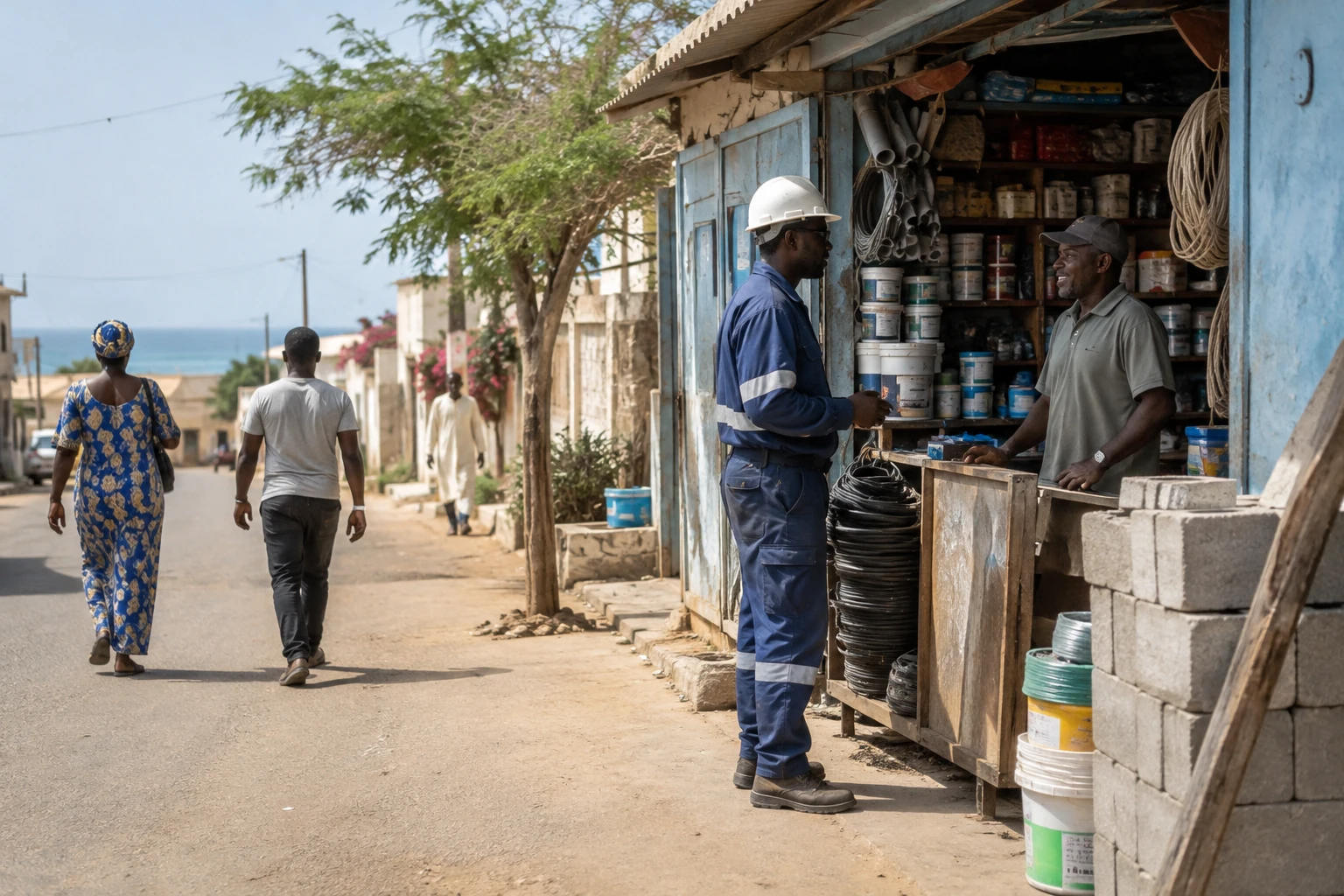
The restart of a mining facility can have an impact far beyond the site where it is located. In Senegal, the expected resumption of operations at Grande Côte concerns Eramet’s sales, but also local suppliers, employees and public revenues.
A coastal mine at the heart of an economic chain
At Diogo, on the Grande Côte north of Dakar, Eramet extracts sand containing ilmenite, rutile and zircon, among other minerals. These minerals are used in various industrial activities, including the manufacture of pigments, ceramics and materials. Heavy mineral concentrate, or HMC, is the intermediate product obtained after the minerals are separated from the sand.
The site is operated by Eramet Grande Côte, a subsidiary of French group Eramet. The Senegalese state holds a 10% minority stake, according to the company’s presentation. This presence directly links mining production to national concerns: tax revenues, jobs, purchases from Senegalese companies and the management of the activity’s effects in neighbouring areas.
The activity is also part of a broader debate about the place of natural resources in Senegal’s economy. Mining at Grande Côte has already prompted discussion about its local effects, particularly on the landscape and land use. The industrial restart alone therefore does not sum up the project’s overall record.
Fire upended the production schedule
On 22 February 2026, a fire broke out at the wet concentration plant, known as the WCP. This facility separates heavy minerals from the extracted sand. Eramet said it was shut down for maintenance at the time of the fire and that no casualties had been reported. Mining operations were subsequently suspended before partially resuming at the end of April.
HMC production reached 983,000 tonnes in 2025, according to data published by Eramet. After the fire, the group lowered its 2026 forecast to a range of 300,000 to 400,000 tonnes. A return to full capacity is now expected in the first quarter of 2027, with an annual target of about 900,000 tonnes.
This target remains a company forecast, not an established result. It depends on progress with reconstruction work and the restart of equipment. The difference between the 2025 target and the production envisaged for 2026 gives a sense of the disruption: the site is expected to operate well below its usual rate for part of the year.
Consequences beyond the group’s accounts
Lower activity can have knock-on effects throughout the economic chain. Purchases of goods and services from local companies may slow, as may some revenues linked to production. Employees and subcontractors are directly affected; for local authorities and the state, changes in taxes, levies and local spending also matter.
Eramet says its economic contribution to Senegal reached €229.7 million in 2025, up from €185.4 million in 2024. The group breaks this amount down into in-country purchases, wages and tax payments. This figure was provided by the company: it reflects its own calculation method and is not, on its own, enough to measure the project’s net effects on the economy or communities.
The restart will therefore need to be monitored on several fronts. Tonnage produced will not tell the whole story: the consistency of orders to Senegalese suppliers, job retention, public revenues and relations with neighbouring municipalities will provide other indicators. The stakes differ for the group, which is seeking to restore sales, and for the areas where the mine’s day-to-day impacts are concentrated.
At the same time, media outlets have reported criticism over changes to the landscape and the consequences of mining in the Lompoul area. This debate is a reminder that industrial performance must also be assessed in light of environmental commitments and local consultation. The available information does not allow the conclusion that bringing the site back into service would resolve these issues.
A trajectory to be confirmed in 2027
For Eramet, the first-quarter 2027 deadline is a decisive operational milestone. For Senegal, monitoring will also focus on how the restart feeds into the local economy and on the transparency of commitments to the populations concerned. The two dimensions are linked, but they are not the same.
At regional level, the issue forms part of West African discussions about processing and the value added derived from mineral resources. Restored production can boost raw-material exports; it does not automatically ensure that more industrial processing or revenues remain in the country. This question extends beyond the Grande Côte site and concerns several economies in the region.
The next concrete test will therefore be the announced restart, followed by the ability to sustain the targeted pace throughout 2027. In the meantime, production figures will need to be checked against actual results, while local benefits and environmental concerns will remain essential to assessing the real significance of the resumption.