Algeria
 Egypt
 Libya
 Morocco
 Sudan
 Tunisia
 Benin
 Burkina Faso
 Cabo Verde
 Côte d'Ivoire
 Ghana
 Guinea
 Guinea-Bissau
 Liberia
 Mali
 Mauritania
 Niger
 Nigeria
 Sierra Leone
 The Gambia
 Togo
 Cameroon
 Central African Republic
 Chad
 DR Congo
 Equatorial Guinea
 Gabon
 Republic of the Congo
 São Tomé and Príncipe
 Burundi
 Comoros
 Djibouti
 Eritrea
 Ethiopia
 Kenya
 Madagascar
 Malawi
 Mauritius
 Mozambique
 Rwanda
 Seychelles
 Somalia
 South Sudan
 Tanzania
 Uganda
 Angola
 Botswana
 Eswatini
 Lesotho
 Namibia
 South Africa
 Zambia
 Zimbabwe
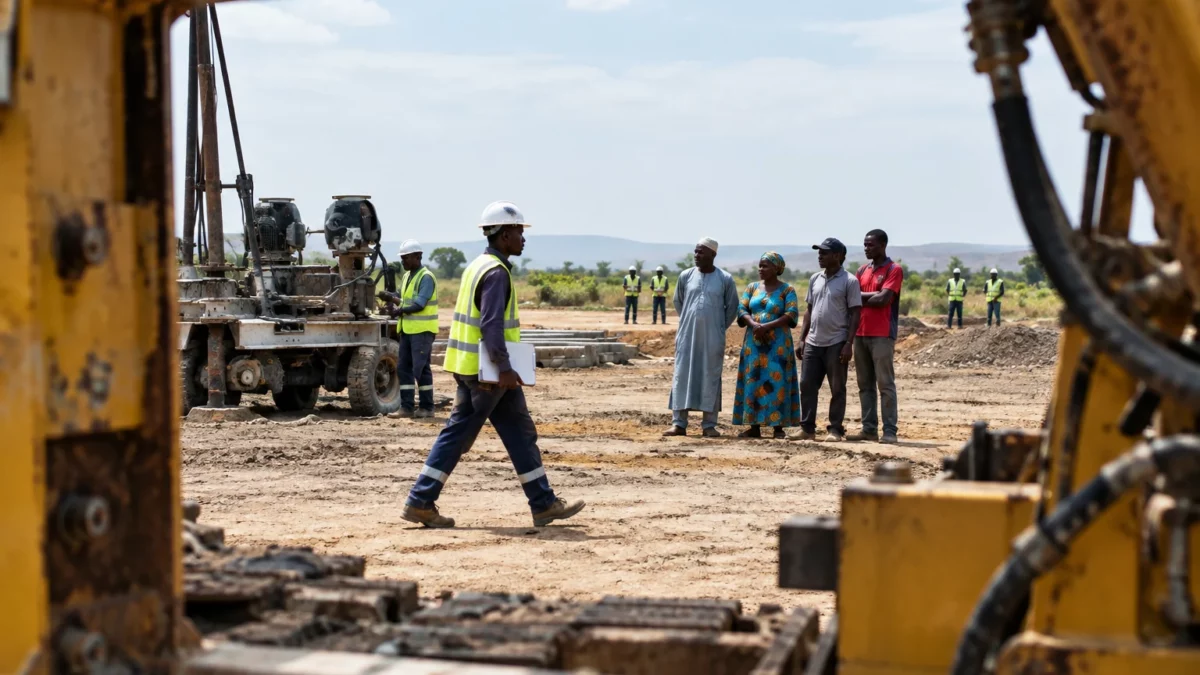
For residents of south-eastern Senegal, laying the first stone of a mine does not yet guarantee jobs or an operating plant. The Falémé iron project promises to transform a resource that has long remained a prospect. The decisive test now will be the shift from announcements to construction, and then to production.
An old deposit, a new phase in Kédougou
On Thursday 26 November 2026, President Bassirou Diomaye Faye laid the first stone of the project in Kédougou, in the south-eastern region. It concerns the Koudékourou, Goto and Farangalia deposits. The state-owned Senegalese company MIFERSO is developing it with Planet One Group, a group based in the United Arab Emirates.
The announced investment stands at 933 million dollars, or about 530 billion CFA francs. The partners estimate the resources of the deposits concerned at around 600 million tonnes. The project envisages an initial phase of ore beneficiation, followed by possible production of direct reduced iron, billets and steel. These intermediate products are used to make steel, particularly for construction and industry. The capacities cited vary according to the announced stages of processing; the detailed timetable and actual financing remain to be publicly specified.
The project is part of a much longer history. MIFERSO, established in 1975 to promote the deposits, has been working on Falémé for several decades. Senegal’s Court of Auditors has documented the company’s institutional and financial difficulties. It also recalls the ArcelorMittal precedent: after a concession was granted in 2007, the state withdrew the mining rights in 2014 because commitments had not been met, according to the audit report.
Local processing: an economic promise and industrial challenge
The aim is not simply to extract ore. The authorities are highlighting an industrial chain based in Senegal, from beneficiation to steelmaking. If it comes to fruition, it could reduce some imports of steel products and retain more value in the country.
But every stage requires investment, infrastructure and buyers. A mine on this scale needs reliable energy, transport links, water and commercial markets. The announced sum is therefore not enough to establish that all the necessary financing has already been secured. Projected capacity must also be distinguished from capacity actually built and operated.
Local benefits will depend on decisions about implementation. People in the Kédougou region can expect jobs and opportunities for Senegalese businesses. However, these benefits are not automatic: they will depend in particular on recruitment, training, local procurement and the distribution of public revenues. The communities concerned will also have an interest in monitoring the effects on land, water and existing livelihoods.
A more diverse mining sector, but still concentrated
Iron is entering a mining economy in which gold, phosphates and mineral sands already play an important role. The 2024 key figures from the National EITI Committee, the Extractive Industries Transparency Initiative, put gold exports reported by companies at 834.9 million dollars. This represented 44.10% of mining exports that year. Phosphoric acid accounted for 25.26%.
These figures show both the importance of gold and the diversity already present in Senegal’s extractive industries. Iron could broaden this base, but only if the country moves beyond exporting raw ore. Local processing is an ambition, not yet a measurable result. The next indicators will be contracts actually carried out, work under way, infrastructure completed and the first sales.
MIFERSO’s history is a reason for caution. A Court of Auditors report on its management found that it lacked the human, technical and financial resources needed to fulfil its remit fully. This assessment highlights the importance of clarifying the partnership’s governance, each party’s responsibilities and the oversight mechanisms. It does not prejudge the outcome of the new project, but is a reminder of why announcements must be followed by verifiable steps.
An issue for Senegal and West Africa
The project is primarily about Senegal’s industrial development. The country’s capital is Dakar, while the mining sites are several hundred kilometres to the south-east. This distance makes infrastructure and the geographical distribution of benefits particularly important. Skilled jobs, state revenues and local contracts will not necessarily benefit the same players or territories.
At regional level, the project is part of a question shared across West Africa: how can natural resources be converted into industrial activity, skills and sustainable revenues? ECOWAS, the Economic Community of West African States, promotes regional integration, but Falémé’s success will depend first and foremost on national decisions and the project’s actual delivery. Senegalese steel production could supply regional markets, provided costs are competitive and suitable logistics links are in place.
The 26 November ceremony is therefore a political and industrial milestone, not proof that operations have begun. Future announcements will need to specify the timetable, available financing, capacity at each phase and commitments to the territories concerned. These are the measures that will show whether Falémé has moved from a deposit studied for decades to a new productive industry in Senegal.
To cross-check the main figures, consult information from the Senegalese Press Agency on the project launch, the report by Senegalese daily Le Soleil, figures from the National EITI Committee and the Court of Auditors’ report on MIFERSO.