Algeria
 Egypt
 Libya
 Morocco
 Sudan
 Tunisia
 Benin
 Burkina Faso
 Cabo Verde
 Côte d'Ivoire
 Ghana
 Guinea
 Guinea-Bissau
 Liberia
 Mali
 Mauritania
 Niger
 Nigeria
 Sierra Leone
 The Gambia
 Togo
 Cameroon
 Central African Republic
 Chad
 DR Congo
 Equatorial Guinea
 Gabon
 Republic of the Congo
 São Tomé and Príncipe
 Burundi
 Comoros
 Djibouti
 Eritrea
 Ethiopia
 Kenya
 Madagascar
 Malawi
 Mauritius
 Mozambique
 Rwanda
 Seychelles
 Somalia
 South Sudan
 Tanzania
 Uganda
 Angola
 Botswana
 Eswatini
 Lesotho
 Namibia
 South Africa
 Zambia
 Zimbabwe
In Kédougou, a disease often associated with history books has found favourable conditions once again. Yet the issue extends far beyond south-eastern Senegal: it raises a simple question about the real resilience of vaccination chains in border areas, where mobility is high and health services are more fragile.
Senegal is not alone in this part of West Africa. Mali, Mauritania and Guinea have also reported resurgences of diphtheria, while the World Health Organization says the African region is facing outbreaks in several countries, with pockets of under-vaccination and uneven primary healthcare systems. ECOWAS is not directly at the heart of the public health response, but the cross-border dimension is central: when families move, the bacterium moves too.
A local outbreak becomes a national warning
The latest situation report published by Senegal’s health authorities shows a rapid rise. As of 9 September 2026, the country had recorded 57 confirmed cases and eight deaths. On 16 September, a new update raised the total to 76 cases and nine deaths, after 30 new cases were confirmed in the districts of Saraya, Kédougou and Salémata. The toll therefore rose again in five days, confirming that the disease is actively circulating.
Kédougou remains the epicentre of the response. The district accounts for the largest share of cases, but authorities have also reported cases in Dakar, Louga, Thiès, Diourbel, Kaolack, Matam, Kolda and Tambacounda. In other words, the outbreak is no longer confined to a single rural area in the east; it now affects very different places, from the outskirts of urban Dakar to inland transport routes.
The timeline matters too. Authorities said the first case was detected on 1 August 2026, but a retrospective review identified 11 suspected cases, all fatal, that occurred between August 2024 and July 2026 at Kédougou regional hospital. Two post-mortem samples, taken in late July and analysed at the Institut Pasteur in Dakar, subsequently confirmed the presence of diphtheria on 1 August. The delay points to the difficulty of diagnosis in a context where the disease has become less familiar to some medical staff.
The clinical symptoms listed by the ministry are those of a severe respiratory infection: sore throat, fever, difficulty swallowing, hoarseness, neck swelling and, in severe cases, the formation of greyish membranes in the throat. Transmission occurs mainly through the respiratory route, but can also happen via contaminated objects. Diphtheria is not a new disease; it becomes dangerous again when vaccination rates fall in some places.
Pockets of under-vaccination are the system’s real weak point
The national vaccination coverage figure is not enough to sum up the reality. Authorities say they are actively identifying “zero-dose” and incompletely vaccinated children in Kédougou. In Saraya, 1,140 children aged 0 to 5 had received no doses and 1,429 were not fully vaccinated, out of 2,539 children identified. In Kédougou, 214 children had still received no doses. In Salémata, only two children under five were vaccinated at the time of the update reported by health authorities.
This situation highlights the contrast between national averages and local realities. Senegal has a high overall vaccination rate by West African standards, but regional disparities create pockets of vulnerability. It is precisely in these gaps that vaccine-preventable diseases regain a foothold. WHO and UNICEF data also show that Senegal’s DTP3 coverage is around 88% in recent estimates, which is still not enough to eliminate territorial blind spots entirely.
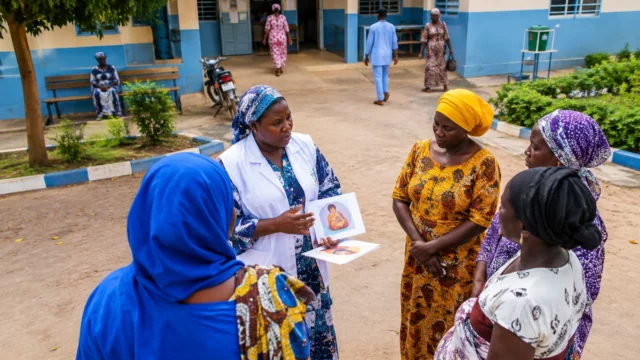
The public response is built around several measures: actively identifying unvaccinated or under-vaccinated children, tracing contacts, providing preventive treatment, securing antitoxin supplies and monitoring people for ten days. On the ground, health workers are also working with community health workers, neighbourhood leaders and “Bajenu Gox” — neighbourhood godmothers who play a very practical role in health outreach in several parts of the country.
The challenge is all the clearer because the affected districts are crossed by daily movements to neighbouring Mali. The case of a two-year-old child of Malian origin, who eventually died in Tambacounda, illustrates how care-seeking journeys and human borders can overlap. This does not in itself prove systematic importation, but it reinforces the idea that the disease is circulating regionally, beyond national administrative boundaries alone.
A warning for the entire Sahel belt
What is happening in Senegal resonates far beyond Kédougou. In 2025, WHO reported more than 23,000 suspected diphtheria cases in the African Region since 2023, with outbreaks recorded notably in Guinea, Mali, Mauritania, Niger, Nigeria and Chad. The agency stresses one central point: more than 90% of reported cases occur in children who are unvaccinated or insufficiently vaccinated.
The problem is therefore not only medical. It also concerns logistics, surveillance, trust in public services, continuity of the vaccine cold chain, the availability of antitoxin and the ability to confirm cases quickly in laboratories. WHO and Africa CDC also warn that conflict, displacement and fragile primary healthcare widen blind spots, particularly in areas at risk of disrupted access.
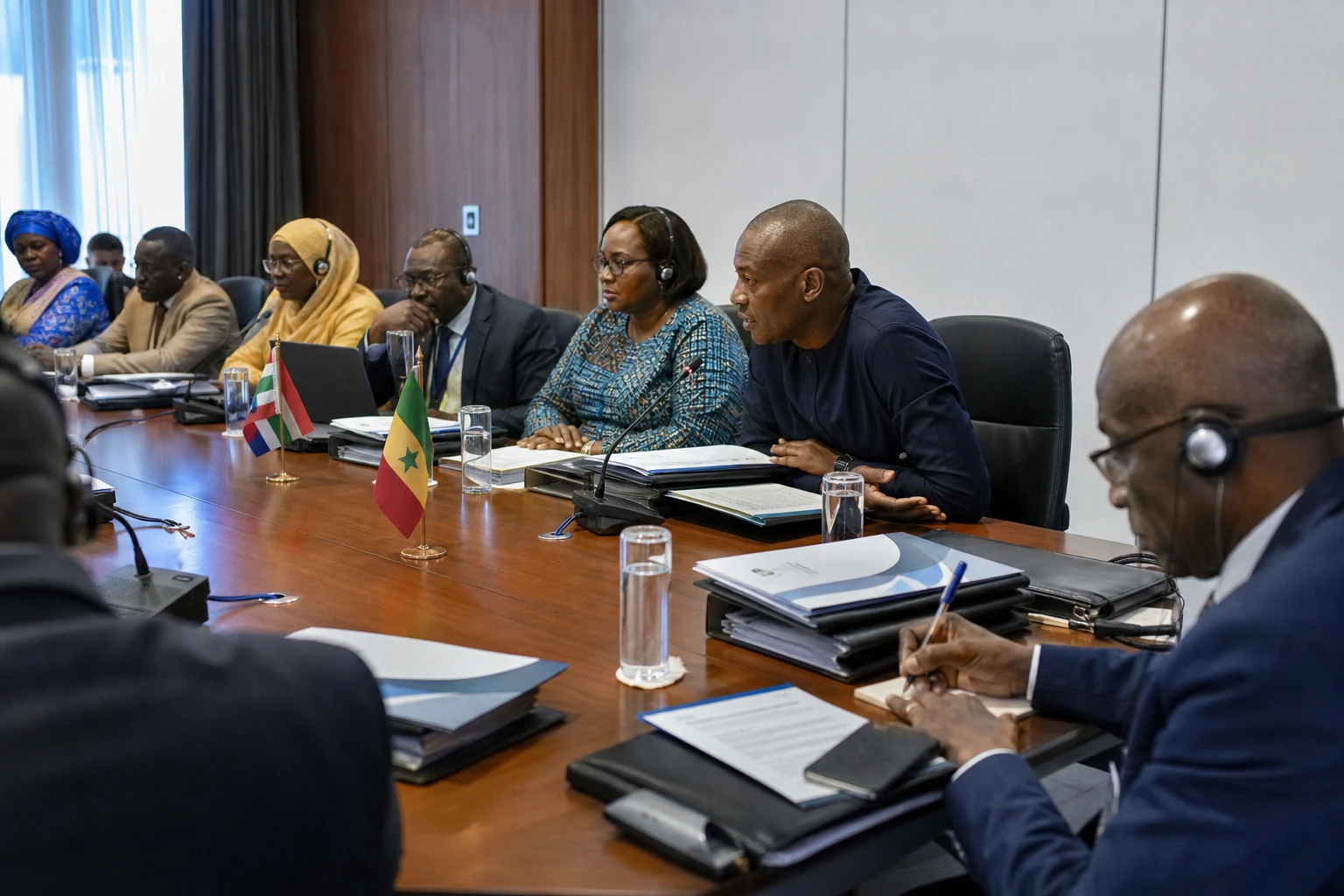
For West Africa, the current sequence is a reminder of a simple truth: cross-border health cannot be handled country by country any longer. In a region where families, traders and workers are constantly on the move, surveillance must be organised around mobility corridors, with rapid sharing of alerts, harmonised case definitions and co-ordinated vaccination campaigns. That is where the difference lies between containing an outbreak and allowing it to become a regional epidemic.
In Senegal, the next step will therefore be less an announcement than a test of sustained effort: finding unvaccinated children, breaking chains of transmission and preventing new outbreaks from appearing outside Kédougou. Diphtheria makes no noise before it strikes; the response, by contrast, will have to remain visible in the districts, not just in official statements.