Algeria
 Egypt
 Libya
 Morocco
 Sudan
 Tunisia
 Benin
 Burkina Faso
 Cabo Verde
 Côte d'Ivoire
 Ghana
 Guinea
 Guinea-Bissau
 Liberia
 Mali
 Mauritania
 Niger
 Nigeria
 Sierra Leone
 The Gambia
 Togo
 Cameroon
 Central African Republic
 Chad
 DR Congo
 Equatorial Guinea
 Gabon
 Republic of the Congo
 São Tomé and Príncipe
 Burundi
 Comoros
 Djibouti
 Eritrea
 Ethiopia
 Kenya
 Madagascar
 Malawi
 Mauritius
 Mozambique
 Rwanda
 Seychelles
 Somalia
 South Sudan
 Tanzania
 Uganda
 Angola
 Botswana
 Eswatini
 Lesotho
 Namibia
 South Africa
 Zambia
 Zimbabwe
As rain is delayed, communities reinvent their bearings
In Sine-Saloum, the first rain is not read only in the clouds. It is also read in inherited gestures, rising voices and the way a community expresses its relationship with the land. In Ndiaye Ndiaye, in the commune of Fatick, an ancient ritual continues to serve as a shared compass as the hivernage, or rainy season, becomes more uncertain.
This tension between memory and adaptation is no mere footnote. In Senegal, the seasons still structure agriculture, rural incomes and food security for a large share of households. In the centre-west, rain dictates millet and groundnut sowing, as well as social organisation, local calendars and the expectations of a population highly exposed to climate hazards.
In Fatick, a Serer rite that speaks as much of climate as of social ties
The Diobaye ritual hunt ceremony, sometimes locally presented as the “Miss of Diobaye”, is part of the living heritage of the Serer people of Senegal’s centre-west. UNESCO notes that the Xooy, another Serer divinatory ceremony, is also held before the rainy season and reflects a similar way of anticipating the hivernage through ritual knowledge. The two practices show that, in this region, forecasting the weather is as much a matter of culture as of observation.
The gathering in Ndiaye Ndiaye brings together initiated men, drums, songs and a carefully choreographed hunt. The practice is reserved for Serer men who have undergone initiation rites. A traditional diviner, the saltigué, identifies the animal whose slaughter is believed to encourage the return of rain. This ritual framework has existed for generations, but it has also been reshaped by modern hunting practices and changes to the natural environment.
In practice, participants themselves say that the hunt is no longer what it once was. Motorbikes have replaced some of the walks through the bush. Firearms have taken the place of travelling on foot alone. And the landscape has changed: Diobaye forest has shrunk under the effects of deforestation, soil salinisation and human pressure. This evolution is consistent with signs observed across West Africa, where decades of drought and rainfall variability have had a profound impact on rural areas.
The deeper message: adaptation also depends on local cultures
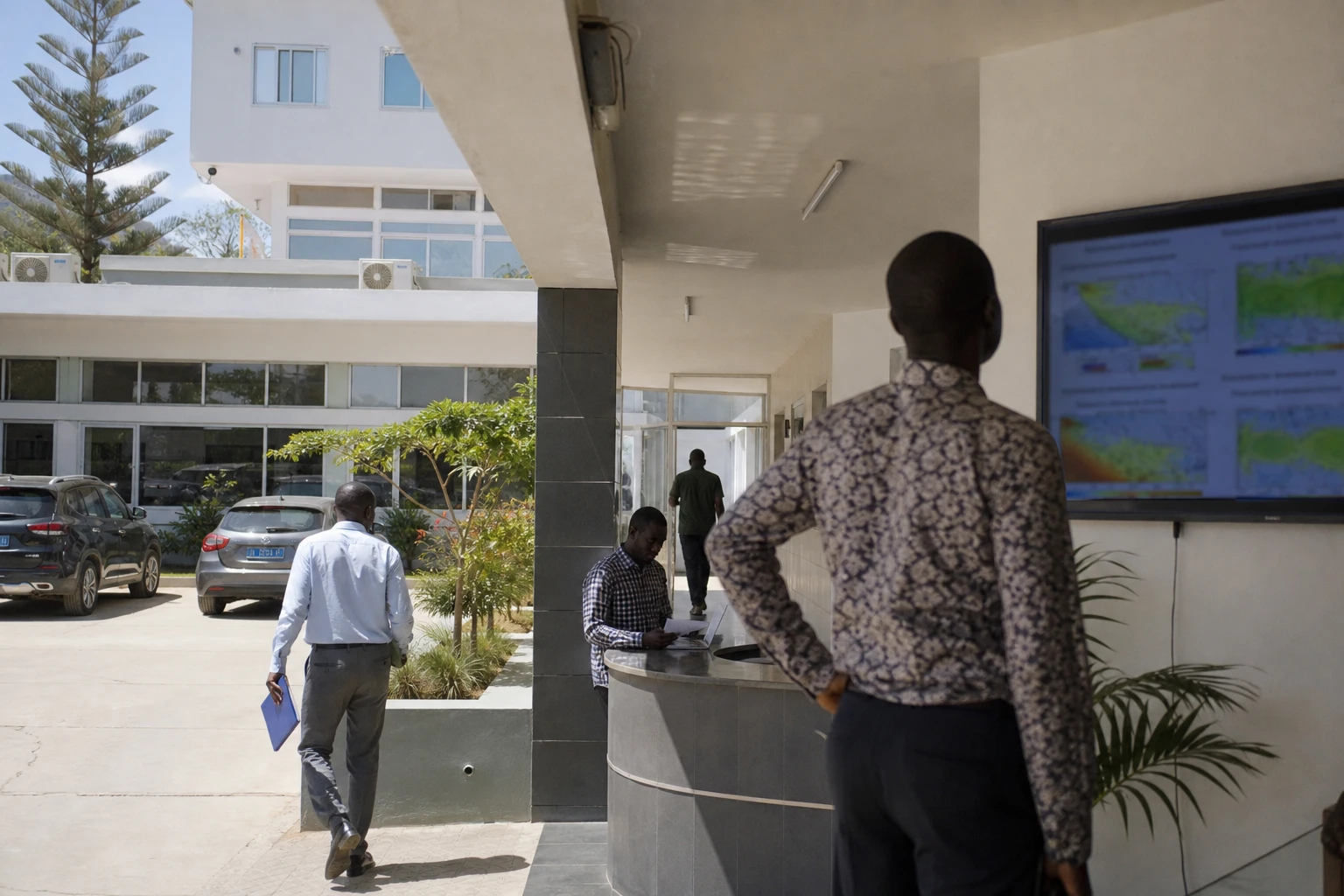
The subject goes far beyond the image of a colourful festival. In Fatick, the rite conveys something essential: when the climate becomes harder to read, societies look to their own institutions for bearings. Technical tools matter, of course, and ANACIM, Senegal’s meteorological agency, publishes seasonal monitoring reports and forecasts each year to help farmers. But local knowledge retains a strong social function, especially where scientific information does not displace collective practices or trust in customary authorities.
Senegal has recognised this in its own way, strengthening water, drainage and rainy-season risk monitoring across several ministries. This is no theoretical concern: in Diourbel and Tivaouane alike, authorities oversaw flood-prevention operations in 2026, showing that the rainy season remains a matter of day-to-day governance. At the regional level, this issue is connected to ECOWAS priorities, which also include work on resilience to disasters.
For residents, the stakes are tangible. Farming families await more regular rains to secure their sowing. Young people see the ritual as a space for integration and prestige. Women and children, meanwhile, watch from the outside as a scene that can still be noisy and impressive, but belongs to local identity. Between village and capital Dakar, between memory and administration, the question is the same: how can a territory hold together as the seasons change their rhythm?
The continent-wide significance is clear. In an African context where weather is becoming more erratic, communities that bring together scientific knowledge, ritual memory and local policy offer a useful lesson. The choice is not between tradition and modernity. It is about understanding how they coexist, correct one another and sometimes reinforce one another. In Senegal, this coexistence can be seen in Fatick. Beyond it, the example is a reminder that credible adaptation to climate change also depends on the cultures that give meaning to the seasons.