
 Algeria
 Egypt
 Libya
 Sudan
 Tunisia
 Benin
 Burkina Faso
 Cabo Verde
 Côte d'Ivoire
 Ghana
 Guinea
 Guinea-Bissau
 Liberia
 Mali
 Mauritania
 Niger
 Nigeria
 Senegal
 Sierra Leone
 The Gambia
 Togo
 Cameroon
 Central African Republic
 Chad
 DR Congo
 Equatorial Guinea
 Gabon
 Republic of the Congo
 São Tomé and Príncipe
 Burundi
 Comoros
 Djibouti
 Eritrea
 Ethiopia
 Kenya
 Madagascar
 Malawi
 Mauritius
 Mozambique
 Rwanda
 Seychelles
 Somalia
 South Sudan
 Tanzania
 Uganda
 Angola
 Botswana
 Eswatini
 Lesotho
 Namibia
 South Africa
 Zambia
 Zimbabwe
Two cases that go beyond the pitch
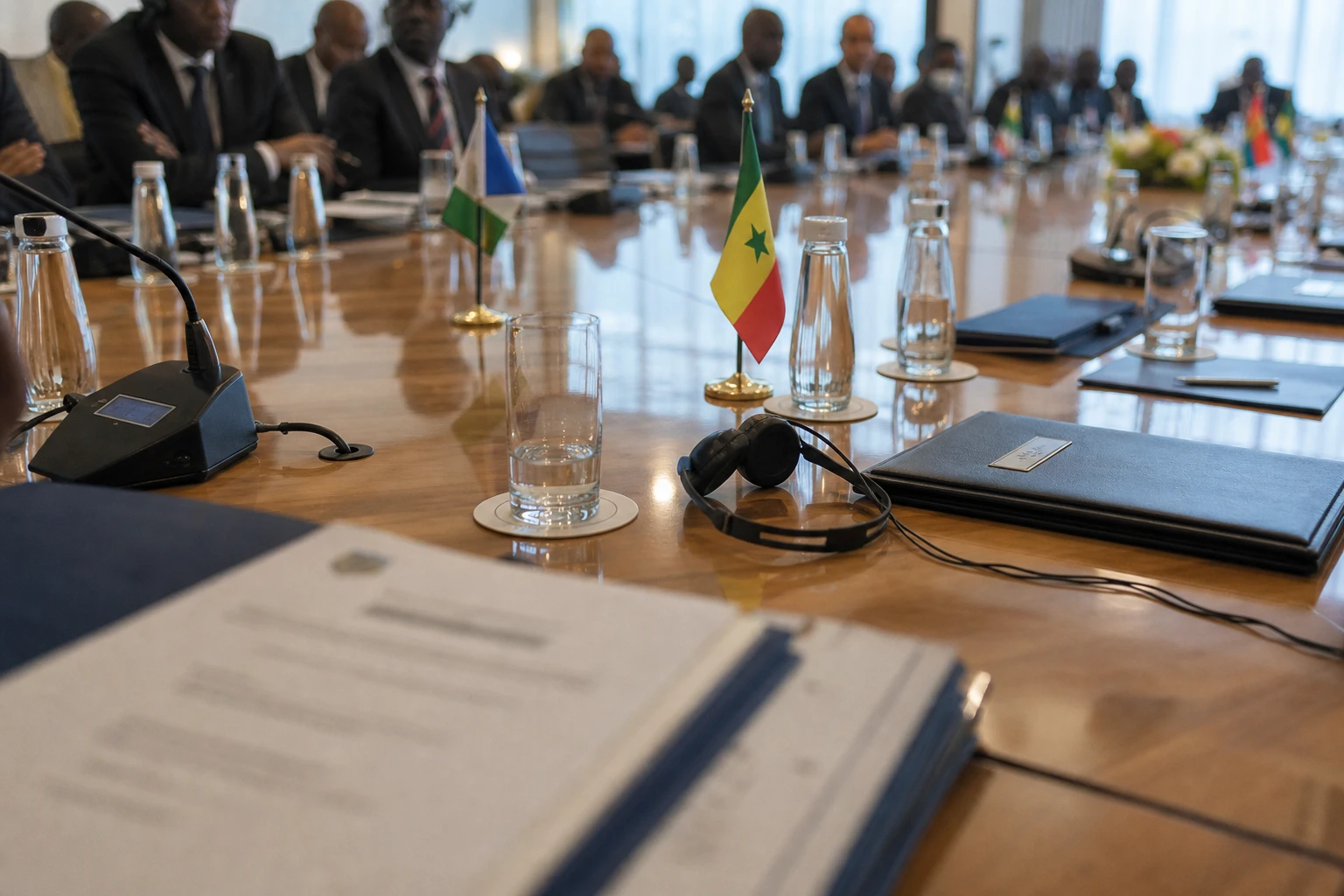
In Senegal, football is not played only on the pitch. It is also decided in the corridors of sports law, where each appeal can reshape a federation, a mandate and a victory. In this kind of episode, the issue is not simply who scored or who won. It is also a question of who speaks for Senegalese football, in Dakar and in the regional leagues.
The Court of Arbitration for Sport, based in Lausanne, is handling two cases linked to Senegalese football in parallel, but they are legally distinct. The first concerns a challenge to the presidential election of the Senegalese Football Federation. The second is the FSF’s appeal against the Confederation of African Football’s decision concerning the 2025 Africa Cup of Nations final against Morocco.
A federation under scrutiny within a tightly regulated regional framework
In the ECOWAS region, where football remains a marker of prestige and popular cohesion, national federations enjoy broad autonomy, but their elections and disputes can quickly make their way to FIFA, CAF and then CAS. In Senegal, this institutional chain is being watched particularly closely because the country underwent a political transition in 2024 and sport retains strong value as a force for national unity.
The FSF election was held on 2 and 3 August 2025. Abdoulaye Fall was elected president in the second round, with 321 votes to Mady Touré’s 30, according to the FSF and RTS. The federation also renewed 16 members of its executive committee. At the same time, Mady Touré denounced irregularities and brought his challenge before the internal appeals bodies.
The FSF appeals commission subsequently declared the appeal inadmissible, in late August 2025, before Mady Touré took the case to CAS in September. Wiwsport reported that a hearing was held in Lausanne on 10 March 2026. And, according to CAS’s official calendar, the presidential case was ultimately referred back to the Senegalese Football Federation on 21 August 2026.
What CAS has decided so far, and what remains open
The second case arose from the 2025 Africa Cup of Nations final. Senegal beat Morocco 1-0 after extra time on 18 January 2026 in Rabat, thanks to Pape Gueye, in a match played at Prince Moulay Abdellah Stadium. CAF subsequently challenged the events of the match. The continental body eventually declared Senegal to have forfeited on appeal, recording a 3-0 scoreline for Morocco on 17 March 2026.
The FSF responded by taking the matter to CAS on 25 March 2026 to challenge the decision. The Court confirmed that it had registered the appeal and then scheduled a hearing in the proceedings concerning the 2025 Africa Cup of Nations final. At this stage, no public CAS decision appears in the sources consulted, which means the final-related dispute remains open in arbitration.
The two cases therefore do not concern the same facts. One involves the internal governance of Senegalese football. The other concerns a continental competition and the disciplinary implications of an incident during a match. But they are connected because they involve the same federation, the same balance of power and, ultimately, the same question: who determines Senegal’s sporting legitimacy?
Governance, reputation and resources at stake
For Abdoulaye Fall, upholding the election result would consolidate a legitimacy already established in practice. For Mady Touré, the stakes go beyond a single vote. They concern electoral practices, the influence of clubs, the transparency of commissions and the ability of internal appeals procedures to convince stakeholders. This debate goes beyond individuals. It raises questions about how an African federation manages succession and checks and balances.
Financially, sports disputes are never neutral. CAS sets arbitration and procedural fees that can be substantial for the parties. This favours cases that are best prepared and stakeholders able to mobilise lawyers, evidence and institutional support. In Senegalese football, where many clubs operate on tight margins, every prolonged dispute also diverts time, energy and resources that could be devoted to training, infrastructure and local competitions.
The implications are also political in the institutional sense. When CAS refers an election case back to a federation, or when it is asked to rule on a challenge to a CAF decision, it reminds us that African federations operate within a framework of rules that extends beyond national borders. But this system is effective only if procedures are seen as clear. Otherwise, the legal crisis eventually spills over onto the pitch itself.
What African football will be watching next
Senegal is not an isolated case. In recent months, several African federations have seen their decisions and elections reviewed by CAS, from Algeria to Cameroon, as well as Tunisia, Morocco and the DRC. This shows one simple thing: international sports arbitration has become an essential step in major disputes in African football.
For Senegalese people, the key question will be whether the internal process can still be enough to bring peace to national football, or whether international arbitration will remain the final stage in major disputes. For CAF, the challenge is to preserve the authority of its decisions without creating the impression that rules are applied inconsistently. And for the West African region, this episode is a reminder that powerful football rests not only on talent and trophies, but also on the strength of the rules governing them.



