Algeria
 Egypt
 Libya
 Morocco
 Sudan
 Tunisia
 Benin
 Burkina Faso
 Cabo Verde
 Côte d'Ivoire
 Ghana
 Guinea
 Guinea-Bissau
 Liberia
 Mali
 Mauritania
 Niger
 Nigeria
 Sierra Leone
 The Gambia
 Togo
 Cameroon
 Central African Republic
 Chad
 DR Congo
 Equatorial Guinea
 Gabon
 Republic of the Congo
 São Tomé and Príncipe
 Burundi
 Comoros
 Djibouti
 Eritrea
 Ethiopia
 Kenya
 Madagascar
 Malawi
 Mauritius
 Mozambique
 Rwanda
 Seychelles
 Somalia
 South Sudan
 Tanzania
 Uganda
 Angola
 Botswana
 Eswatini
 Lesotho
 Namibia
 South Africa
 Zambia
 Zimbabwe
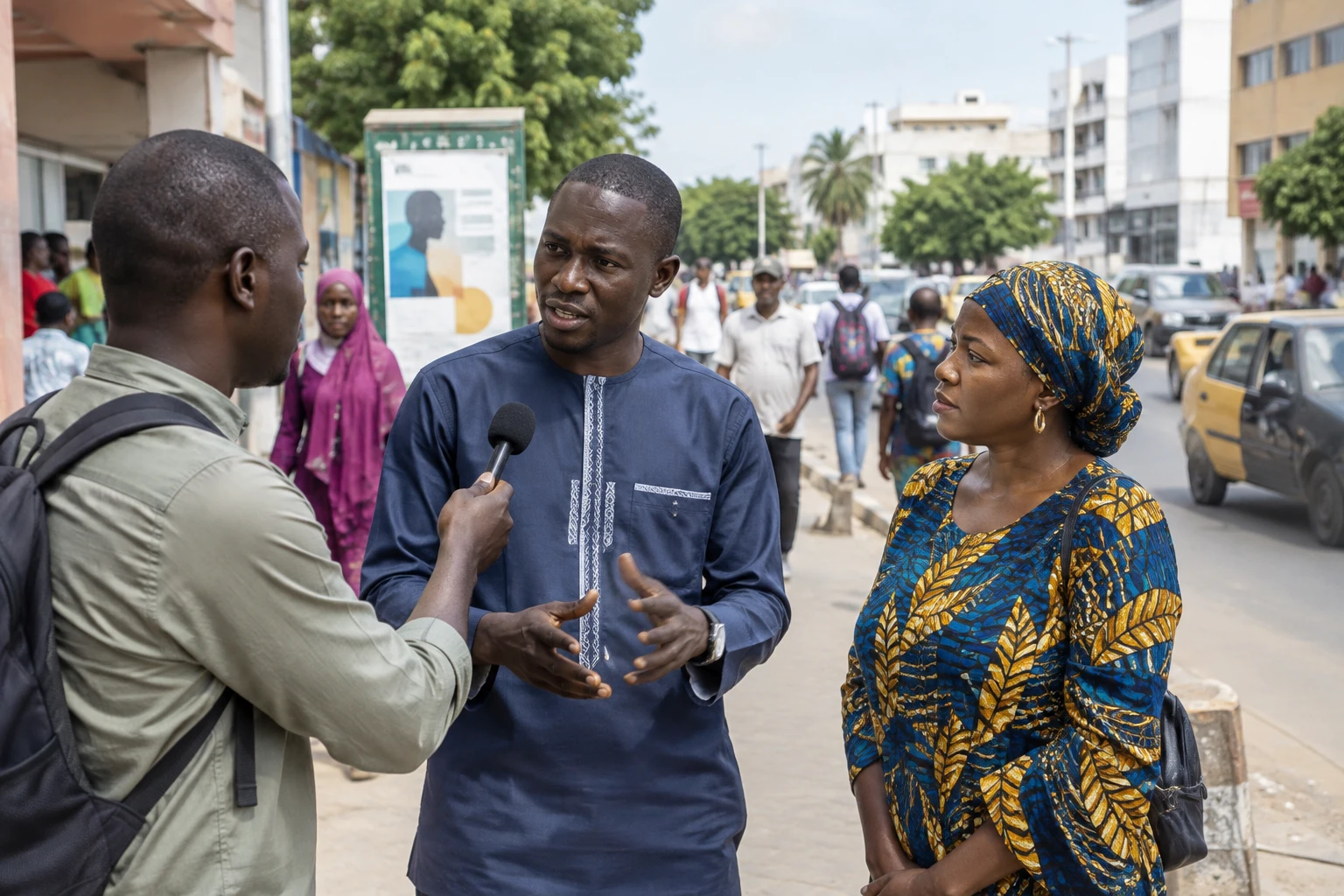
In Dakar and across the regions, decisions on the 2026 budget could affect essential services, public works and the cost of living. In Senegal, the question is therefore not only how to reduce the deficit, but also who will bear the adjustment and which spending will be protected.
A revised budget under pressure from revenues and energy costs
A supplementary finance bill (LFR) amends the budget during the year when revenues or spending diverge from forecasts. The text submitted to the National Assembly cuts revenues to CFAF 5,848.7 billion, from CFAF 6,188.8 billion in the initial budget. The projected deficit reaches CFAF 1,735.2 billion, or 7.6% of gross domestic product (GDP), up from 5.4%.
Higher energy subsidies are a major factor in this rebalancing. Their allocation would rise from CFAF 250 billion to CFAF 790.3 billion, while expected growth for 2026 has been revised down to 2.7%. These figures are set out in the budget proposal and also reported by the Senegalese Press Agency (figures in the supplementary finance bill).
The regional context also matters. Senegal borrows on the West African Monetary Union (WAMU) government securities market, where member states raise funds from investors. Rising yields there make new borrowing more expensive and can reduce the room available in national budgets.
Investment deferred, compromise contested
The government is proposing to cut investment appropriations by CFAF 555 billion. Prime Minister Ahmadou Alhaminou Mohamed Lo said on 25 October that some projects would be deferred until 2027 because funding was unavailable or they were not ready for immediate implementation. The executive says the revision must take account of falling revenues and spending that has become urgent.
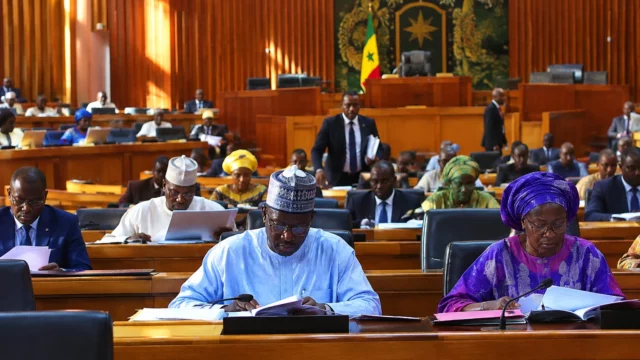
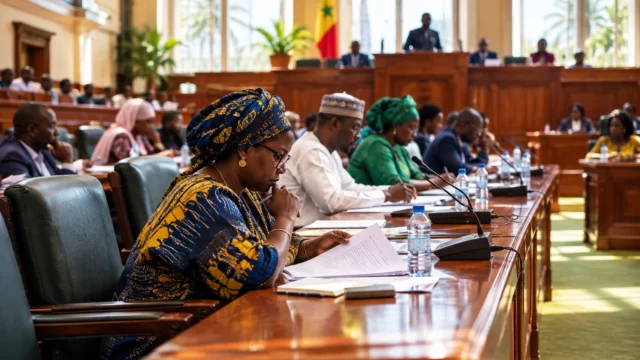
The Pastef parliamentary majority, however, rejects the bill in its current form. It does not necessarily dispute the principle of a revision, but challenges how the cuts are distributed and calls for health, education, water, infrastructure and industry to be protected. The party is also seeking explanations for CFAF 120 billion linked to the emergency response mechanism, as well as savings on the running costs of the state. This opposition and MPs’ demands were reported by the African Press Agency.
The disagreement emerged in committee on 23 October. A plenary debate is scheduled for Tuesday 27 October at 10am. As of the date of that session, the outcome of the vote has not been established by the information available here. The announced timetable must therefore be distinguished from the parliamentary result.
The decisions will not affect everyone in the same way. Deferring works could delay infrastructure that benefits people in the regions and deprive construction firms of expected contracts or payments. Conversely, maintaining spending without sufficient revenue increases borrowing needs. Households are particularly affected by subsidies: cutting them could push up energy prices, while maintaining them commits substantial public resources. The government says it intends to defer projects rather than abandon them; their precise timetable remains to be seen.
Borrowing remains accessible, but is more expensive
On 23 October, Senegal raised CFAF 55 billion on the regional market, against an initial auction target of CFAF 50 billion. Investor bids exceeded CFAF 69 billion, a sign that the state retains access to finance. But the average yield on five-year bonds stood at 8.24%, up from 7.82% on 9 October. This change, documented by the auction data, indicates more costly borrowing. It does not, on its own, make it possible to attribute the increase to the parliamentary standoff.
These securities are part of the WAMU market, shared by several West African states. Senegal’s borrowing costs therefore also depend on regional conditions, investor demand and assessments of risk. The 8.24% figure relates to a specific issuance, not the uniform cost of all public debt.
The IMF file, another test of credibility
The budget debate is taking place as Dakar seeks to restore confidence after the discovery of previously inaccurate information on public debt. On 1 September, staff at the International Monetary Fund (IMF) announced a staff-level agreement paving the way for a 36-month programme worth about $2.2 billion. This agreement does not amount to financing already approved: the executive board must still decide, after corrective measures and the securing of financing assurances. The IMF statement sets out these conditions.
For the authorities, a credible budget can facilitate efforts to secure financing and strengthen public accounts. For MPs, the challenge is to ensure that adjustment does not rely mainly on deferring investment or potentially increasing costs for households. The debate is therefore as much about transparency and spending oversight as it is about the size of the deficit.
A national issue with regional repercussions
The Assembly’s decision will affect the implementation of public policies in Senegal and the terms on which the country can borrow in WAMU. It is also of interest to regional partners and investors monitoring Senegal’s budget trajectory. The next step will be the vote on the supplementary finance bill, followed by the translation of the decisions into actual spending: social services, infrastructure projects, energy subsidies and the running costs of the state.
The expected compromise will therefore have to reconcile three constraints: containing the deficit, protecting activities and services considered priorities, and reassuring lenders without placing a disproportionate share of the burden on Senegalese people. Its specific terms, rather than statements of principle, will determine who pays the price of the revision.