
 Algeria
 Egypt
 Libya
 Morocco
 Sudan
 Tunisia
 Benin
 Burkina Faso
 Cabo Verde
 Côte d'Ivoire
 Ghana
 Guinea
 Guinea-Bissau
 Liberia
 Mali
 Mauritania
 Niger
 Nigeria
 Sierra Leone
 The Gambia
 Togo
 Cameroon
 Central African Republic
 Chad
 DR Congo
 Equatorial Guinea
 Gabon
 Republic of the Congo
 São Tomé and Príncipe
 Burundi
 Comoros
 Djibouti
 Eritrea
 Ethiopia
 Kenya
 Madagascar
 Malawi
 Mauritius
 Mozambique
 Rwanda
 Seychelles
 Somalia
 South Sudan
 Tanzania
 Uganda
 Angola
 Botswana
 Eswatini
 Lesotho
 Namibia
 South Africa
 Zambia
 Zimbabwe
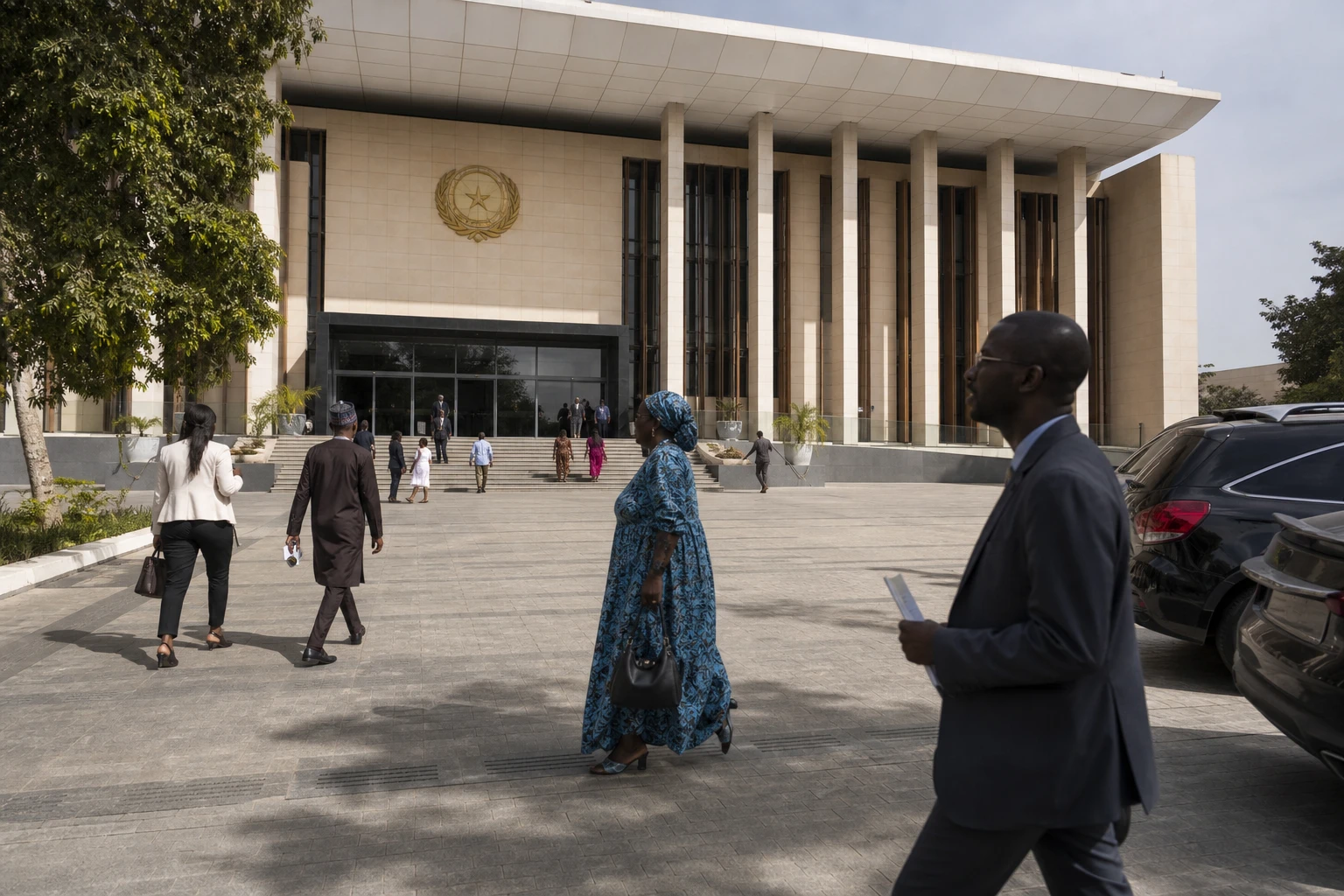
A tense parliamentary address, but a message of method
In Dakar, the government has chosen realism over easy promises. In a country weighed down by debt and with strong social expectations, Ahmadou Al Aminou Lo’s tone matters as much as his announcements. On Tuesday 8 September, Senegal’s prime minister defended a course of fiscal recovery before the National Assembly, embracing a message of austerity and governmental continuity.
The context is clear. Senegal is emerging from a period of budgetary pressure, with public debt estimated at 134% of GDP and payment arrears close to 1,956 billion CFA francs, according to figures presented by the head of government. At the same time, Dakar has reached a staff-level agreement with the International Monetary Fund for a 36-month programme worth about $2.2bn, intended to support economic and financial reforms from 2026 to 2029.
This backdrop sheds light on the parliamentary scene. Rather than opening a political front, the head of government sought to establish a technical sequence. He said the executive could not immediately launch major public works while the public finances remained unrepaired. He also described the programme negotiated with the IMF not as a hard restructuring, but as a “reprofiling” of the debt, to ease debt servicing and align repayments with the country’s capacity.
Debt, the budget and the recovery timetable
At the heart of the issue are the public finances. Senegalese authorities want to restore debt sustainability before accelerating investment. This priority was confirmed in the general policy statement, in which the government put the restoration of financial stability at the centre of its agenda. The prime minister even warned, in words reported by the national press, that the country had become poorer in 2025 and could become poorer still in 2026 if the adjustment was not carried through to the end.
The message to households and businesses is twofold. On the one hand, the government acknowledges the seriousness of the situation. On the other, it is trying to preserve the impression of a clear course. According to the institution’s statement, the programme agreed with the IMF is intended to support budget reforms, debt governance and the monitoring of domestic arrears. This matters for local businesses, which are often on the front line of payment delays, as well as for public bodies that depend on a solvent state to meet its commitments.
The reminder is also political. In June 2026, the presidency had already stressed the need to clean up the public finances, strategically manage debt and revive the economy. Tuesday’s statement is therefore part of an institutional continuity, with a new head of government appointed on 25 May 2026, but the same concern to restore the confidence of lenders, markets and economic players.
Migration debate puts national cohesion to the test
The parliamentary session was not devoted solely to debt. Ahmadou Al Aminou Lo also condemned the rise of hostile rhetoric targeting West African nationals living in Senegal. He called for such remarks to stop, while recalling that the country had been shaped by long-standing human movement across the sub-region. The prime minister’s office later clarified that the state would also ensure compliance with residency rules.
This issue touches a sensitive nerve. In Dakar’s markets, working-class neighbourhoods and commercial districts, traders and workers from ECOWAS, the Economic Community of West African States, are part of everyday life. The debate about foreigners is therefore not confined to a parliamentary spat. It reflects the economic coexistence of the capital, secondary cities and the cross-border networks that sustain the informal economy.
By speaking publicly on the issue, the prime minister sought to head off an identity-based turn that part of civil society regards as dangerous. He also distanced himself from nationalist rhetoric that blames foreigners for wider economic strains: unemployment, pressure on purchasing power, commercial competition and the challenge of urban employment. The government’s response therefore remains a delicate balance between administrative firmness and a reminder of the country’s values of openness.
What Dakar wants to say to West Africa
Senegal’s message is aimed at the whole of West Africa. Its relationship with the IMF, debt pressures and handling of migration interest regional capitals, particularly as several ECOWAS states weigh budgetary sovereignty against the need for external financing and the preservation of social cohesion. Like other coastal capitals, Dakar must also manage pressure from cross-border flows and the expectations of a large young population seeking jobs.
The Senegalese government now sets out three interconnected priorities: restoring the public finances, protecting national cohesion and reviving the real economy. In his statement, the prime minister referred to localising public policies, creating jobs by 2029 and achieving pharmaceutical sovereignty, with the aim of expanding local production. These announcements show a desire to move beyond simply accounting for the crisis and to anchor recovery in local communities, productive sectors and public services.
What happens next will depend on the budget timetable, full approval of the programme with the IMF and the government’s ability to stay the course in the face of political resistance. For Senegal, the challenge is not only to reassure external partners. It is also to convince its own citizens that today’s adjustment can create a stronger basis tomorrow for investment, jobs and social stability.



