Algeria
 Egypt
 Libya
 Morocco
 Sudan
 Tunisia
 Benin
 Burkina Faso
 Cabo Verde
 Côte d'Ivoire
 Ghana
 Guinea
 Guinea-Bissau
 Liberia
 Mali
 Mauritania
 Niger
 Nigeria
 Sierra Leone
 The Gambia
 Togo
 Cameroon
 Central African Republic
 Chad
 DR Congo
 Equatorial Guinea
 Gabon
 Republic of the Congo
 São Tomé and Príncipe
 Burundi
 Comoros
 Djibouti
 Eritrea
 Ethiopia
 Kenya
 Madagascar
 Malawi
 Mauritius
 Mozambique
 Rwanda
 Seychelles
 Somalia
 South Sudan
 Tanzania
 Uganda
 Angola
 Botswana
 Eswatini
 Lesotho
 Namibia
 South Africa
 Zambia
 Zimbabwe

A political signal that goes beyond simply monitoring public officials’ wealth
In Dakar, the fight against corruption is no longer waged only in speeches. It now involves specific obligations, deadlines and broader scrutiny of public officials’ assets. Senegal is following a movement that touches the heart of the state: who must account for their actions, when, and to which institution.
This development comes at a time of intense institutional activity. Since 2025, Senegal’s government has put forward several pieces of legislation on public transparency: the creation of a new OFNAC, a law on access to information, protection for whistleblowers, and then a reform of asset declarations. The package also fits within the older framework of the WAEMU Transparency Code, which sets common standards for budgetary governance across the West African monetary union.
What parliament voted for in Dakar
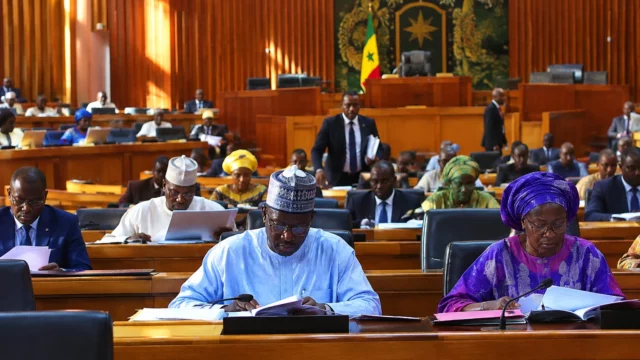
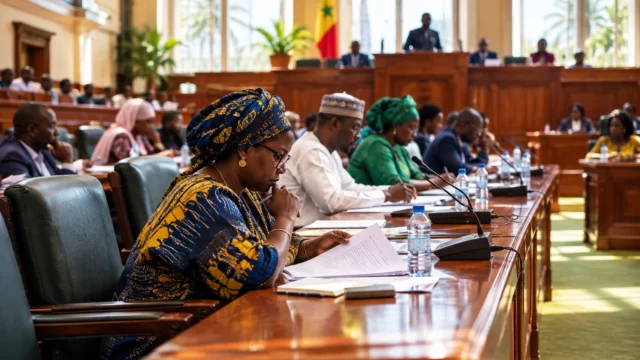
On 25 August 2025, the National Assembly adopted a bill on asset declarations. The text received 130 votes out of 165 MPs, with one vote against and one abstention, following 15 amendments. A few days later, it was promulgated in Dakar on 3 September 2025 as Law No. 2025-13.
The law’s scope extends beyond the head of state alone. Its annex lists the presidents of institutions of the Republic, including the president of the National Assembly and the president of the constitutional court. It also covers members of the National Assembly’s Bureau, members of the government, staff at the Presidency, the Prime Minister’s Office and the General Secretariat of the Government, as well as several senior administrative and financial officials.
The timetable is strict. Those newly covered have three months after their appointment or election to file a certified, accurate and truthful declaration. Those who had not declared their assets before the law came into force must do so within two months. Declarations are filed with OFNAC, the National Office for the Fight against Fraud and Corruption, which also receives annual updates from those required to submit them.
A governance reform, not just an anti-corruption law
The government presents the law as a preventive measure. In the explanatory memorandum published in the Official Gazette, it says asset declarations should also be used to identify conflicts of interest, concealment of assets, the use of front men and other forms of indirect illicit enrichment. The law also broadens the scope of those required to declare. For staff responsible for executing public budgets, the financial threshold has been lowered from one billion to 500 million CFA francs. This matters: it extends scrutiny to the channels through which public money is most often dispersed.
Justice Minister Ousmane Diagne had already presented the reform as a tool to fight corruption, rather than merely a mechanism to combat illicit enrichment. In parliament, MPs from the majority also stressed the need to ensure the law is implemented in practice. They called for public awareness campaigns, a sign that the challenge is no longer solely legal, but also administrative and political.
The sequence also says something about the current government’s approach. Bassirou Diomaye Faye and Ousmane Sonko have made a break with opaque practices a defining feature of their arrival in office. But delivering on that promise will depend on institutions’ ability to carry out regular checks, impose effective sanctions and keep records up to date. The Official Gazette also stipulates that the list of people required to declare must be sent to OFNAC every year, by 31 January at the latest.
What this means for institutions and society
For the executive, the reform reinforces a pledge of accountability. For parliament, it sets an important symbolic precedent: the president of the National Assembly is explicitly brought within the scope of the declaration requirement. The signal is just as strong for the constitutional court, since the body responsible for interpreting the law must also make its asset position visible. This choice could strengthen public trust, provided that scrutiny does not remain theoretical.
For financial administrations, magistrates, inspectors and officials in sensitive sectors such as mining, quarrying and hydrocarbons, the law imposes a heavier burden. This is at the heart of the issue: public and extractive resources are vulnerable to capture, and the law seeks to close this blind spot. In a country where public expectations around the management of public finances are high, transparency is becoming a source of domestic credibility as well as a signal to economic partners.
For Senegalese people, the stakes are more concrete than they may seem. An asset declaration law will not, on its own, change daily life. It can, however, alter how the state recruits, monitors and sanctions its own employees. If consistently enforced, it could reduce the perception of impunity. If not, it will join the long list of reforms announced but rarely followed through. Parliament has also provided for sanctions and obligations to update declarations; the question is how OFNAC will enforce them.
A regional dimension in West Africa
Senegal is not legislating in a vacuum. Across West Africa, public transparency has become a marker of state credibility, particularly as citizens demand greater oversight of public finances, natural resources and strategic appointments. By adopting and extending WAEMU standards, Dakar is pursuing regional compliance as well as political initiative.
The continental significance is clear. Across the African Union and subregional organisations, the fight against corruption has become a more concrete test of governance than broad institutional slogans. Senegal is seeking to show that an anti-corruption reform can cover the executive, parliament, the judiciary and independent administrative authorities. What happens next will depend on two decisive steps: implementation by decree, and OFNAC’s ability to effectively scrutinise declarations and publish what can be made public without compromising the declarants’ security.