Algeria
 Egypt
 Libya
 Morocco
 Sudan
 Tunisia
 Benin
 Burkina Faso
 Cabo Verde
 Côte d'Ivoire
 Ghana
 Guinea
 Guinea-Bissau
 Liberia
 Mali
 Mauritania
 Niger
 Nigeria
 Sierra Leone
 The Gambia
 Togo
 Cameroon
 Central African Republic
 Chad
 DR Congo
 Equatorial Guinea
 Gabon
 Republic of the Congo
 São Tomé and Príncipe
 Burundi
 Comoros
 Djibouti
 Eritrea
 Ethiopia
 Kenya
 Madagascar
 Malawi
 Mauritius
 Mozambique
 Rwanda
 Seychelles
 Somalia
 South Sudan
 Tanzania
 Uganda
 Angola
 Botswana
 Eswatini
 Lesotho
 Namibia
 South Africa
 Zambia
 Zimbabwe
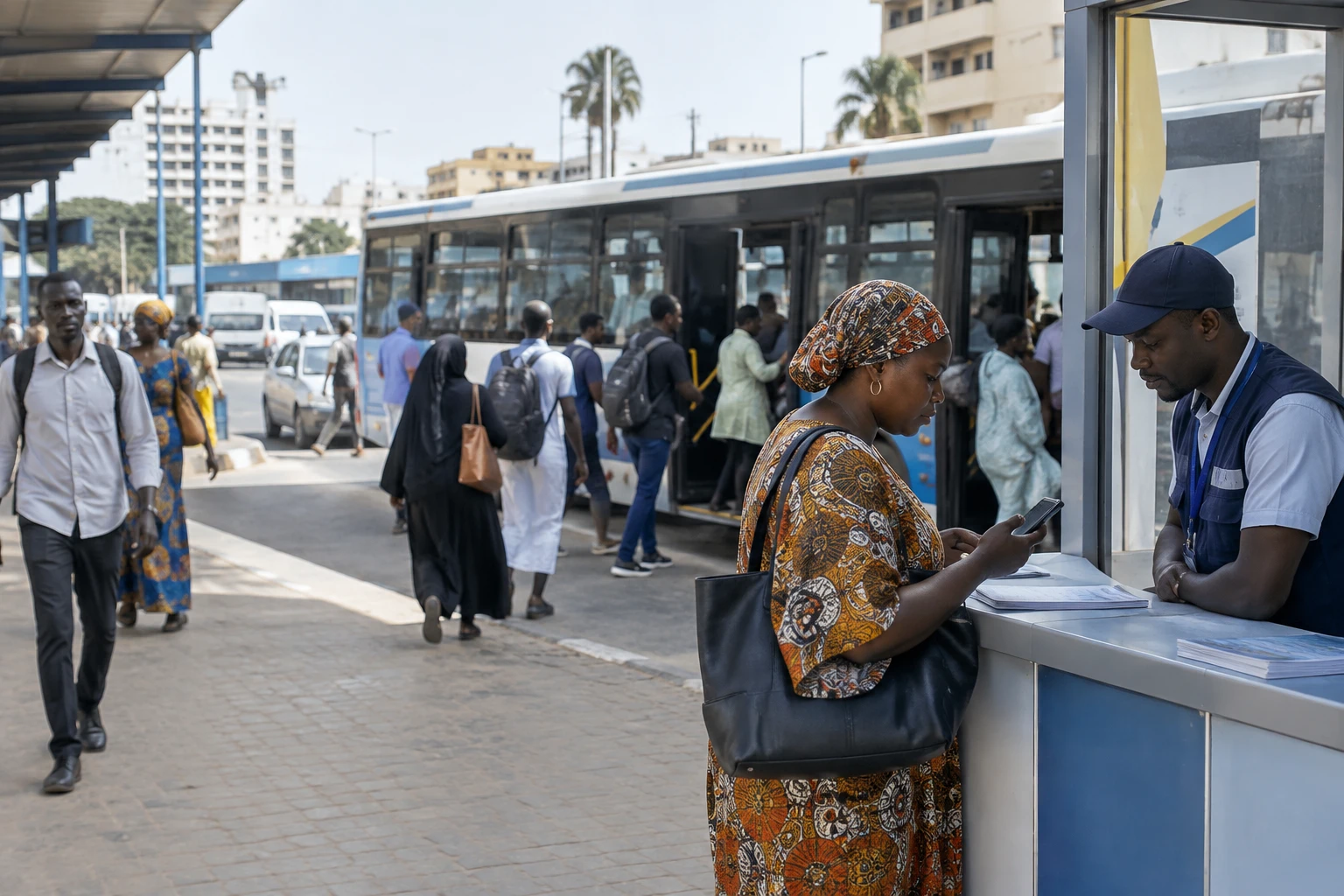
Artificial intelligence can detect a health risk or help a woman farmer anticipate the weather. But without reliable data, accessible tools and teams able to use them, such promises often remain at the pilot stage. In Senegal, the challenge now is to turn digital projects into services that are useful in everyday life.
Digital foundations before applications
In Dakar, the Senegalese authorities and the Gates Foundation launched the Senegal AI Scaling Hub on 29 October 2026. The initiative is intended to help artificial intelligence solutions move beyond experimentation and be deployed more widely. Health, education and agriculture are among the sectors targeted.
The launch is part of the New Deal technologique, the national digital strategy associated with the Senegal 2050 Agenda. The strategic partnership concluded with the Gates Foundation includes, among other things, an AI hub, a digital identity and a unit tasked with monitoring digital transformation projects. The Senegalese presidency set out its main elements in September 2025.
These components address a practical problem: a standalone application is not enough to modernise a public service. For a diagnostic aid, for example, to be useful, medical information must be structured, protected and accessible to authorised professionals. Similarly, an agricultural advisory service depends on reliable data about crops, soils and weather conditions.
Moving from pilot to a service people actually use
The hub aims to bring together government departments, researchers, businesses and project leaders. According to discussions reported by the Senegalese daily EnQuête after the launch, participants cited administrative obstacles, a lack of coordination, infrastructure and funding. These difficulties affect the ecosystem as a whole, not just start-ups.
Applications will also need to reflect the realities of people’s lives. In Senegal, a service designed only for a recent smartphone, a stable internet connection and a French-language interface risks leaving some people behind. National languages, voice-based solutions and tools suited to the equipment available may therefore influence a project’s success. Access to digital services is not measured solely by the number of applications launched.
Digital identity is equally important. It can make it easier to access administrative procedures and link some public services. However, its deployment requires safeguards for privacy and security, as well as the ability to correct inaccurate data. People in large cities, rural populations and those less familiar with digital tools do not face the same obstacles.
Finally, making AI work requires computing capacity, skills and sustainable funding. The cost does not end with the purchase of equipment: systems must also be maintained, users trained and data updated. If government departments cannot carry out these tasks over time, a pilot project risks coming to an end before it has improved a service.
An issue of sovereignty and regional cooperation
Senegal is not alone in tackling these issues. In a September 2026 publication on six African deployments of local computing infrastructure, the United Nations Development Programme notes that equipment alone does not guarantee the adoption of AI. Accessible data, skills, governance, cybersecurity and continuity of funding also matter. The study examines experiences in Kenya, Malawi, Rwanda, South Africa, Togo and Zambia.
For Dakar, the choice of solutions is also a matter of control. Developing tools that meet local needs can strengthen Senegalese skills and its ecosystem. But collaboration with international partners raises a central question: who sets priorities, controls the data and decides the terms of deployment? The answer will depend as much on governance rules as on technology.
Across West Africa, these choices are also of interest to the countries of ECOWAS, the Economic Community of West African States. Digital services designed for multiple languages and systems able to exchange data can facilitate cooperation. However, such interoperability requires common standards and compatible safeguards, rather than simply multiplying national platforms.
The next steps will be decisive
The launch of the hub marks an institutional milestone, not yet proof of large-scale deployment. Project selection criteria, timelines, funding mechanisms and measured results will make it possible to assess the initiative’s real reach. It will also be important to know how health professionals, teachers and farmers will take part in designing the tools.
The test will be practical: will the services meet needs identified on the ground, including outside Dakar? Will data be protected and solutions accessible under real-world conditions? For Senegal and its neighbours, the challenge is not simply to have AI, but to build the institutions and skills that will enable it to be used sustainably.