Algeria
 Egypt
 Libya
 Morocco
 Sudan
 Tunisia
 Benin
 Burkina Faso
 Cabo Verde
 Côte d'Ivoire
 Ghana
 Guinea
 Guinea-Bissau
 Liberia
 Mali
 Mauritania
 Niger
 Nigeria
 Senegal
 Sierra Leone
 The Gambia
 Togo
 Cameroon
 Central African Republic
 Chad
 DR Congo
 Equatorial Guinea
 Gabon
 Republic of the Congo
 São Tomé and Príncipe
 Burundi
 Djibouti
 Eritrea
 Ethiopia
 Kenya
 Madagascar
 Malawi
 Mauritius
 Mozambique
 Rwanda
 Seychelles
 Somalia
 South Sudan
 Tanzania
 Uganda
 Angola
 Botswana
 Eswatini
 Lesotho
 Namibia
 South Africa
 Zambia
 Zimbabwe
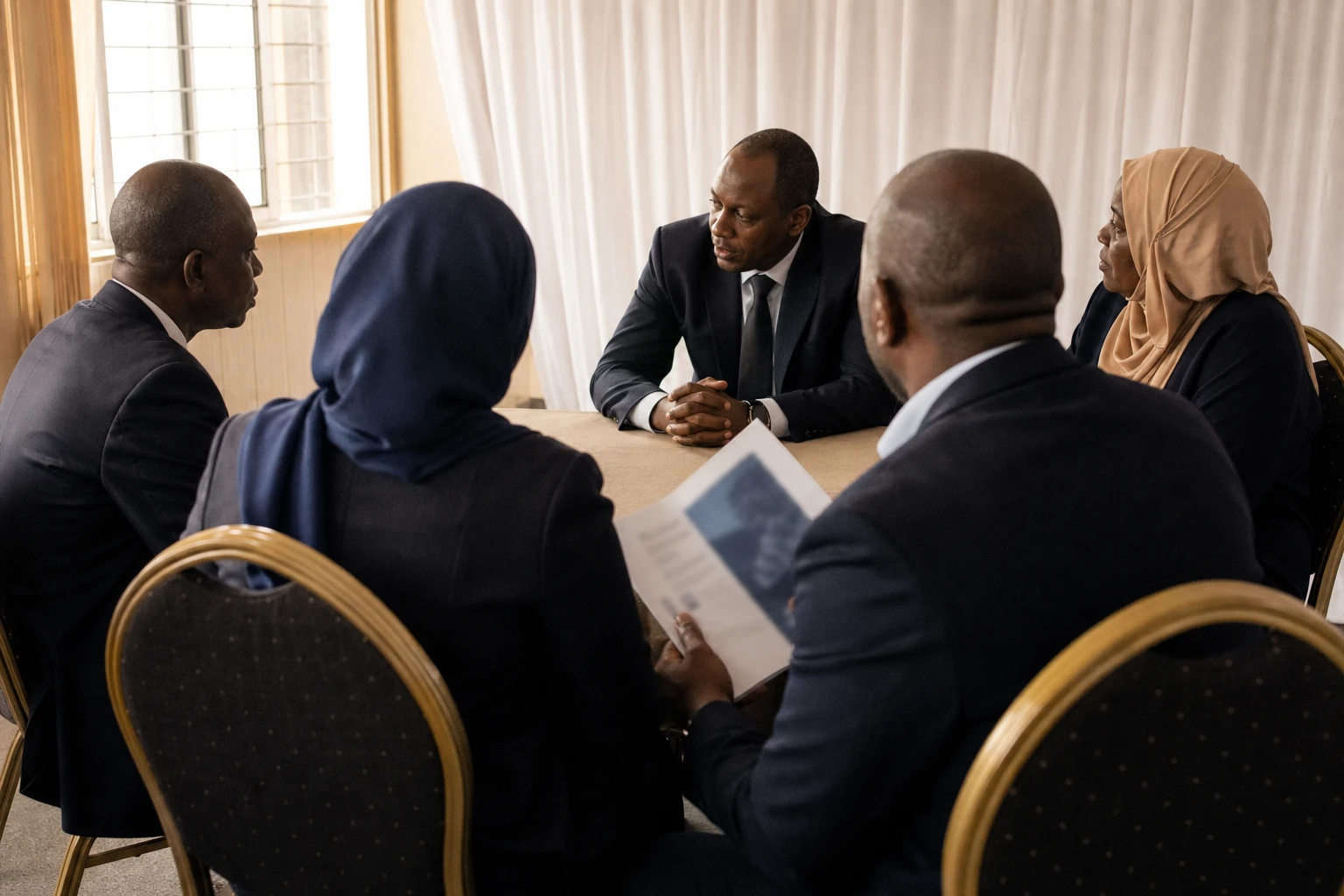
In Moroni, a legal case has become a test of public health and the rule of law
In Comoros, a criminal case is no longer confined to the courts. It now concerns the dignity of a former head of state, the role of checks and balances, and a simple question: can a seriously ill detainee be left without appropriate care? According to those close to him, Ahmed Abdallah Sambi, president of the Union of the Comoros from 2006 to 2011, is seeing his health deteriorate as his family calls for a medical evacuation. The authorities, for their part, dispute the claim that he faces immediate danger to his life.
The issue goes beyond Sambi himself. In an archipelago where Moroni concentrates decision-making, every signal sent by the judiciary, the presidency and the public prosecutor also weighs on public trust. The case comes as the country is a member of the Common Market for Eastern and Southern Africa (COMESA) and engaged in broader trade negotiations with the European Union. In other words, Comoros’ institutional reputation also matters abroad.
What the law, international judges and local challengers say
The heart of the dispute is long-standing. In 2019, the United Nations Working Group on Arbitrary Detention issued Opinion No. 65/2018 on the deprivation of liberty of the former Comorian president. The document concludes that his detention is arbitrary and calls for his release and compensation. At the African level, the African Commission on Human and Peoples’ Rights opened Communication 702/18 before striking it off in November 2025 for lack of diligence on the part of the complainant. The two proceedings therefore did not reach the same outcome.
At the domestic level, the Comorian Constitution provides that the President of the Union and members of the government may be tried by the Supreme Court sitting as the High Court of Justice in cases of high treason, with an organic law setting out its composition and procedure. The legal framework cited by Sambi’s defence is therefore based on a broader dispute: which court had jurisdiction, and under what conditions?
The former president’s family also argues that an order authorising temporary release for medical care, dated 2 January 2020, was not enforced. This claim has not been confirmed by an accessible official document among the sources consulted, but it has appeared in several recent media reports and in accounts from those close to him. In journalism, this distinction matters: this is a reported claim, not a fact legally established by the documents consulted.
A tension between judicial security, the detainee’s health and political calculation
On 29 May 2026, six former Comorian prime ministers publicly called on Azali Assoumani to authorise treatment abroad for Sambi. They cited his deteriorating health and offered guarantees that he would return. This matters: in Moroni, the case is no longer mobilising only the former president’s family. It also involves former figures from the state apparatus.
At the same time, Comorian media reported a sharp disagreement between the public prosecutor and the former president’s treating doctor in late May 2026. The prosecutor said the examinations carried out did not show a critical condition. The doctor disputed that account and spoke of a false public diagnosis. This contradiction is deepening long-standing mistrust surrounding the case.
The health issue is not secondary. Comorian law on parole also provides for a medical certificate on a detainee’s condition to be sent to the prosecutor general and then forwarded to the justice minister. In a case this sensitive, the duty of care becomes a matter of procedure as well as a medical issue. When medical expertise, the judicial hierarchy and the executive do not agree, the detainee remains at the centre of a stand-off over which he has no control.
What the case says about Comoros — and today’s political landscape in Africa
Comoros is often viewed from Moroni, but the Sambi case also forms part of a broader political landscape. The African Union, UN mechanisms and partner countries follow such situations closely, not because they are exceptional, but because they reveal how robust judicial guarantees really are across the continent. When a former president becomes an ill detainee, the question is no longer just about one man. It concerns how a state treats its opponents once they have left the political arena.
The Guinean precedent cited by Sambi’s family, along with appeals by African parliamentarians in other sensitive cases, shows that a medical evacuation can become a political gesture to ease tensions. Conversely, a continued refusal fuels suspicion of a settling of scores. For Comorians, this weighs on democratic life. For regional partners, it raises a question of consistency: supporting the rule of law means not only funding programmes, but also defending minimum safeguards when health and liberty intersect.
What happens next will depend less on commentary than on action. In Comoros, the decision on whether to allow Ahmed Abdallah Sambi to travel to a facility equipped to provide appropriate care will say much about the institutions’ ability to separate justice, health and political rivalries. At the African level, the case will remain a useful indicator: not for judging a country from outside, but for measuring whether legal safeguards still hold when tested by power.