Algeria
 Egypt
 Morocco
 Sudan
 Tunisia
 Benin
 Burkina Faso
 Cabo Verde
 Côte d'Ivoire
 Ghana
 Guinea
 Guinea-Bissau
 Liberia
 Mali
 Mauritania
 Niger
 Nigeria
 Senegal
 Sierra Leone
 The Gambia
 Togo
 Cameroon
 Central African Republic
 Chad
 DR Congo
 Equatorial Guinea
 Gabon
 Republic of the Congo
 São Tomé and Príncipe
 Burundi
 Comoros
 Djibouti
 Eritrea
 Ethiopia
 Kenya
 Madagascar
 Malawi
 Mauritius
 Mozambique
 Rwanda
 Seychelles
 Somalia
 South Sudan
 Tanzania
 Uganda
 Angola
 Botswana
 Eswatini
 Lesotho
 Namibia
 South Africa
 Zambia
 Zimbabwe
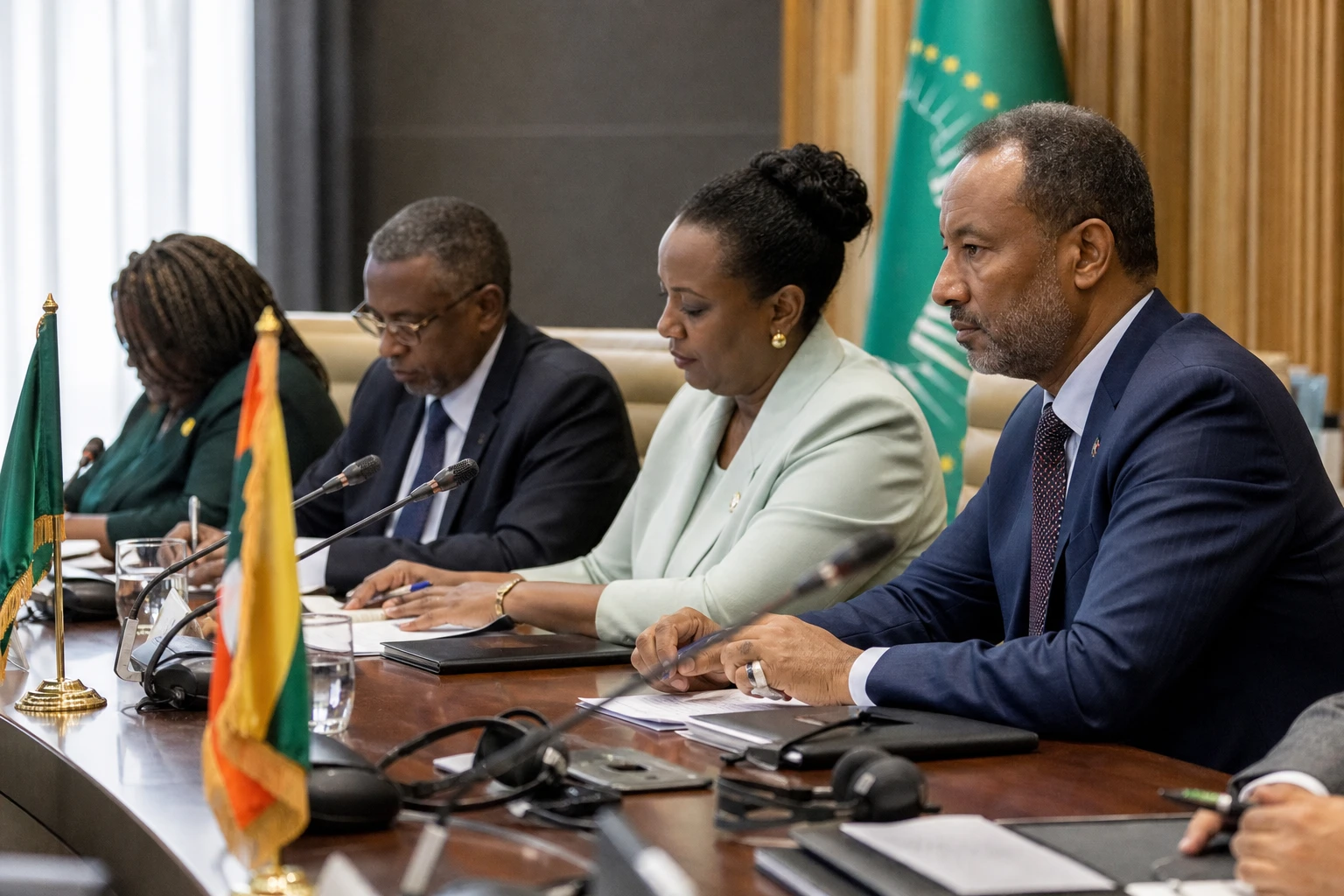
In Moscow, a signal that goes beyond military diplomacy
In the Libyan dossier, every visit matters. When a military official from the east travels to the Kremlin, it is about more than protocol. It is also a way to influence the internal balance at a time when Tripoli remains the official political seat, but state authority is still fragmented among several centres of power.
Saddam Haftar’s visit to Moscow fits this pattern. The deputy head of the Libyan National Army, the dominant force in the east, was received by Vladimir Putin at the Kremlin on Wednesday 19 August 2026, and then by Russian Defence Minister Andrei Belousov. Discussions focused on military cooperation, the training of officers and strengthening the capabilities of the Libyan army, according to accounts published in Moscow and by eastern Libyan outlets.
The meeting comes as Libya remains engaged in a long process of institutional reunification. The UN, through its Support Mission in Libya, says it continues to support an inclusive political process, credible elections and the reunification of institutions. The African Union, for its part, welcomed in June 2026 the signing of a roadmap to end the transition period, signed by Libya’s main political authorities.
An old relationship that remains useful to both sides
To understand the significance of this visit, it is necessary to look again at the map of power in Libya. In the east, the Haftar camp has for years sought to consolidate its military structures and secure external recognition to complement its weight on the ground. For Moscow, the interest is clear: to keep a foothold in a strategically important country in the Maghreb, at the crossroads of the Mediterranean, North Africa and the Sahel. Leading analyses of Russia’s presence in Libya describe it as a military, maritime and logistical lever, designed to serve purposes beyond the Libyan dossier alone.
Russia, for its part, says it supports Libya’s unity and sovereignty. In its official communications to the United Nations, its permanent mission says it backs an inclusive solution and internal dialogue among Libyan forces. This public position does not erase the reality on the ground: Moscow has maintained close ties for several years with the authorities in the east and the military structures linked to them.
The UN context reinforces this interpretation. In April 2026, the Security Council extended the sanctions regime related to Libya and the mandate of the panel of experts tasked with monitoring it. At the same time, the UN mission says the priorities remain reducing armed interference, reunifying institutions and preparing a credible electoral timetable.
What the talks in Moscow are really seeking to achieve
In substance, Saddam Haftar did not come merely to greet an ally. The discussions covered very specific issues: training, skills development, combat readiness and broader military cooperation. In statements issued after the meeting, both sides presented these contacts as a means of supporting regional security and stability. This wording says much about the political objective: to make the bilateral relationship more visible, more durable and more useful both on the ground in Libya and in international power struggles.
For the Haftar camp, there are two objectives. First, to consolidate its position in the east by demonstrating its ability to engage directly with a permanent member of the Security Council. Second, to present itself as an indispensable interlocutor in any future national realignment, as negotiations on the unification of institutions continue. In a country where decision-making centres are dispersed, the diplomatic stage becomes an extension of the military balance of power.
For Moscow, the advantage is strategic. Libya offers a foothold on the southern shore of the Mediterranean and strategic depth towards the Sahel. It also enables Russia to maintain channels with several Libyan actors at a time when it is redeploying its influence in other areas where it has lost ground. Experts point in particular to bases, ports and coastal infrastructure as potential assets for a long-term presence.
Libya between declared sovereignty and overlapping dependencies
This episode also says something about Libya’s political economy. When institutions remain fragmented, external alliances influence security, energy, trade routes and diplomatic choices. People, meanwhile, experience the consequences in their daily lives: access to services, the movement of goods, the stability of public-sector wages and the security of routes between the east, west and south. The debate is therefore not abstract. It directly affects the state’s ability to function as a whole.
The regional dimension is equally clear. In North Africa, Libya remains a link between the Maghreb, the Mediterranean and the Sahelian hinterland. Every military consolidation in the east has effects beyond Libya’s borders, particularly on arms flows, cross-border movements and the balance among Turkish, Russian, Egyptian and European partners. The African Union and the UN are each pressing, in their own way, for a Libyan solution first, without another military escalation.
What happens next will depend less on the language used in Moscow than on what follows inside Libya: genuine progress towards a unified political framework, clarification of the security institutions and the ability of Libyan actors to reduce the role of external armed backers. That is the measure by which Saddam Haftar’s visit will take on its full significance. For now, it mainly confirms one thing: in Libya, diplomacy remains inseparable from the military balance of power.